
The global wildlife trade — both legal and illegal — is fuelling animal-to-human disease transmission, according to new research published this week.
Of the 2,079 mammal species traded worldwide, 41 per cent shared at least one pathogen with humans.
In comparison, 6.4 per cent of non-traded mammal species shared human-infecting or “zoonotic” pathogens, according to the report.
The research, conducted by a team out of the University of Fribourg in Switzerland, also found traded mammals were about 1.5 times more likely to be hosts of zoonotic diseases.
The peer-reviewed report, published in the journal Science on Thursday, local time, noted inter species disease transmission was a “public health priority”.
“[Several] high-profile outbreaks, [including] HIV, the 2014 West African Ebola epidemic, the 2003 mpox outbreak in North America, and the COVID-19 pandemic have been linked to traded wildlife,” the report said.
‘”[But] the long-term impact of the wildlife trade in shaping pathogen exchange between humans and wild animals remains unclear.”
That transmission, the report said, could happen across all stages of trade — including harvesting, breeding, transport, stockpiling, retail, consumption and companionship.
“For instance, a person buying three Finlayson’s squirrels in a Laotian wildlife market has been estimated to have an 83 per cent chance of getting at least one leptospirosis-infected [animal],” it said.
Every 10 years on the market adds one more pathogen risk
Three separate datasets were used to analyse the legal and illegal wildlife trade, spanning from as early as 1975.
This was cross-referenced with the CLOVER database, the largest resource of mammal-pathogen associations to date.
Comparing the two sets of information, researchers tested whether mammals on the trade market were more likely to share pathogens with humans, compared to non-traded mammals.
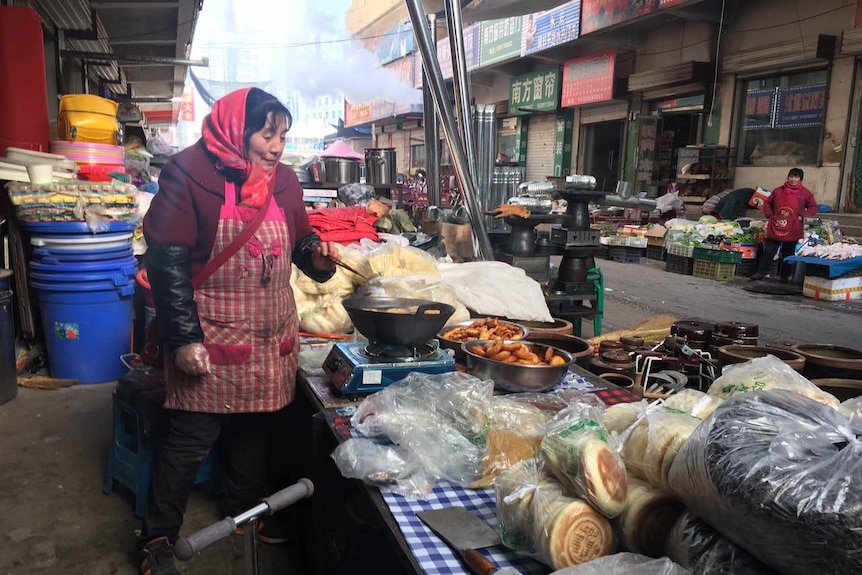
The report looked at wildlife trading data from around the world. (Supplied )
They also looked at whether illegal trade and live animal markets increased transmission risk, and how the amount of time in trade affected the level of disease shared.
The longer a wild mammal had been traded globally, according to the report, the more pathogens it shared with humans.
“[We estimated] a wild mammal species shared one additional pathogen with humans for every 10 years of presence in trade,” the report said.
“This finding implies that pathogens hosted by traded species that currently do not infect humans are more likely to do so in the near future.
“[This is] compared with [pathogens] hosted by non-traded species.”
Australia’s biocontrol success stories
Because new species were expected to enter global wildlife trade, the report added, additional wildlife pathogens could gain the opportunity to infect humans.
“[This would] thereby increase the risk of future zoonotic disease outbreaks, potentially including epidemics and pandemics of new pathogens,” the report said.
Their findings, the research team concluded, highlighted a need for stronger bio-surveillance to avoid potential outbreaks.
Tiggy Grillo, the national coordinator and chief operating officer of Wildlife Health Australia, said it was a “remarkable” set of data.
“It highlights to us what are some of the riskiest wildlife trade interactions that are happening out there,” she said.
“It really provides some numbers to help inform decision making … to start identifying and supporting certain actions which might reduce the risks in relation to wildlife trade.
“One of the foundation programs for our organisation is a wildlife health surveillance system.
“So we collect information on investigations that have looked into sick and dead wildlife across Australia’s landscape … and that is really used to inform [how] we manage risks in Australia.
“It also helps us to identify if there’s something that might be concerning for the wildlife … [and] new pathogens that potentially might be harmful to humans.”Data on local wildlife market trade still ‘very limited’
The report was not without its limitations, the team noted.
The data did not capture “local but widespread wildlife markets”, including the exotic pet markets, which likely influenced the spread of disease in different ways.
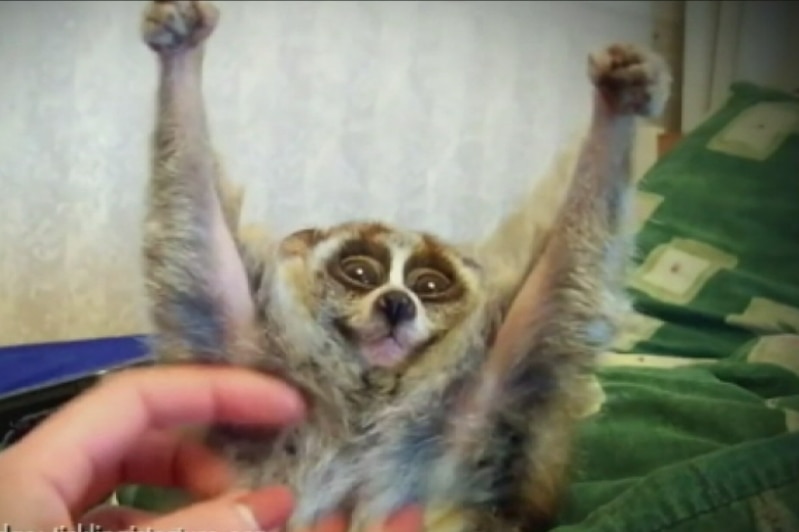
Animals like the slow loris are traded illegally on the black market.
Blind spots like these were noted by Alice Hughes from the University of Melbourne’s Biodiversity Institute.
“Wildlife trade data itself is very challenging to bring together,” Professor Hughes told the ABC.
“The majority of wildlife trade is not monitored, so that means getting a total number of species in trade and how they’re used is very, very challenging.
“You’ll see, for example, [the report has] a figure on human-sharing pathogens in the live market versus the illegal trade, with the live market having a much harder percentage of shared pathogens.
“You would expect that because if they’re in a live market, we’re more likely to be consuming them.
“The fact that we are seeing more of the shared-pathogen load in the live market isn’t surprising.
Loading Instagram content
“But one of the challenges is that that live market data is still very limited, in terms of knowing what species are in market and, in many cases knowing what pathogens they carry.”
Dr Hughes noted the report highlighted the need for further research and more monitoring of the global wildlife trade.
“These aren’t paired samples [in this report], they’re just trying to get an idea of what animals are in trade and what pathogens [they carry],” she said.
“We really need analysis that brings together those two elements in the same dataset, rather than trying to synergise two different sets.”
The report likewise called for expanded surveillance of pathogens in “wild, captive, and domesticated animal populations”, calling it “essential” to further research.
‘If we disrupt nature, we disrupt life for all of us’
Assessing the potential risk of traded animals was an “urgent need”, according to the report.
Do rabbit biocontrols still work?
Across Australia there have been more than 275 cases of zoonotic diseases in 2026, a collection of diseases which includes anthrax, mpox, lyssavirus, leptospirosis and more.
Dr Grillo said Wildlife Health Australia had been involved in writing global guidelines to address the disease risk in the wildlife trade.
Those guidelines were published by the World Organisation for Animal Health, a group bringing together multiple international experts.
“A colleague of mine said this, that COVID really highlighted that if we disrupt nature, we disrupt life for all of us,” Dr Grillo said.
“And I think that’s a really poignant point.
“COVID brought into light wildlife and the risks and concerns, but also the importance of not just looking at wildlife health from the perspective of [supporting] human health, but also supporting wildlife themselves.”