
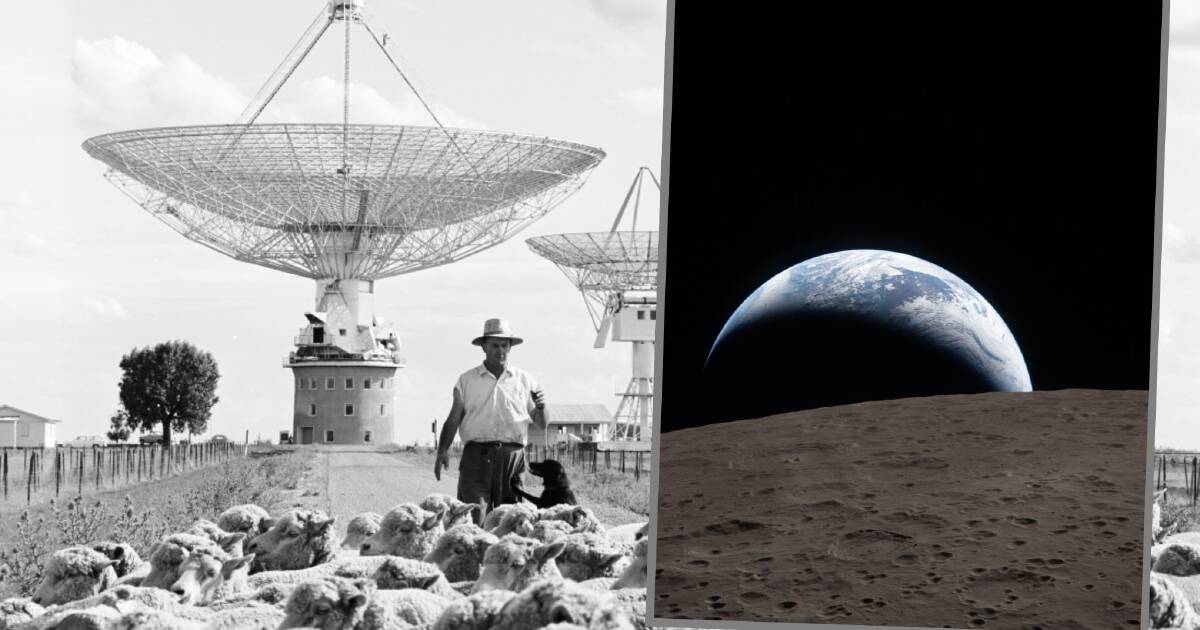
The name: In 2020, the telescope was given the Wiradjuri name Murriyang, which represents the “Skyworld” where the creator spirit Biyaami resides.
The build: Originally commissioned in 1961 using a steel mesh surface; it was upgraded in 1970 to more sensitive perforated aluminium panels.
The power: Through continuous internal and external upgrades, the telescope is now 10,000 times more sensitive than it was during the 1969 Apollo 11 moon landing.
Deep freeze technology: To achieve such extreme sensitivity, the telescope’s radio receivers are cryogenically cooled to minus 270 degrees Celcius (3 Kelvin) to eliminate electronic interference.
Vital stats: The dish spans 64 metres in diameter and weighs 1000 tonnes, yet it is so finely balanced it can be operated remotely via the internet.
A proven track record: Beyond Apollo, Parkes has tracked missions to Venus (1962), Mars, Jupiter, and even intercepted signals from distant comets.
The Artemis mission: While NASA’s Deep Space Network (including Tidbinbilla in Canberra) handles primary tracking, Parkes acts as the heavy lifter for high-speed data downloads, including biomedical and navigation vitals for the Artemis II crew.
The moon’s switchboard: Australia is an original signatory to the Artemis Accords, with Parkes currently demonstrating the network capability required for future permanent moon bases and lunar GPS systems.