
It’s the ceasefire that wasn’t.
As in Gaza and countless other conflict zones, the official pledges of the last few days that initially placated financial markets have become little more than bargaining chips ahead of this weekend’s negotiations.
Rockets are still flying and the Strait of Hormuz remains all but shut.
Is the Strait of Hormuz open or closed?
After almost six weeks of war, the cost of the assault on Iran only now is becoming apparent. Thousands are dead and injured, many more innocents have been rendered homeless, and cities have been smashed.
Then there’s the global toll. The 2026 oil shock already has sent shivers through the international community as soaring energy costs and fuel shortages up-end trade and business across the globe.
But experts are warning of worse to come. Time is running out to cauterise the wound, to limit the extent of the looming economic calamity caused by the unprecedented shutdown of Middle Eastern oil exports.
Iran war live updates: For the latest news on the Middle East crisis, read our blog
While crude oil prices are 40 to 50 per cent higher than prewar levels, they have been remarkably restrained since Israel and the US began pounding Iran, which responded by cutting off much of the flow of Middle East fuel to the rest of the world.
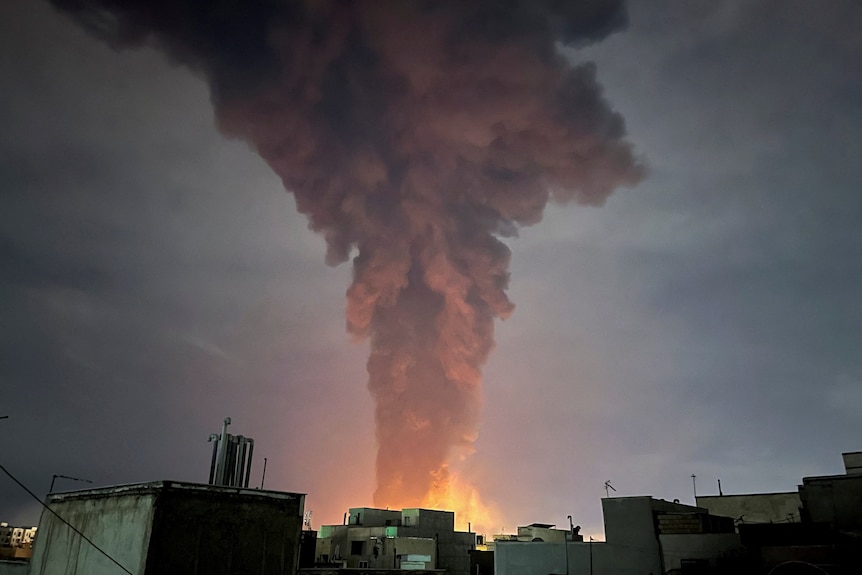
Smoke rises in Tehran following US-Israeli strikes last month. (Reuters via West Asia News Agency: Majid Asgaripour)
Crude prices have been held in check because of two key factors.
The first is that global reserves have been drawn down to help alleviate the shortages. The second is that ships that left the Strait of Hormuz before the conflict began were still at sea.
But the emergency buffers are being eroded. And in recent days the last of the tankers that left before the hostilities broke out have only just delivered their cargoes.
Loading…
Without an immediate resolution, far worse is to come as the oil shock transforms into a full-scale crisis.
“We’re still living off the fuel that left the Strait of Hormuz before the war began,” MST Marquee oil analyst Saul Kavonic told the ABC.
“The real crunch point will be later in April and May, and then we’ll start to see increased competition from other nations in Asia and globally, who will all be trying to scramble and secure the last little bits of fuel that are left.”
As analysts from investment bank Société Générale noted on Tuesday: “Time is, simply put, running out.”
Fuel prices yet to respond
Optimism has ruled supreme for the past six weeks.
According to the New York Times, Israel was convinced regime change in Tehran was very likely and that the military assault would be over in just a few weeks, convincing the US to go along for the ride.
While commodity markets reacted swiftly, sending oil prices sharply higher, they too discounted the potential impact.
The most heavily quoted oil contracts for North Sea Brent, the global benchmark, and the lighter-grade US benchmark West Texas Intermediate, saw prices rise to peaks around $US115 a barrel.
But those quotes are taken from what is known as futures markets, for oil to be delivered at some point in the future. Right now, the nearest contract delivery date is June.
But for a refiner trying to source fuel immediately, the price has been much higher.
This time last week, the price surged to $US141 a barrel — the highest it’s been since 2008, when fears were growing that the world was running out of oil.
According to Société Générale, the premium — the price gap between spot markets and forward delivery contracts — hit a record $US32 a barrel last week.
That, Société Générale wrote, was “consistent with expectations that disruptions will be temporary, even as near-term supply shortages intensify.”
Inside the secret ceasefire talks
Even after Israel maintained its bombardment of Lebanon and US President Donald Trump threatened to resume “shootin'” if the shaky ceasefire didn’t hold, the discount on future shipments remained intact.
Traders, it seems, are still banking on a big drop in crude oil prices even as the Strait of Hormuz remains shut.
But Trump’s own advisors disagree.
The US Energy Information Administration expects fuel prices to continue to rise and the pain to worsen.
Will petrol prices get back to prewar levels?
“Just as we had never before seen the strait close, we’ve never seen it reopen,” it noted this week.
“What exactly that looks like remains to be seen. Full restoration of flows will take months. Our modelling indicates that fuel prices will continue to rise until these variables resolve.”
With Middle Eastern shipping halted and storage tanks full, production has been severely curtailed and will remain so for most of this year.
The agency expects “a return close to pre-conflict levels in late 2026”.
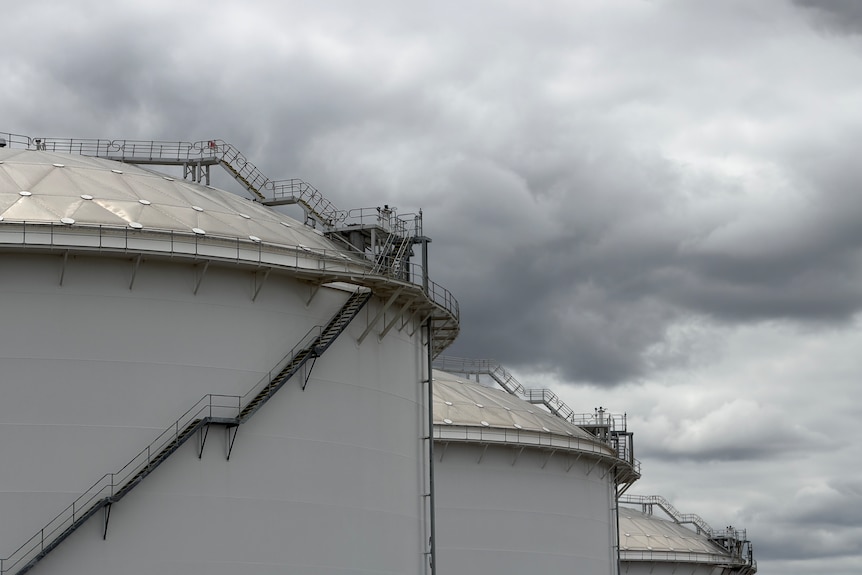
Three diesel oil storage tanks in Victoria, holding 30 million litres of fuel. (ABC News: Andy Ware)
Diesel situation to deteriorate
You only need to cast your mind back to the aftermath of the pandemic to consider the after-effects of a major trade disruption.
Right now, almost 10 per cent of the world’s supertankers are trapped in the Persian Gulf. That shortage of ships has sent oil transport prices into orbit. And it will create a backlog that will take many months to rectify.
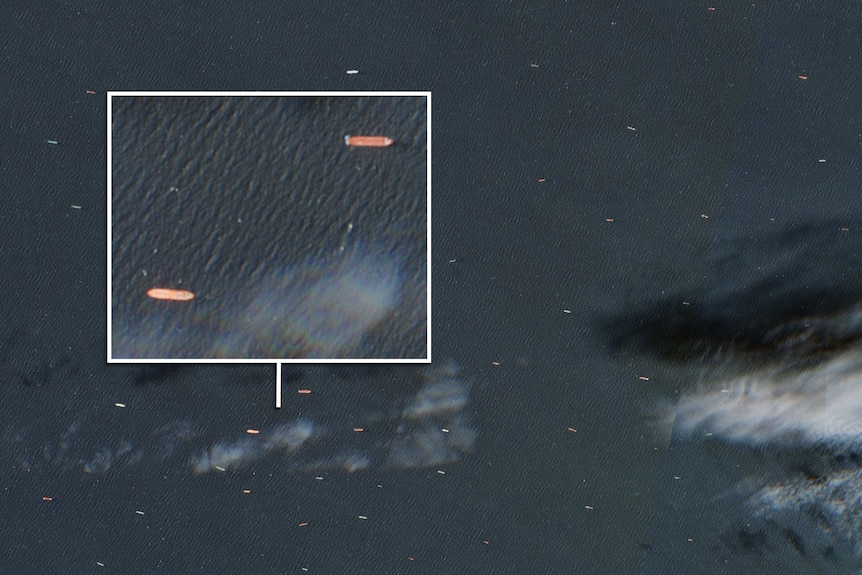
Ships anchored in the Persian Gulf on April 7, 2026. (Supplied: European Union/Sentinel Hub)
Meanwhile, refiners in the midst of a once-in-a-lifetime squeeze are making the most of it, with huge mark-ups on processing, especially for jet fuel.
As one of the world’s biggest resource exporters and a major global food supplier on a massive continent, diesel is an essential fuel source for Australia.
Given there is no option but to use it regardless of the price, demand cannot be easily wound back. It is, as economists would say, inelastic.
Track the latest petrol and diesel prices around Australia
With supplies now running thin, diesel shortages have become more pronounced and, according to Macquarie University’s Lurion De Mello, could seriously impact the Australian economy.
“It’s going to take a lot longer, I think, for diesel prices to come down to, say, below $2,” he told ABC.
“We need the diesel price to come down because diesel is going to have a huge inflationary impact on our groceries.”
According to Saul Kavonic, the global diesel shortage appears to be worsening.
“Right now Australia is dragging cargoes of diesel from as far away as Cherry Point in the US and even the Netherlands in Northern Europe,” he said.
“That’s how acute the shortage is, and the truth is the real shortage hasn’t hit us yet.”
Fortunately, Australia has leverage when it comes to securing supplies.
As a major exporter of gas and coal, we can use our sway to ensure that refineries in Singapore and South Korea continue to ship here.
But poorer countries such as Sri Lanka, without leverage and which have only recently emerged from debt crises caused by COVID, are likely to suffer.
What has the war achieved?
The regime in Tehran has been emboldened by its survival, it has realised the power it now can wield over the global economy and has discovered a new source of income — a reported $US2-million toll on ships passing through the Strait of Hormuz.
Loading…