
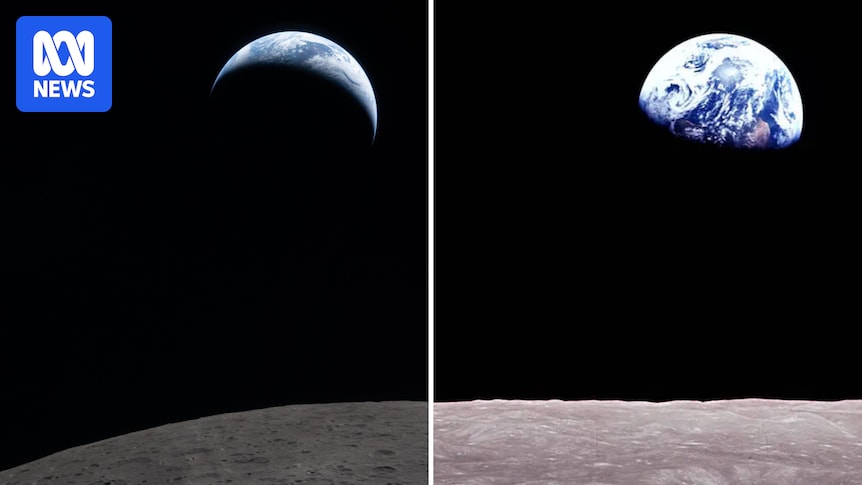
On Christmas Eve in 1968, Apollo 8 astronaut William Anders took a photo that changed humanity’s perception of the world.
The image known as “Earthrise” showed our home planet as a half-illuminated sphere, slowly lifting itself above the Moon’s cold horizon.
As Anders scrambled for a colour film roll on the far side of the Moon, the planet he was photographing was in geopolitical turmoil.
The United States was mired in an increasingly unpopular war in Vietnam; Martin Luther King Jr and Robert F Kennedy had been assassinated; there was conflict and unrest in the Eastern Bloc, South Africa, Northern Ireland, India and beyond.
Now in 2026, the Easter weekend produced images that will earn their own place in history. And once again, our troubled planet was placed spectacularly in its cosmic context by humans in a tin can 400,000 kilometres away.
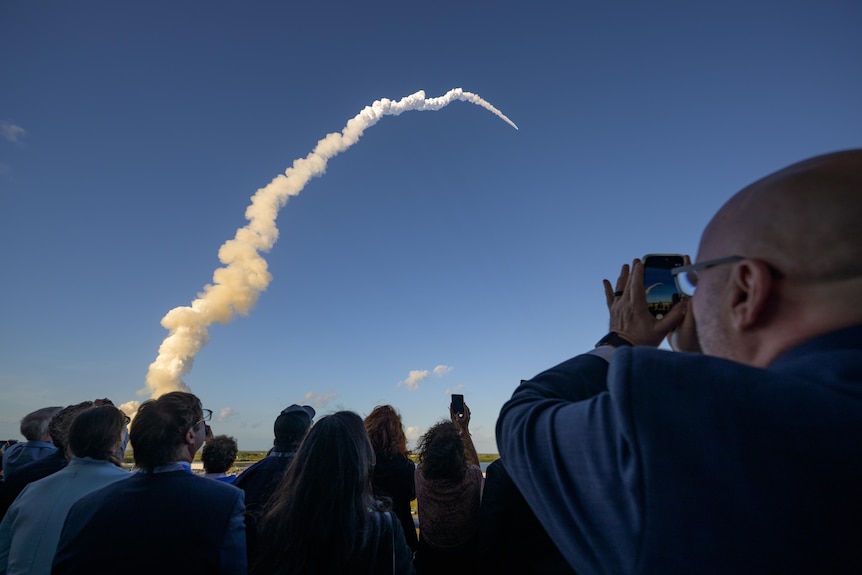 Amid global turmoil citizens of the world have turned their heads to the sky to track humanity’s return to the Moon.(Supplied: NASA/Bill Ingalls)
Amid global turmoil, citizens of the world turned their heads to the sky to track humanity’s return to the Moon. (Supplied: NASA/Bill Ingalls)
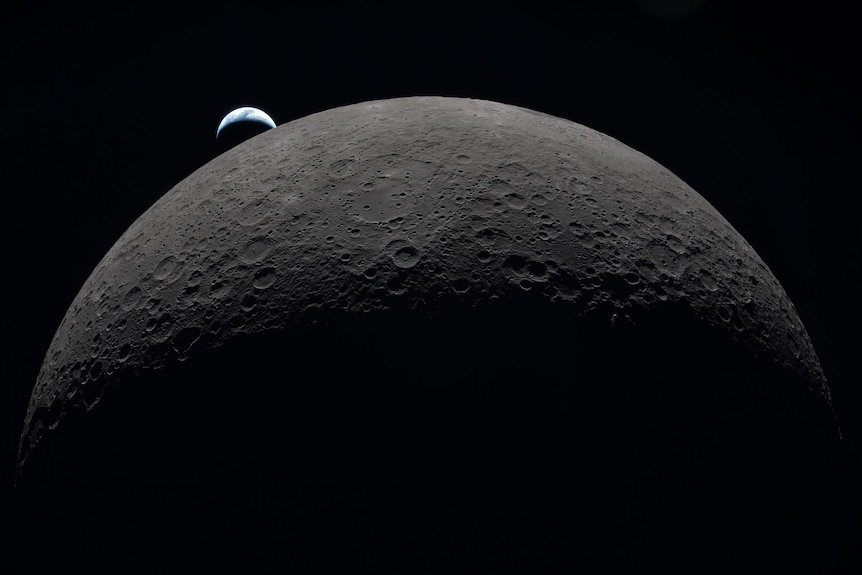 The first trip around the Moon in fifty years provided plenty of new camera angles for visually unique images that captured the public’s attention.(Supplied: NASA)
The first trip around the Moon in 50 years provided plenty of new camera angles that captured the public’s attention. (Supplied: NASA)
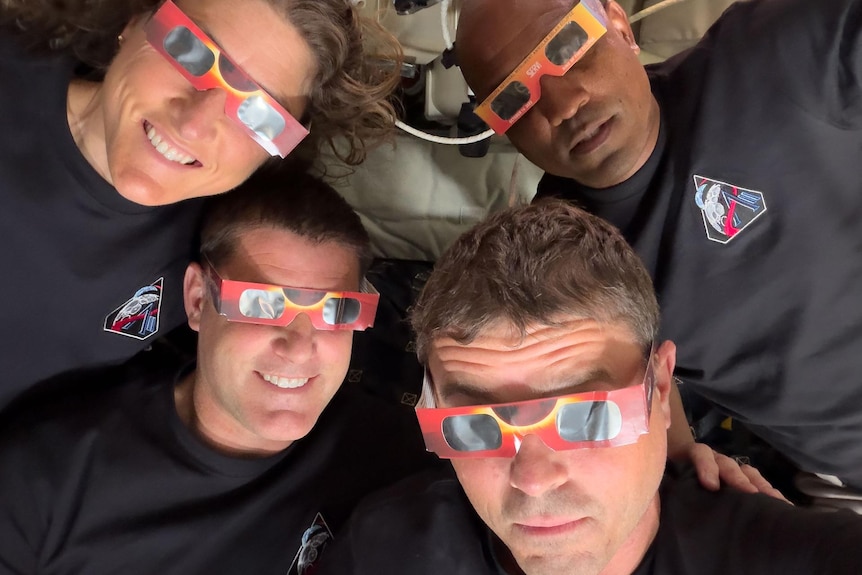 The Artemis II crew don eclipse glasses for an hour-long solar eclipse as they flew behind the Moon.(Supplied: NASA)
The Artemis II crew donned eclipse glasses for an hour-long solar eclipse as they flew into the Moon’s shadow. (Supplied: NASA)
The Artemis II mission offered a bright spark in a grim global news agenda and a life-affirming shot of perspective.
But space missions are expensive, and there are always other places where this money could be spent.
“Billions for space, pennies for the hungry” was the sentiment during anti-Apollo protests in the 60s; one sociologist called the whole program a “Moondoggle”.
So what did we get from America’s 2026 moonshot — and does it stand up to scrutiny?
Quiet part out loud
There was a stand-out awkward moment during Donald Trump’s 12-minute conversation with the Artemis II crew, in the wake of their lunar fly-by.
It wasn’t the 62 seconds of silence after the president compared the “bravery” and “genius” of Canadian astronaut Jeremy Hansen to the legendary status of Trump’s friend and ice hockey legend Wayne Gretzky.
It was when Trump set out to pay a compliment and, along the way, mentioned that he had considered axing NASA.
“You know, I had a decision to make in my first term, and the decision is: ‘What are we going to do at NASA?’
“Are we gonna have it be revived, or are we going to close it down?
“And I had very little hesitation.”
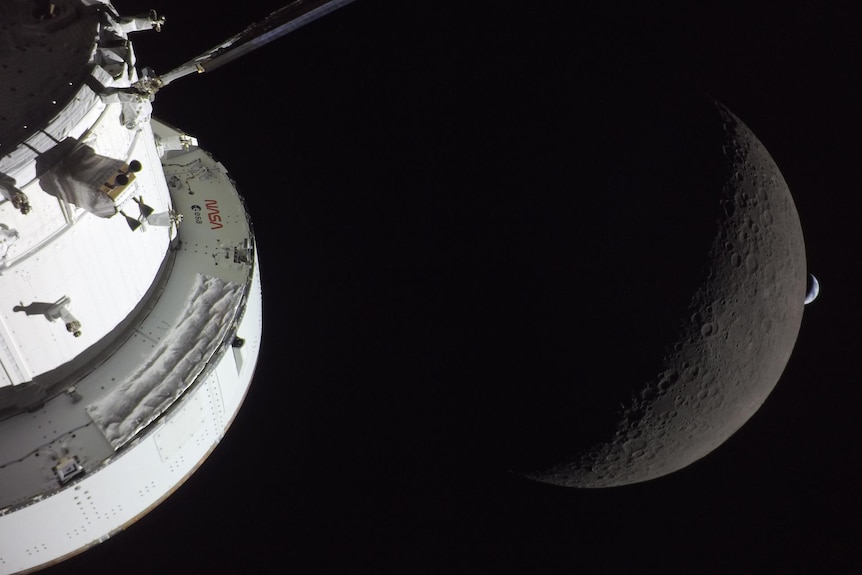 NASA’s Orion spacecraft captures a photo of itself, the Moon and the Earth on lunar fly-by.(Supplied: NASA)
This might be easily overlooked as an inadvertently barbed digression — Trump went on to say “it was not even a question in my own mind; we’ve spent what we had to do” — except that four days earlier, the White House tabled a 23 per cent cut to NASA’s funding in its 2027 budget request.
The proposal prioritises human space exploration like the Artemis missions, but slashes science projects.
It’s not the first time this president has taken aim at science funding, nor is it unusual for space agencies to face pointed questions about their spending.
In the case of the Artemis program, which largely retraces the steps taken by the Apollo missions five decades ago, these questions loom especially large.
Haven’t we been there, done that, and got a lot more than a T-shirt?
Less science, more logistics
For those closely following Artemis II, a lot was made of the scientific observations made during this single lap of the Moon.
The chatter on NASA’s live broadcasts was all about the long list of observation targets and the value of human eyes as instruments; the geological training undertaken by the astronauts to support their observations from 7,000km above the surface; the unexpected shades of brown and green they were seeing in the pockmarked terrain — and the “impact flashes” they witnessed as they slipped into shadow and meteorites struck the Moon below.
Loading…
There is genuine insight in some of these findings. No doubt multiple scientific papers will result.
The impact flashes, in particular, were a significant surprise. Leaders of the Artemis lunar science team say the mission has exceeded their loftiest expectations.
But few would argue that this amounts to $US4 billion worth of science.
The real value of this mission is in studying the astronauts themselves and the technology that has carried them.
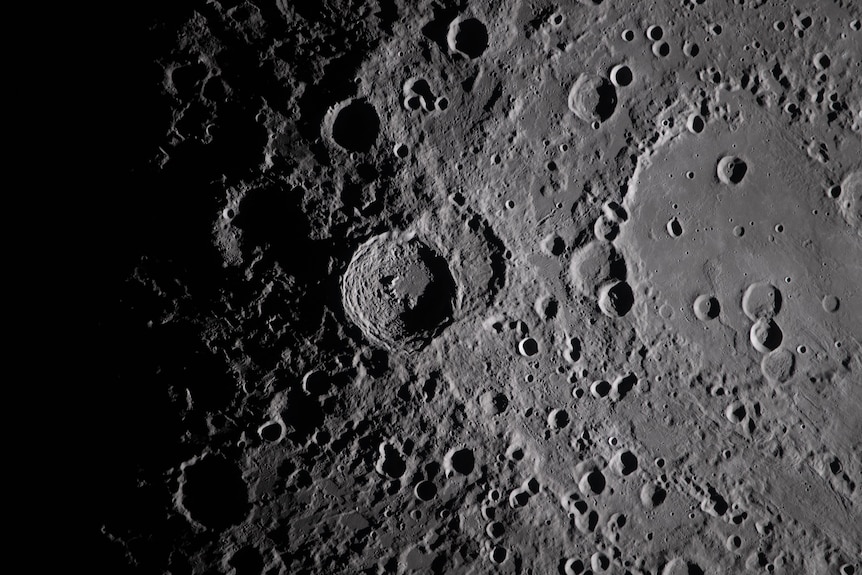 Astronauts took high resolution photos of Moon locations like Vavilov Crater while also noting down their direct observations of the lunar surface.(Supplied: NASA)
It’s a test, not just for landing humans on the Moon with Artemis IV in 2028, but for a new era of regular lunar missions and the establishment of a permanent base.
And it’s a test that the crew and the Orion spacecraft, with the possible exception of its toilet, passed with flying colours.
That in itself, especially given the concerns about its safety during re-entry, is something to celebrate.
… And also politics
This technical trailblazing — even if parts of the trail were worn smooth 50 years ago — is where the Artemis program comes closer to justifying its overall price tag of roughly $US93 billion.
NASA administrator Jared Isaacman has made strategic adjustments to the agency’s goals, changing the timeline and trajectories of the next two Artemis flights and setting a firm focus on a moon base.
The “Lunar Gateway” space station is out, and increased commercial partnerships are in, including 30 proposed robotic landings in 2027 to start preparations for that future colony.
“The United States will never again give up the Moon,” Isaacman promised in March.
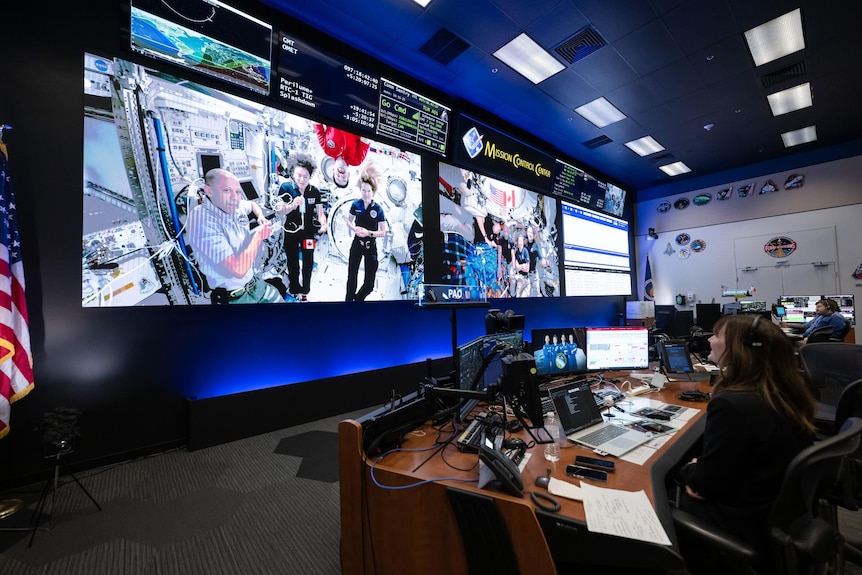 The view from NASA’s mission control during a connected call with the International Space Station and the Artemis II crew.(Supplied: NASA)
Even if the US were to lose this new boots-on-the-Moon race to China, this accelerated plan for a base would give it plenty to cheer about.
Dominance on the Moon, and eventually Mars, is the ultimate name of the game. This is the inescapable undertone when blissful celebrations of a safe splashdown quickly take on a dimension of triumphal flag-waving.
‘Copy, Moon joy’
Whatever the motivations of the politicians paying the bills, there’s a much stronger argument in the minds of everyone around the world who’ve been breathlessly following the Artemis II mission.
And it’s not about a race for resources.
It’s there in the wobble of Commander Reid Wiseman’s voice as he describes seeing the Moon through one window and the Earth through another.
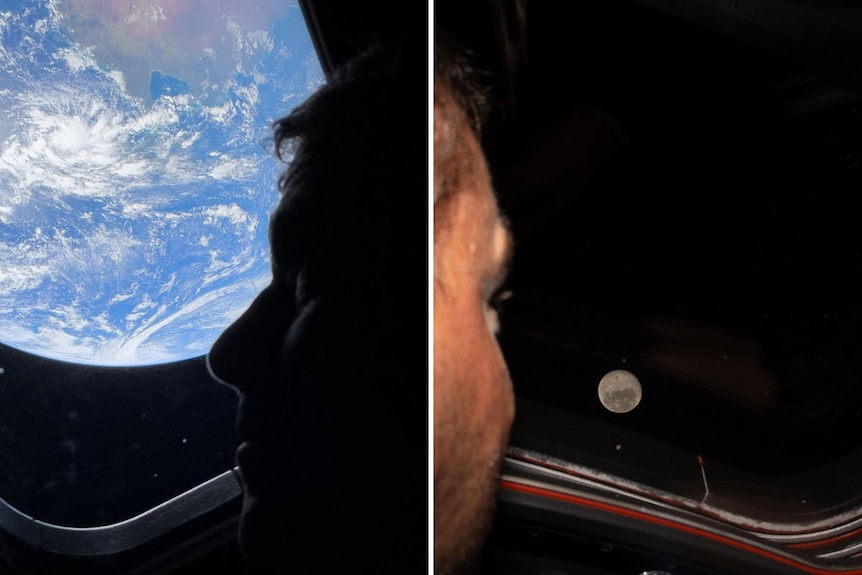 Artemis II commander Reid Wiseman looks out of the Orion spacecraft at the Earth being left behind and the far away Moon.(Supplied: NASA)
It’s there in the torrent of emails received by ABC Radio National’s Artemis Explained podcast from children and their parents. (And no, not all of them were about the toilet.)
And it is absolutely there in the room at mission control in Houston when Kelsey Young, Artemis science flight operations lead, responds to a particularly bubbly report from the astronauts with a now-iconic reply: “Copy, Moon joy.”
The world might be a hot mess at the moment, but in times like these, we all cry out for good stories. For joy, and for wonder.
This mission has delivered those in spades.
Of course, none of it would be happening without the political imperative.
And of course, there’s a direct loop back to politics from the groundswell of public sentiment: excited and inspired voters are a big help to NASA in its conversations with Congress.
But for the millions of us who have been cheering the astronauts on — and are breathing a sigh of relief now that they’ve landed — Moon joy is, in fact, what it’s all about.
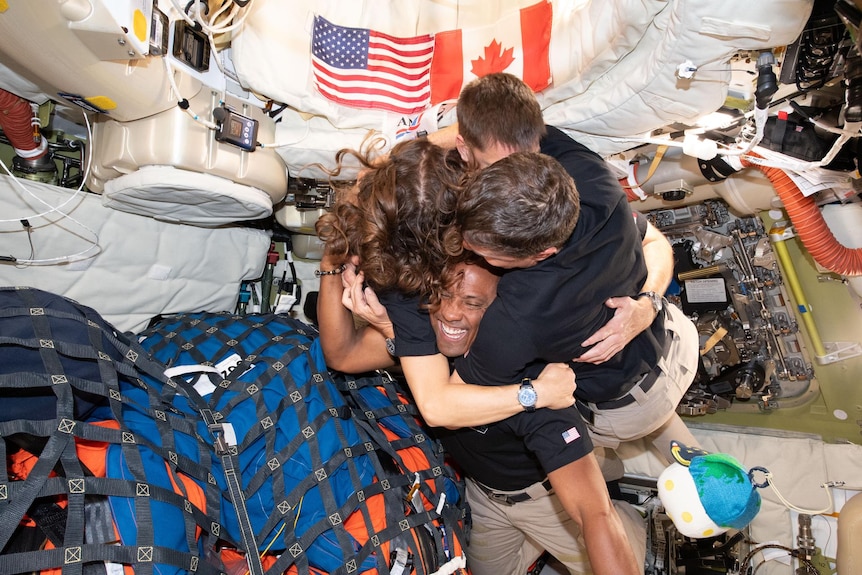 Astronauts Christina Koch, Jeremy Hansen, Reid Wiseman and Victor Glover group hug on the way home from the Artemis II lunar flyby.(Supplied: NASA)
Relive all the highs, tense moments and toilet blockages of Artemis II in a special season of the ABC Radio National ‘Science Friction’ podcast: Artemis Explained.