

A new report from online GP directory Cleanbill shows Australian patients at clinics that do not fully bulk-bill are paying an extra 13.5 per cent to see a GP than in the past.
The April Blue Report, informed by the 6,900 clinics in Cleanbill’s directory, indicates that a standard consult now costs $49.23 out of pocket.
The report also showed that a higher percentage of regional clinics were switching to a full bulk-billing model than those in metropolitan areas.
Public servant Matthew Lillywhite said he used to fly from his home in the Australian Capital Territory to his family general practitioner (GP) in Melbourne because it was easier than seeing his local doctor.
A standard consult at his doctor in Canberra costs $140 up front, including a $40 rebate through Medicare.
That price had increased $40 from $100 per session when he moved to the capital in 2023.
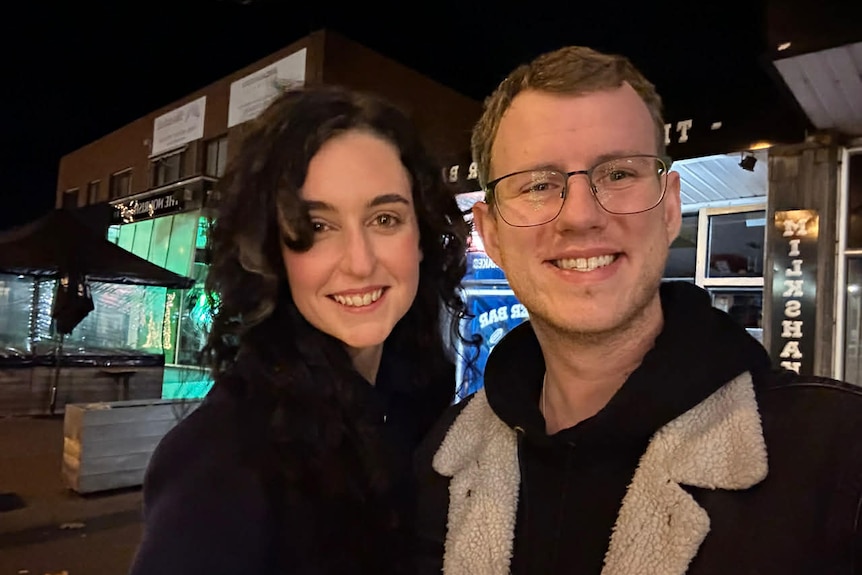
Matthew Lillywhite and his flight attendant friend, Alison Achter. (Supplied: Matthew Lillywhite)
Mr Lillywhite lives with chronic health conditions that require regular monitoring and scripts.
A flight attendant friend hooked him up with $80 return tickets to get to his bulk-billing doctor in Melbourne.
While he no longer has access to those cheap flights he said that was how he survived the last few years, while juggling chronic illness and regular GP appointments.
“Canberra doesn’t feel like it has universal health care anymore,” he said.
In recent times, Mr Lillywhite’s salary has increased significantly, meaning the percentage of his income spent on GP sessions has decreased overall.
He now helps pay for classmates’ medical costs when they cannot book a bulk-billing clinician.
Other times, he helps drive them to bulk-bill appointments they would otherwise struggle to make, due to distance.
“If you can’t afford to pay up front, your options shrink really quickly,” he said.Hike to out-of-pocket costs
The Blue Report puts clinics within the Cleanbill directory into categories known as the Modified Monash (MM) system, which the federal government uses to rank locations from major cities (MM1) to very remote communities (MM7) based on how rural and remote the area.
It shows people in very remote communities who are not bulk-billed are forced to pay the most on average to see a doctor.
Those patients are charged an average of $56.54 out of pocket per appointment in 2026, up from $50.50 in 2025.
In metropolitan areas, patients who were not bulk-billed were paying an average of $48.89 per GP session, up from $42.79 last year — a 14.3 per cent increase.
After the cities, medium rural towns were hit with the highest increase — $50.25 this year, up from $44.21 in 2025.
The report did not provide Canberra-specific data.
However, reporting at the start of the year showed only about one in ten clinics fully bulk-billed in the ACT.
Federal Health Minister Mark Butler said the Cleanbill data was not a reliable analysis of bulk-billing.
“Specific data contained in the Cleanbill analysis cannot be relied upon and should not be reported as accurate,” Mr Butler said.
Mr Butler said since November 1 last year, more than 3,700 medial practices were fully bulk-billing, with more than 1,400 of those previously mixed-billing practices.
He said about 97 per cent of Australians were within a 20-minute drive of a bulk-billing practice.
Bulk-bill rate increase
While costs have risen, the report also showed regional and remote areas were driving much of the recent surge in bulk-billing.
According to the report the percentage of clinics fully bulk-billing standard weekday appointments had almost doubled in a year from about one in five to just more than two in five.
Regional centres, large and medium rural towns and remote communities all recorded bigger jumps in the percentage of fully bulk-billing clinics than metropolitan areas.
The percentage increase to fully bulk-billed clinics in metro areas was lowest, at 16.8 per cent.
The report noted the addition of one bulk-billing clinic in small regional and rural areas could result in a significant percentage change.
The Federal Department of Health publishes an online practice finder that lets patients search for clinics, including whether they bulk-bill.
‘Two-tier system’ risks universality
After reading the report, Caroline Johnson, a GP and associate professor of general practice and primary care at the University of Melbourne, said she was worried the country was heading towards a “two-tier” healthcare system, which could jeopardise its universality.
“We’re offering bulk-billing to some people and a different type of care for people who can afford an out-of-pocket cost, which isn’t in the spirit of what Medicare was set up to do,” she said.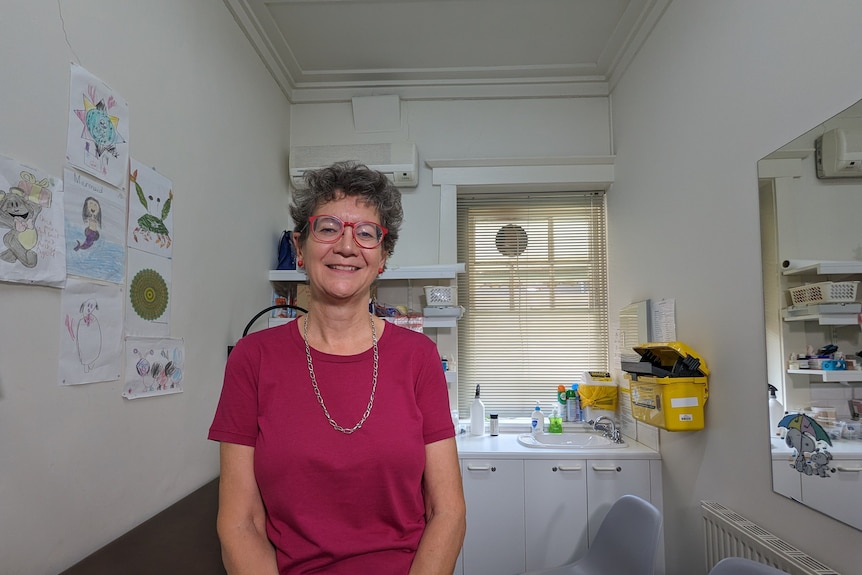
Caroline Johnson says the discrepancy between bulk-billing and non-bulk-billing clinics may jeopardise universal health care in Australia. (ABC News: Darryl Torpy)
“It’s a reminder of just how much less affordable general practice care has become in the last three years.”
She said the sharp percentage jumps in bulk-billing at regional centres should be read cautiously.
“Those percentages really just show a trend rather than what’s happening in any particular town.”
The Royal Australian College of General Practitioners (RACGP) said the data showed bulk-billing increases where funding better reflected the “true cost” of care.
“This report shows exactly what we said would happen has happened — bulk-billing has increased the most in regional, rural and remote Australia, where the incentives are higher,” RACGP president Dr Michael Wright said.
“When funding better matches the cost of care, bulk-billing increases.”
‘It’s lowered the barrier’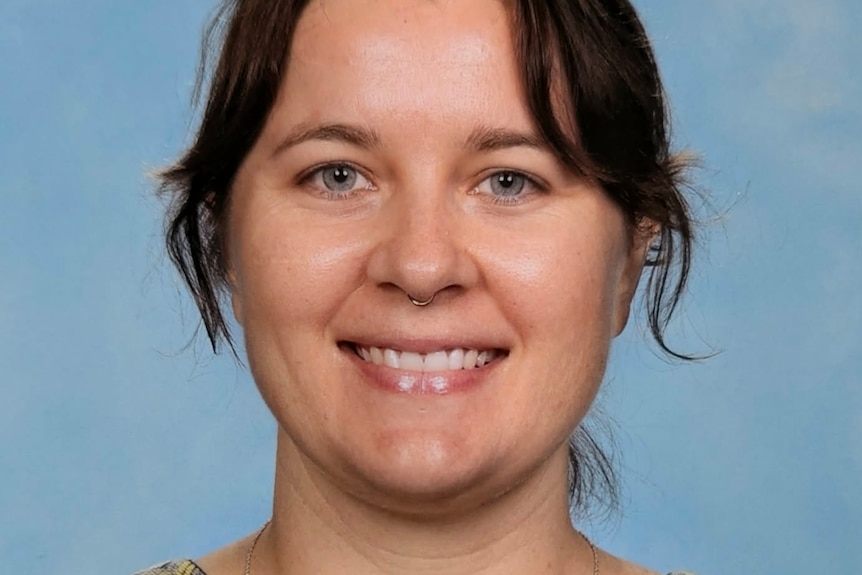
Zowie Lenard requires regular GP visits. (ABC News: Supplied: Zowie Lenard)
When Zowie Lenard moved from Townsville in Queensland to Horsham in western Victoria a year ago, she was shocked she could not find a clinic that bulk-billed.
Ms Lenard’s Medicare records show on January 7 this year, she paid $100 for a standard consultation at her GP, receiving $43.90 back from Medicare.
By March 21, the clinic had shifted to a fully bulk-billing model meaning her appointment cost her $0 — and Medicare gave $84.90 to the practice.
“It’s lowered the barrier [to accessing GP care] completely, there is no barrier anymore,” she said.
But for Horsham-based occupational therapist Phoebe Nagle, the addition of one fully bulk-billing clinic in town was not enough.
Ms Nagle lives with endometriosis and mental health conditions, and she wanted to find a local female doctor who she could see on an ad-hoc basis, without long wait times.

Phoebe Nagle wants to see more bulk-billing practices in Horsham. (ABC News: Supplied: Phoebe Nagle)
She said the place that best met her needs was a mixed-billing clinic that charged her $100 per consult, before a $40 Medicare rebate.
She described the accessibility of affordable GP care in Horsham as a “full 180” compared to Geelong.
“My previous GP in Geelong was bulk-billing, so there wasn’t that financial burden of knowing you need support but being blocked from seeing the doctor,” Ms Nagle said.
“With a chronic condition needing to see the doctor a lot, it can add up to so much.”