
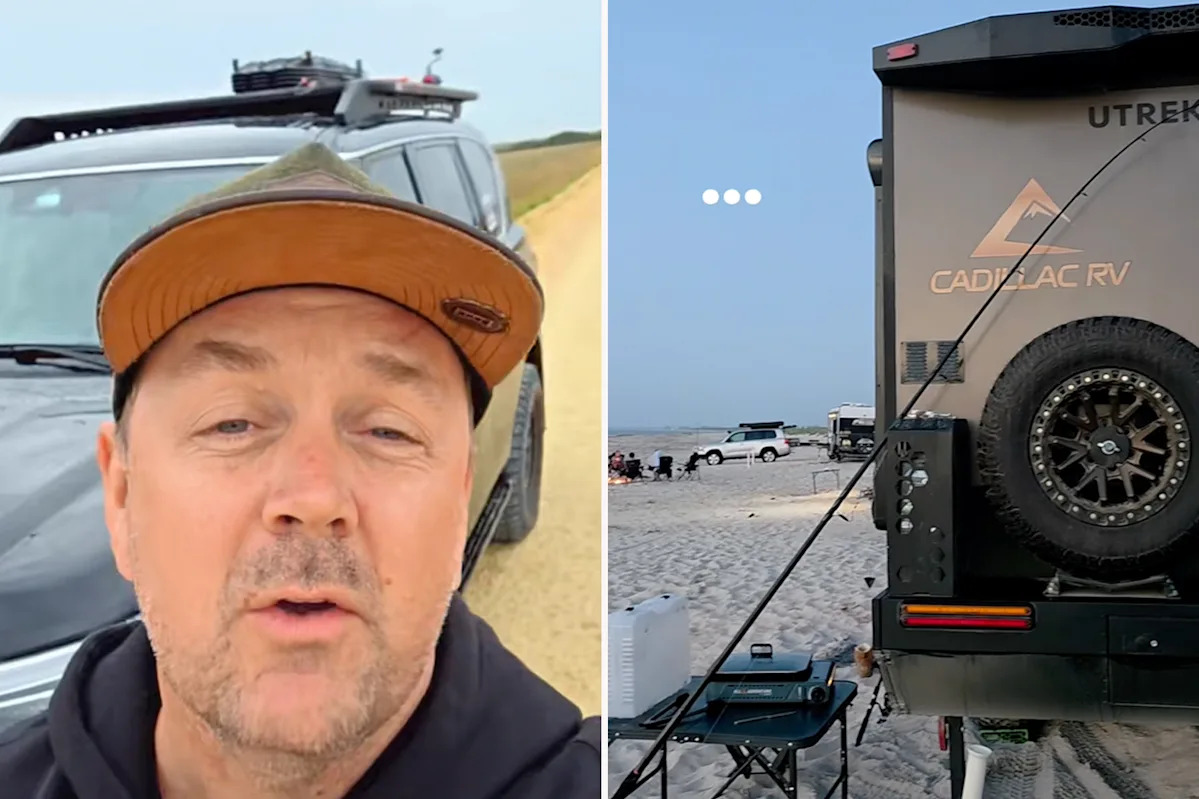
A man travelling around Australia in a caravan has addressed a major dilemma many Aussies are facing as uncertainty continues to grow around the nation’s fuel crisis.
Despite the federal government announcing a fuel excise last week, to help make petrol more affordable at the bowser, many are still desperate to conserve fuel.
The high cost of fuel, with diesel now above $3 a litre, can make a week on the roads hundreds of dollars more expensive than it was last year. For some, it means postponing and altering travel plans.
Others are worried about using fuel for travel, while regional towns need it just to survive.
Avid traveller Dave Ogilvie said the sentiment online is that people who are travelling are being “selfish” and instead of using precious fuel, they should be helping to save it for the communities that need it to make a living.
But he said these small towns, often visited by roadtrippers, also “need the cash” brought in from tourism, and that without people visiting, they would suffer. Instead of cancelling, he encouraged people to visit regional Australia.
“What I am seeing is a lot of small towns with shops and pubs closed. When we’ve travelled to these areas before, they would have been open,” he told Yahoo News Australia from the road this week.
“We were at a supermarket in Robe, South Australia, the other day, and the lady was almost begging us to do a big shop because they just had no customers.”
Dave said he’s been travelling for quite a lot of years and never before has he seen the towns so quiet.
With caravanning a popular mode of travel in recent years, it would not have been uncommon to see “thousands” on the road, according to Dave. Now, he says “it’s dead” on the roads.
“I really think it’s a direct result of the fuel crisis,” he concluded.
Fuel concerns driving people away from small towns
Currently in Coffin Bay, South Australia, Dave said he previously tried to book at a popular park, but said it was “impossible to get into”. Now there’s only “a handful of people” and the pubs are quiet too.
“People aren’t travelling. You go to caravan parks, and there is no one there. This time last year, it would have been absolutely flat out,” he said.
“These towns are just not getting that upswing of the holiday bookings that they kind of need.”
Do you have a story about the current fuel crisis? Contact newsroomau@yahoonews.com
Last month, Reflections Holidays — which has 40 holiday parks across NSW — announced that all guests will receive a $25 credit to help ease some of the financial stress of travelling, in an effort to maintain bookings.
In regional NSW, Sam Smith and his wife run Big 4 Caravan Park Moama. While it should be one of the busiest times of year, “it’s quieter than usual,” he told Yahoo.
In regional Queensland, Emma Menzies, who runs the Mulga Country Motor Inn in Charleville, is also feeling the heat.
She’s had people “cancel recently”, saying “they’re worried about taking fuel away from local communities”.
“What I don’t think people realise is that by cancelling their stays, they are doing more harm than good,” she said this week.
“Our Outback towns rely on workers and visitors; it’s what keeps our businesses operating and our communities strong.”
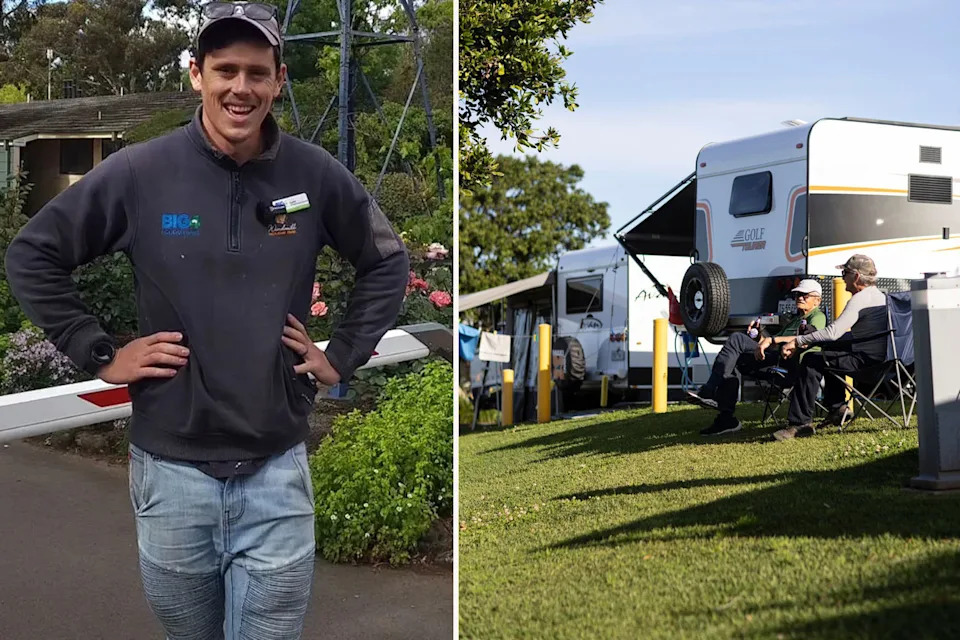
Sam Smith and his wife run Big 4 Caravan Park Moama. He says it’s quieter than usual due to high fuel prices. Source: Supplied Big 4/Reflections Holidays
Dave pointed out that many of the shops in small towns are likely run by women whose husbands are local farmers.
Sienne Mollon, who lives in Katherine, NT, agrees.
“There’s obviously a lot of conversation around farmers not being able to plant seed. That’s our big worry — the impact of the fuel on the agricultural industry,” she told Yahoo News this week.
And while she understands the need to conserve fuel in some parts of Australia, particularly in the eastern states, she said many smaller towns “rely on people doing laps around Australia”.
Alternate ways to travel
Instead of postponing travel, Dave suggests “staying a day or two longer rather than travelling every single day”. That could help conserve fuel and also help give back to the community. “You also don’t need to stay at campsites that cost $70 or $80 a night,” he said.
“There is just a massive network of free camps around Australia now. It’s incredible. And some of them have really nice facilities. You can still do this relatively affordably.”
Do you have a story tip? Email: newsroomau@yahoonews.com.
You can also follow us on Facebook, Instagram, TikTok, Twitter and YouTube.