
According to DRC Gold Refinery SA – DR Congo’s first-ever gold refinery – the country has taken a major step toward restoring its monetary gold system nearly half a century after it was largely absent from official reserve accumulation.
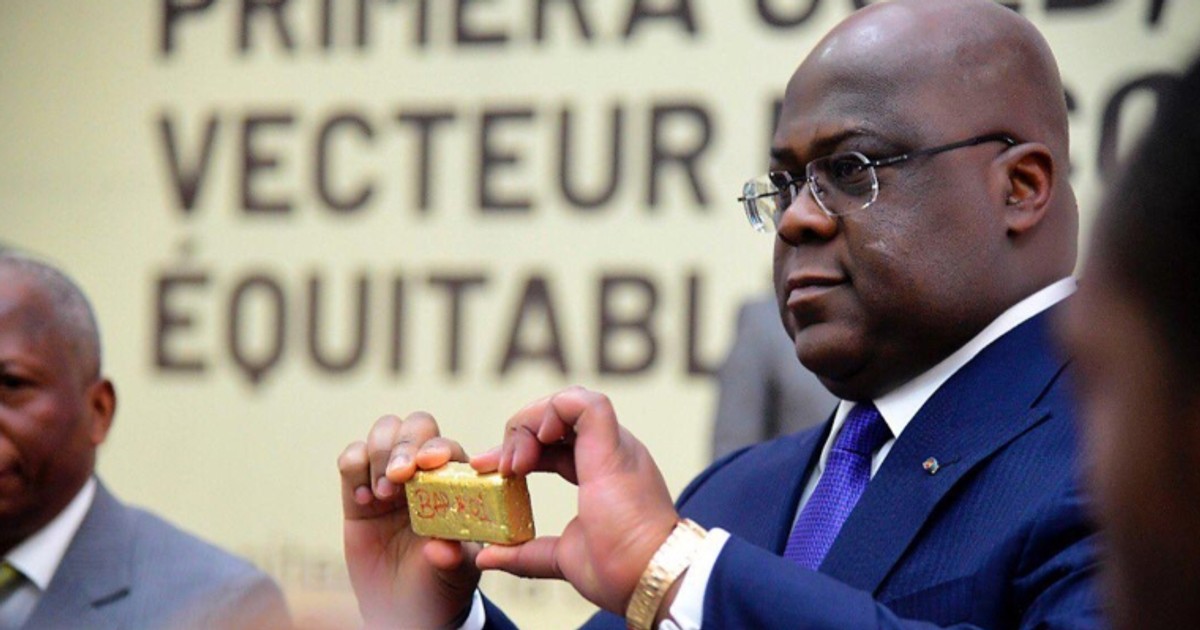
The company said the contract signed last February between the Central Bank of the Congo and Drc Gold Trading SA is already yielding results, with the state-owned entity delivering its first batches of refined gold ingots to the issuing institute.
The refinery explained that it specialises in the purchase, aggregation, and transformation of artisanal gold into refined bullion, ensuring that output from small-scale miners is processed into standardized bars suitable for official reserve use.
The delivery of these first ingots marks an important milestone, as it indicates that locally sourced artisanal gold has now been successfully converted into “monetary gold”—a category of refined bullion that can be recorded by the central bank as part of its official foreign reserves.
Historically, much of the DRC’s artisanal gold production has flowed through informal channels, limiting its contribution to national reserves.
The new system aims to reverse that trend by formalising supply chains and ensuring greater state control over gold aggregation and processing.

Central Bank of the Congo begins formal gold accumulation drive
Business Insider Africa previously reported that the Banque Centrale du Congo (BCC) has unveiled a strategic shift aimed at strengthening economic sovereignty through direct gold purchases from DRC Gold Trading SA, a fully state-owned entity.
During a Council of Ministers meeting on April 5, Prime Minister Judith Suminwa outlined the broader policy direction, describing it as a strategy to improve traceability, strengthen oversight, and formalise gold flows that have long been dominated by informal and cross-border trading networks.
Until recently, the central bank did not operate a structured domestic gold-buying programme. Instead, much of the country’s artisanal gold, particularly from eastern provinces was sold to private traders, with significant volumes leaving the country through informal or illicit cross-border channels.
This meant a large portion of the DRC’s gold wealth was never captured in official reserves or recorded in monetary statistics.
The new framework is designed to change that by ensuring that a greater share of domestic production is formalised, traceable, and retained within the national financial system.
By centralising purchases through a state-owned aggregator, the government aims to increase transparency in the artisanal mining sector while also creating a direct pipeline for converting locally produced gold into official reserve assets.