
Last week’s relief rally on Wall Street stalled on Friday ahead of the weekend’s US-Iran talks in Pakistan.
While key US indices enjoyed their best week since November, the final session saw the S&P 500 making a marginal loss, the blue-chip Dow down more, while the tech centric Nasdaq made a gain.
S&P 500: -0.1%Dow Jones: -0.6%Nasdaq: +0.4%
European stocks did better with the pan-Europe Eurostoxx 600 up 0.4% despite Germany’s Dax trading sideways.
Over the week, the S&P 500 gained 3.6%, European stocks picked up 3.6%.
Australian and Chinese shares did even better, up 4.4%, but both were outpaced by the more than 7% gain in Japan.
ASX 200 futures closed on Saturday morning pointing to another solid 0.8% gain, although that was before the talks in Pakistan collapsed.
Chief investment officer at UBS Global Wealth Management, Mark Haefele says investor sentiment continues to fluctuate amid uncertainty about the durability of the two-week Middle East ceasefire agreement.
“While volatility is likely to remain in the near term, we continue to believe that exposure to structural trends will remain a key differentiator for equity market performance over the long run,” Mr Haefele said.
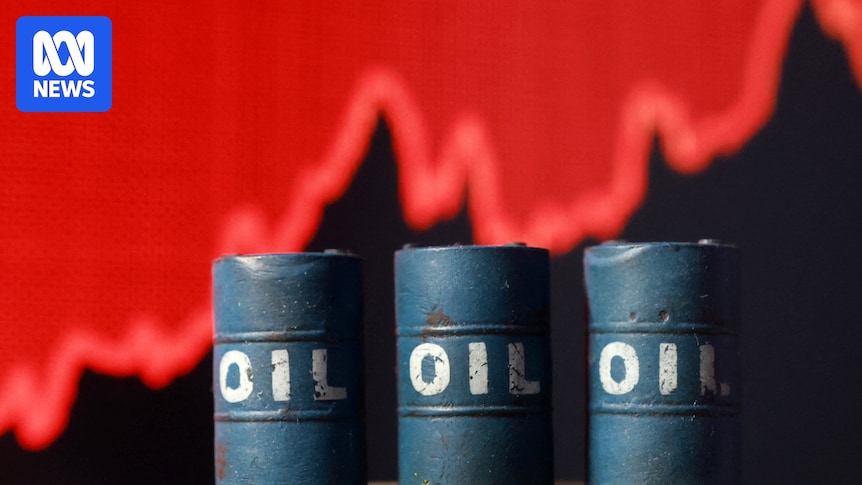
Oil prices on futures markets slipped but remain at historically high levels on the physical spot markets.
Brent crude futures: -0.8% to $US95.20/barrelWest Texas Intermediate crude futures: -1.3% to $US96.57
Both key futures contracts fell around 13% over the week.
“The key issue for the oil market is whether ship traffic through the Strait of Hormuz will resume,” Commerzbank analysts said in a weekend note.
“So far, there are no signs of this happening. If oil supplies from the Persian Gulf remain blocked, oil prices are likely to rise again.”
Traffic through the strait remained less than 10% of normal volumes as Tehran warned ships to keep to its territorial waters.
Most ships that have sailed through the Strait in the past day were linked to Iran, ship-tracking data showed on Friday.
US inflation data showing a 0.9% jump in the CPI reading for March, taking the year-on-year figure up to 3.3%, saw US Treasury yields edge higher.
Despite that, the US dollar slipped, with the Greenback having its worst week since the start of the year.
The Australian dollar has been a beneficiary of the trade gaining around 3% over the week, despite a marginal dip on Friday.
In early trade this morning, the risk sensitive Aussie has dropped almost 1% to be trading back below 70 US cents.
Another indicator of anxiety ratcheting up in global markets has been the rapid retreat of cryptocurrencies after the peace talk failed.
Bitcoin slipped around 3% to be trading just above $US71,000.
Gold lost a bit of ground (-0.3%) on Friday but picked up 2% over the week.
Copper hit a three-week high but eased a little on Friday’s close as traders juggled the competing forces of an improved demand in China against uncertainty over the fragile ceasefire in the middle east.