
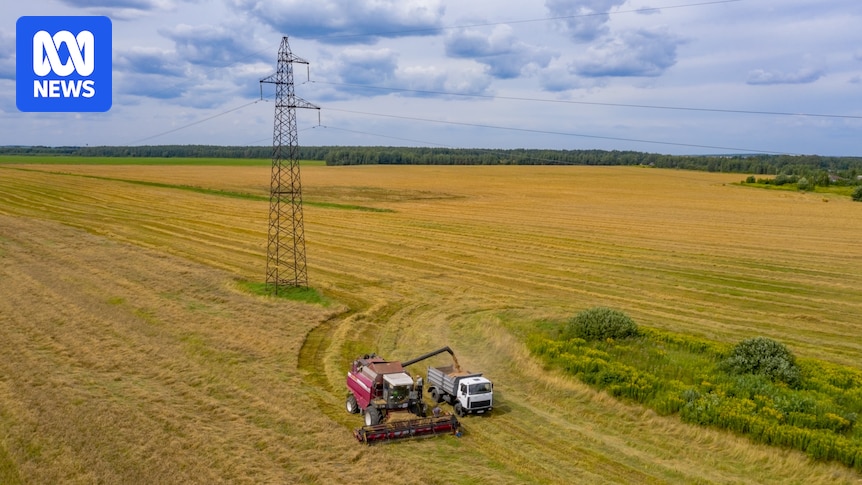
Farmer Craig McIntosh owns 4,000 hectares at Tragowel, near Kerang in Victoria’s north and has been a vocal supporter of the controversial VNI West project.
VNI West is a proposed 500-kilometre high voltage project that will run through farmland to connect renewable energy zones in Victoria and New South Wales.
Not only that, Mr McIntosh has offered up his property for the transmission lines.
“Others didn’t want it, so me and a couple of other neighbours got together and said, ‘Why not bring it through our farms?’,” Mr McIntosh said.
One reason he supports it is that he has farmed all his life around a transmission line that was built about 60 years ago, bringing power to a region that previously relied on generators.
“So it’s been 60 years and I’m thinking we’ve got to do something to catch up and if we don’t do something it could be another 60 years and we [will say] we should have built it 60 years ago,” he said.
“And you can farm under it — I’ve never known anyone to crash into [a tower] or stop farming around them.”
Survey access has been provided for approximately 40 per cent of the preferred easement, with the owners of about 170 properties across the broader project area agreeing to have surveyors on their land.
‘No government should be doing that’
Many farmers have been vehement in their opposition to the transmission lines.
Victorian Farmers Federation (VFF) president Brett Hosking’s property is within the proposed easement.
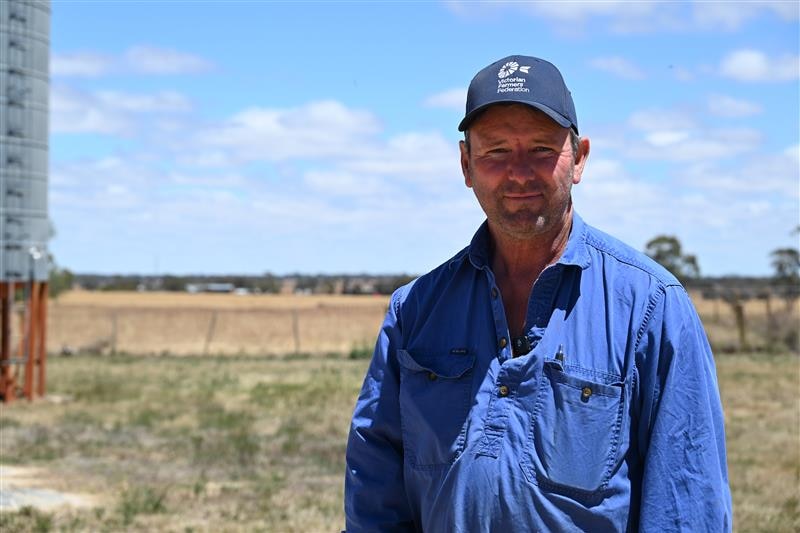
Brett Hosking says the VNI west project has been stressful for farmers. (Supplied: Victorian Farmers Federation)
“The stress it’s placed on me with VNI West coming through and the poor engagement … in fact, the lack of engagement … from VicGrid,” Mr Hosking said.
“The almost removal of my rights to even have any input over what’s going to be placed on my land without consent.
“It’s horrific, and no government should be doing that.”
As a previous board member of Farmers for Climate Action, Mr Hosking said it was not a matter of being against new electricity infrastructure in general.
“Agriculture is doing the heavy lifting when it comes to reducing emissions, yet we seem to still be bearing the brunt of every other sector of the economy [that] needs to reduce their own emissions,” he said.
Diversifying income
By hosting 10km of transmission line, Mr McIntosh would receive more than $2 million in state government compensation over the next 25 years.
He said that would diversify his income streams, and help drought-proof his property.
“Especially at the moment with rising fuel and fertiliser costs, I’m a big believer that we need different revenue streams to be profitable,” Mr McIntosh said.
It would also enable a proposed wind turbine facility on his property to proceed, generating extra income.
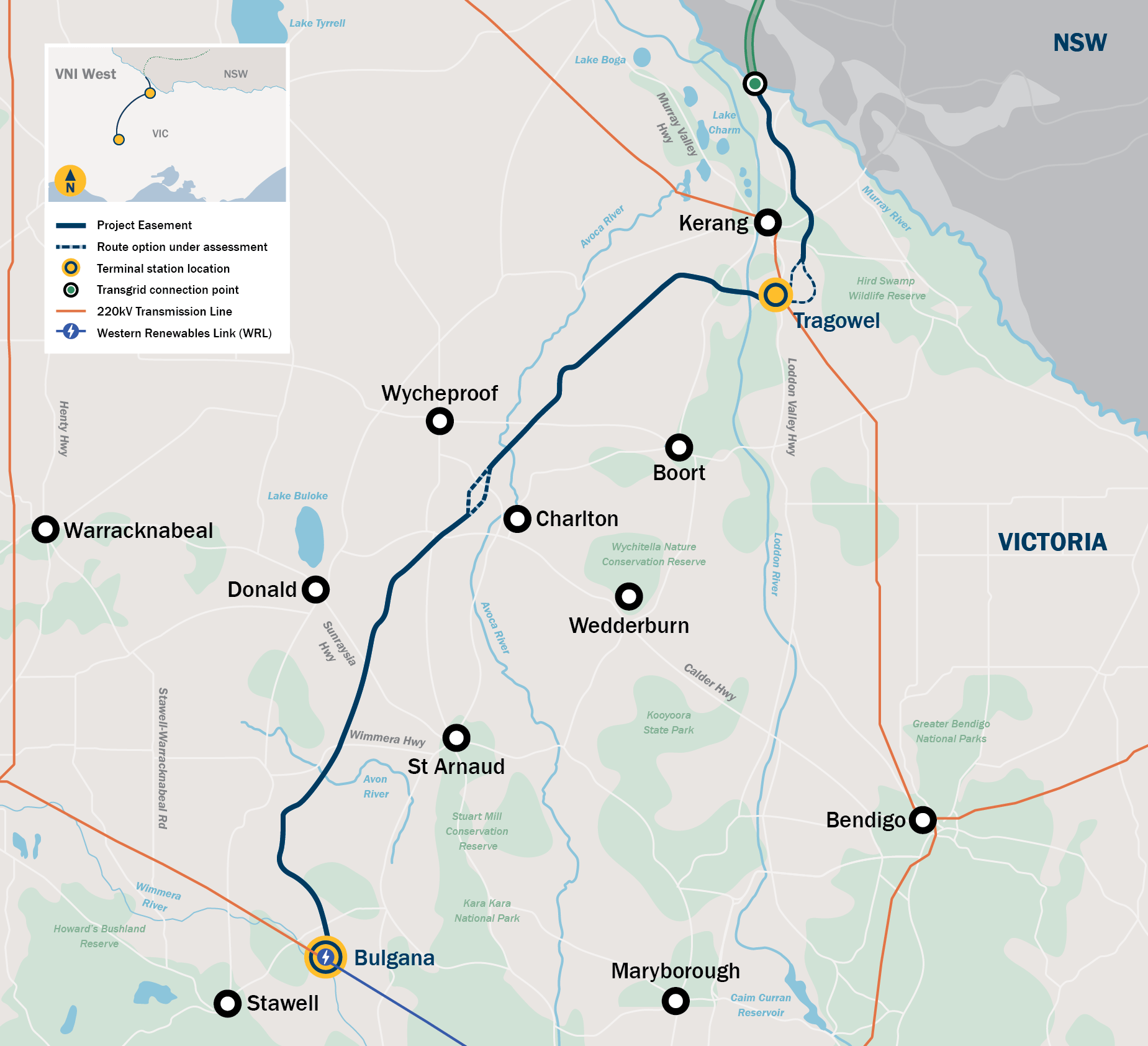
A map showing the VNI West route. (Supplied: VicGrid)
“We’ve got a project going at the moment with wind turbines and we’re pushing that quite hard, so there’s a little bit of self-interest there, because we need the powerline to plug into the wind turbines anyway,” he said.
While Mr McIntosh expected backlash for speaking publicly in favour of VNI West, he said he was not concerned.
“I’ve always been up-front with what I’m doing and how I’m doing it,” he said.’Needless and wasteful’
The Victoria Energy Policy Centre’s Professor Bruce Mountain has been pushing for an alternative plan for transmission in Victoria.
He previously criticised the bill of the project, estimating it could cost up to $28 billion over the next decade and said there were cheaper options to expand transmission capacity in Victoria.
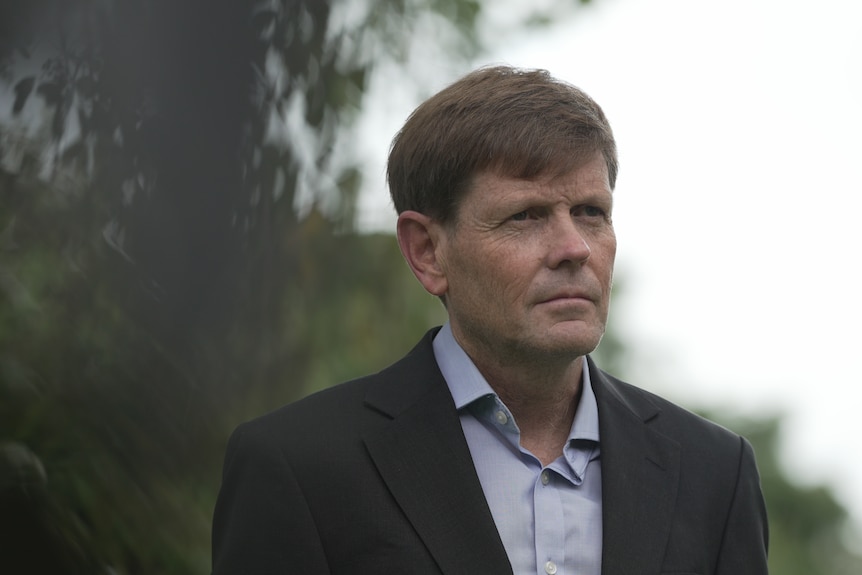
Bruce Mountain has criticised the VNI West project. (ABC News: Peter Garnish)
“All of our research shows it undermines the energy transition — it’s needless, it imposes enormous cost on consumers,” Professor Mountain said.
“It is a major policy failure.”
Project will continue
VicGrid chief executive Alistair Parker said while the goal was for voluntary access, the project would continue regardless.
“Our strong preference is to work with landholders and agree voluntary access for the work required to plan the project,” Mr Parker said.
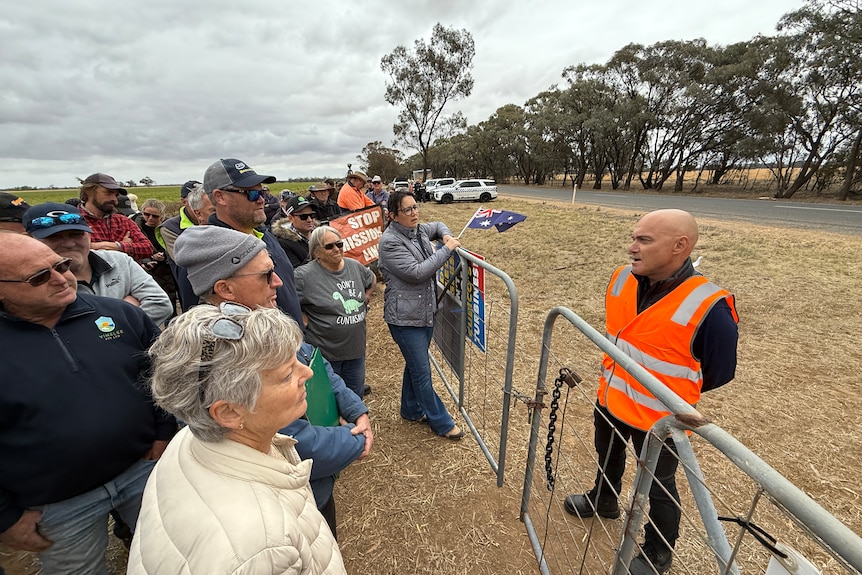
In November, VicGrid employees were blocked in their attempt to gain entry to some properties. (ABC Rural: Angus Verley)
“We will continue to engage respectfully and seek voluntary agreement, but all Victorians are relying on us to deliver this project to keep the lights on.”
Notices of proposed entry have been issued to 26 properties where voluntary access for ecology surveys has not been agreed.
If access is denied, authorised officers may issue warnings, directions or infringement notices for refusing, obstructing or unreasonably delaying entry, which may carry a fine of about $800.
If voluntary access cannot be agreed and access continues to be blocked, VicGrid can also apply for a court order for access.
According to VicGrid, refusing access does not affect whether the project proceeds, but without access, there may be gaps in information where assumptions need to be made.