
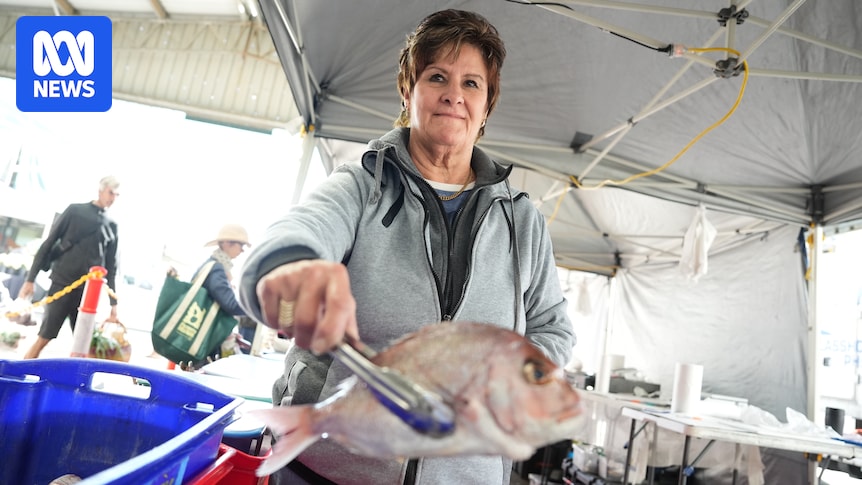
As fuel prices remain high amid the war in the Middle East, growers and fishers are among those having to make tough decisions to remain viable.
Producers at the Capital Region Farmers Market, which operates in Canberra, say the squeeze is only just beginning.
The market is a hub for growers and producers from the region and beyond, including the New South Wales coast.
Some are choosing to raise their prices and limit their travel, while others are looking anxiously towards an uncertain 12 months ahead.
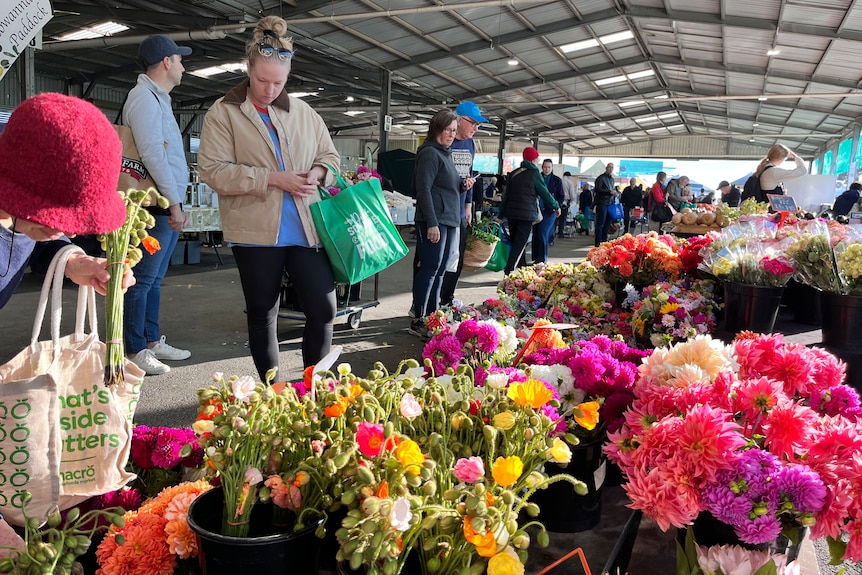
The Capital Region Farmers Market has been affected by rising fuel prices. (ABC News: Adam Kennedy)
Costs up by thousands
Vicki Abbott, who runs Narooma Seafoods, said the business has had to add 50 cents a kilo to absorb the increase.
“Our boat holds 40,000 litres of fuel. We burn about 30,000 litres a month. It’s been an increase of about $10,000 a week,” Ms Abbott said.
Longer trips out to sea to hunt for swordfish are now being reconsidered as pressure mounts.
“Two days getting there, two days getting back … we’ve said no, we’re not going there,” she said.
“So we’ll fish closer: we’ve got marlins, tuna, things like that.”
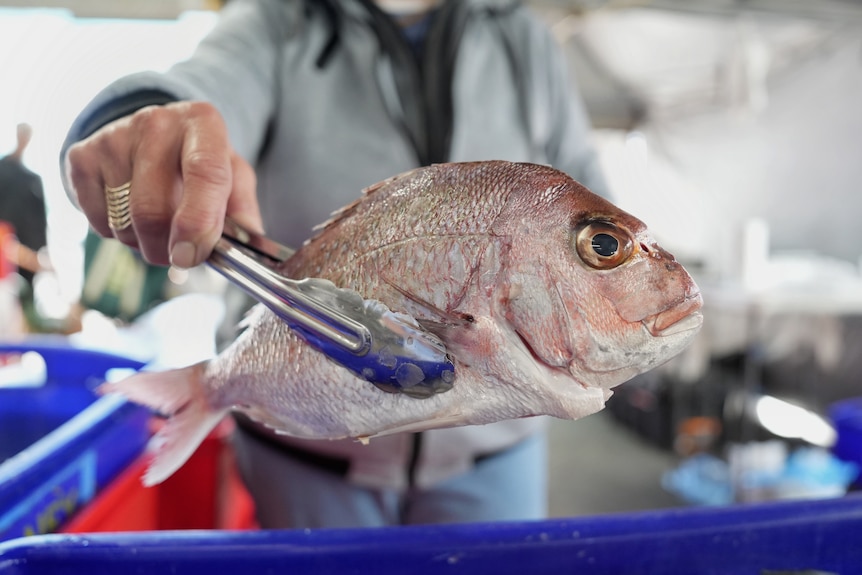
Fisher Vicki Abbott said they had stopped going further out to sea due to rising fuel costs. (ABC News: Adam Kennedy)
The operation delivers to markets in Moruya and Sydney as well as Canberra.
Ms Abbott said they were hoping to “ride it out” and that they would benefit from having just one boat.
“We’re in a better position than a lot of the boats; some of the companies have got three or four boats,” she said.
“Fuel in some places has been restricted, so they’d have to tie up three boats and just operate with one, which means laying off a crew.”
Planning for harvest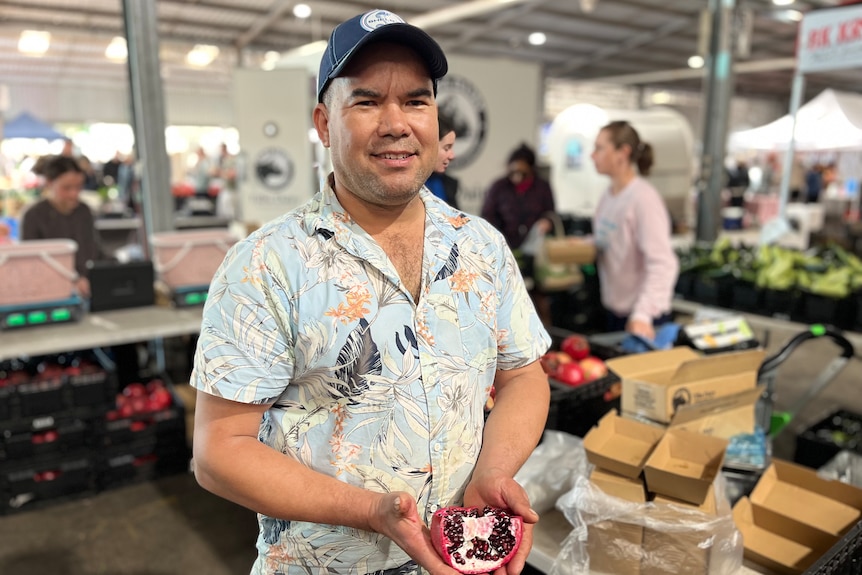
Rahmatullah Jafari has been holding back from passing on costs to the customer. (ABC News: Adam Kennedy)
The impact is also being felt by smaller local growers like Rahmatullah Jafari, who drives for a total of four hours using diesel fuel to sell his pomegranates.
“All our machinery operates by diesel. It’s very bad,” he added.
While the price of diesel has doubled, Mr Jafari has hesitated to pass that cost on to his customers.
“I don’t want to upset the customer,” he said.
“They always come to me, but I don’t know until when I can continue this price.”
Caroline O’Clery produces olives on her small farm, and collects her diesel using jerry cans whenever she comes into town.
“Of course, people think you’re hoarding,” she said.
“I’m actually trying to keep my tractors full, because harvest is coming up next month.”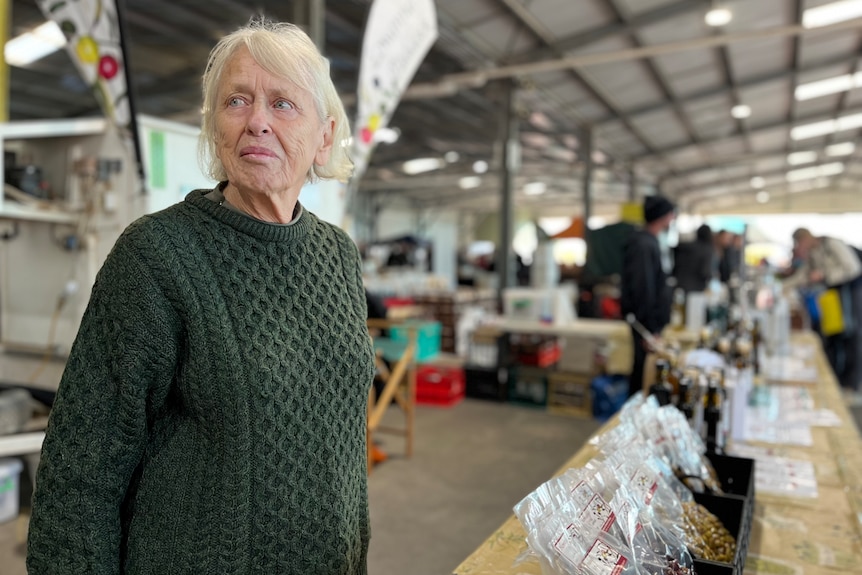
Caroline O’Clery has been using jerry cans to collect her diesel. (ABC News: Adam Kennedy)
Strain goes from fuel to fertiliser
While Paul de Jong does not have as far to travel as other farmers, his overall costs have still increased by about 10 per cent.
But the seedling grower fears the flow-on effects for fertiliser could soon become a problem.
“I use a slow release fertiliser, and that one’s made in America … but I’m talking to the suppliers who import it [and] they’re restricting access a little at this point,” Mr de Jong said.
“I’m trying to make sure that I’ve got enough fertiliser by buying as early as possible, but they are being very careful about releasing it because they’re expecting shortages.”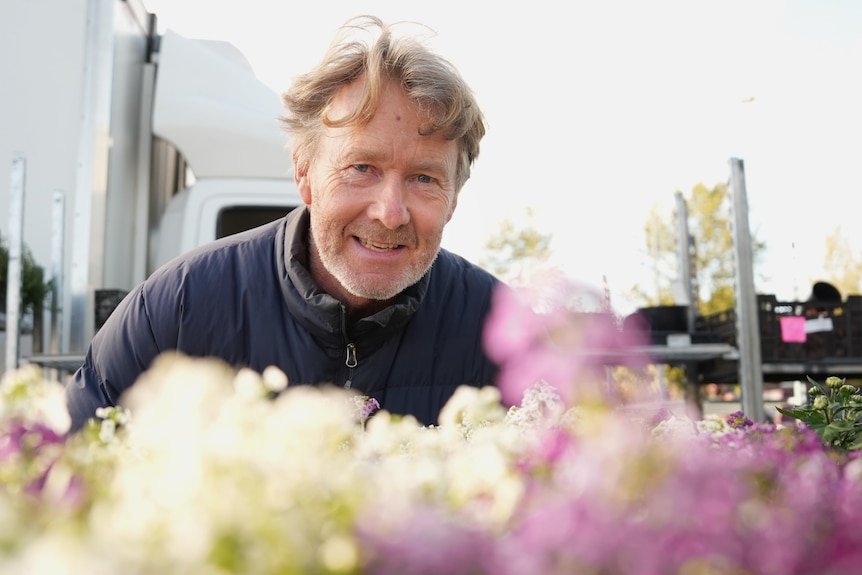
Paul De Jong is concerned about delivery of fertiliser to Australia. (ABC News: Adam Kennedy)
Potato farmer Luke Bartlett also fears fertiliser shortages will compound the fuel crisis.
“That’s our biggest worry when it comes round to next season — can we get fertiliser?” he said.
“Even customers who are getting seed off us this year are pulling back because of diesel and fertiliser shortages.
“It’s just going to affect the whole chain.”
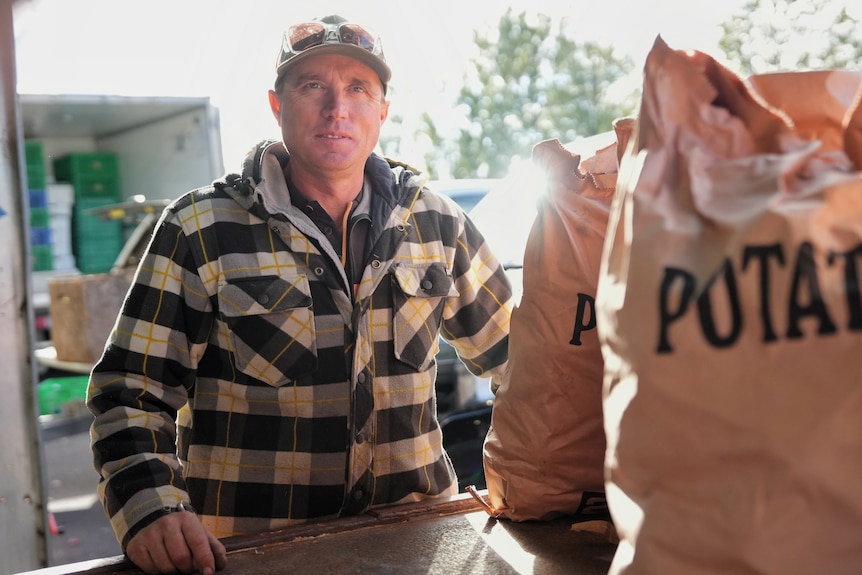
Potato grower Luke Bartlett has had to raise his prices. (ABC News: Adam Kennedy)
Mr Bartlett said he’s had to put his prices up this season just to cover costs.
“We’re starting to harvest and the fuel price is high, as we all know,” Mr Bartlett said.
“We’re using diesel a lot in our tractors and machinery, so it’s an everyday thing really.”
Mr Bartlett said the next 12 months would be “pretty scary”.
“A lot of growers are going to pull the pin, because the risk is just too high — fuel, fertiliser,” he said.
“It sort of outweighs the return.”
Loading…