
Even after three decades with an NHL team, Anaheim Ducks CMO Merit Tully still views Orange County as an emerging hockey market in which fan acquisition requires a stronger push than in the sport’s traditional hotbeds. It’s exactly the type of challenge the NHL’s Industry Growth Fund was designed to address.
The IGF was introduced in the collective-bargaining agreement signed by the NHL and NHLPA in 2013 with the stated purpose of helping “lower-grossing clubs that may need supplemental support to allow them to make long-term improvements in their revenue generating potential and operational efficiency.”
While the program’s broad mandate has always allowed a range of uses, early IGF-backed projects largely focused on increasing youth participation. That is beginning to change, as teams such as the Ducks tap the fund for a broader range of fan engagement and marketing efforts.
“As you look at the IGF, I think the league has looked at alternative ways to have people become fans of the sport,” Tully said. “It doesn’t just have to be with a stick in hand or a stick and ball outside. There are other ways that people can find passion for the game.”
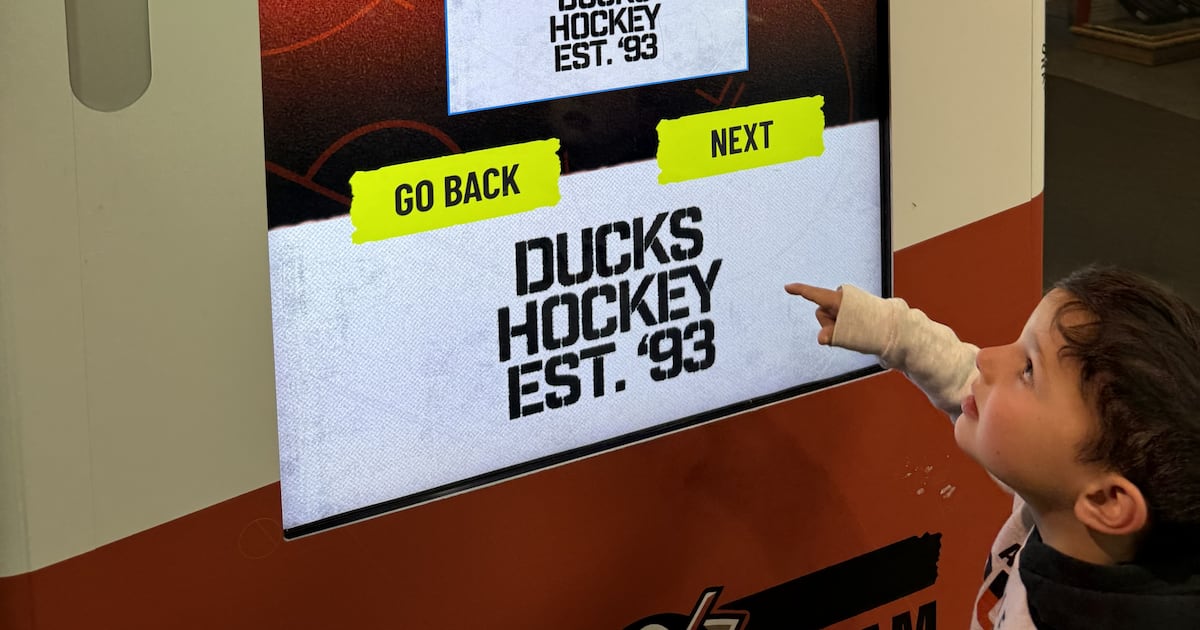
This season, the team has rolled out an augmented reality activation allowing visitors to its skating rinks and community events to pose virtually for photos with Ducks players or the team’s recognizable mascot, Wild Wing.
Users stand in front of a unit with a large touchscreen and 4K camera, which the Ducks purchased from Baltimore-based Balti Virtual along with a two-year software license. They then enter their email address and phone number to receive their image, adding them to the team’s marketing database.
Since its introduction, the NHL and NHLPA have jointly distributed more than $240 million through the Industry Growth Fund. Funding was initially set at $20 million per year and has since increased to $30 million, with all 32 clubs contributing equally to the fund.
Grants are administered by a committee representing both sides. Teams can apply for up to three IGF grants during each two-year funding cycle, with projects from lower-revenue clubs mostly receiving priority. Individual grants generally range from $200,000 to $1 million, depending on a club’s revenue tier, the project’s potential to generate revenue or bolster brand value, and whether it can be scaled across other teams.
As of 2023, 58% of that total had been allocated to club-level projects, with the remainder supporting leaguewide initiatives such as learn-to-play programs, STEM education and women’s hockey.
Of the funding awarded to clubs, roughly 11% has been used for marketing initiatives involving mobile vehicles — such as gaming trucks — and digital apps. Rob Knesaurek, who serves as the NHL’s senior vice president for hockey development and industry growth, said the use of IGF grants for such efforts has emerged and surged within the past five years as the league and union expand their view of how the fund can be used.
“Instead of going and only talking to the youth programmer or the community person at a club, we started going into the marketing department, we went to the CMOs, we went to ticketing, we went to the president saying, ‘This IGF capital is to grow the game, and that’s how we want it to be utilized,’” Knesaurek said.
The Ducks’ AR activation is just one tech-forward project supported by the IGF in recent years.
The New Jersey Devils and Columbus Blue Jackets have used grants to launch esports programs. The Buffalo Sabres have implemented new arena entry technology. The Winnipeg Jets received one of the fund’s larger allocations to develop a mobile app centralizing team news, ticketing and a rewards program that Knesaurek said is now generating significant sponsorship revenue.
Marty Walsh, executive director of the NHLPA, said the program has “evolved into something bigger than the initial beginnings of it,” while stressing that its commitment to community and participation-based initiatives remains unchanged.
Just last week, for example, the fund allocated $2.5 million for the construction of a clubhouse for the Variety Boys and Girls Club of Queens that will feature a dedicated hockey space, as well as an undisclosed amount to the Philadelphia Flyers for a program in local public schools to support students’ physical well-being through in-class activity.
The league and union are now reviewing applications from clubs for the program’s sixth two-year cycle, and Knesaurek said teams are leaning further into innovation.
“We have seen things that are new to us that require us to go a little bit deeper and explore,” Knesaurek said. “Generally, the IGF is seeding capital for these new ideas. We’re encouraging them to bring these new ideas to light. It’s test capital, so if it works in one market, we can then expand it amongst other interested groups in the league.”
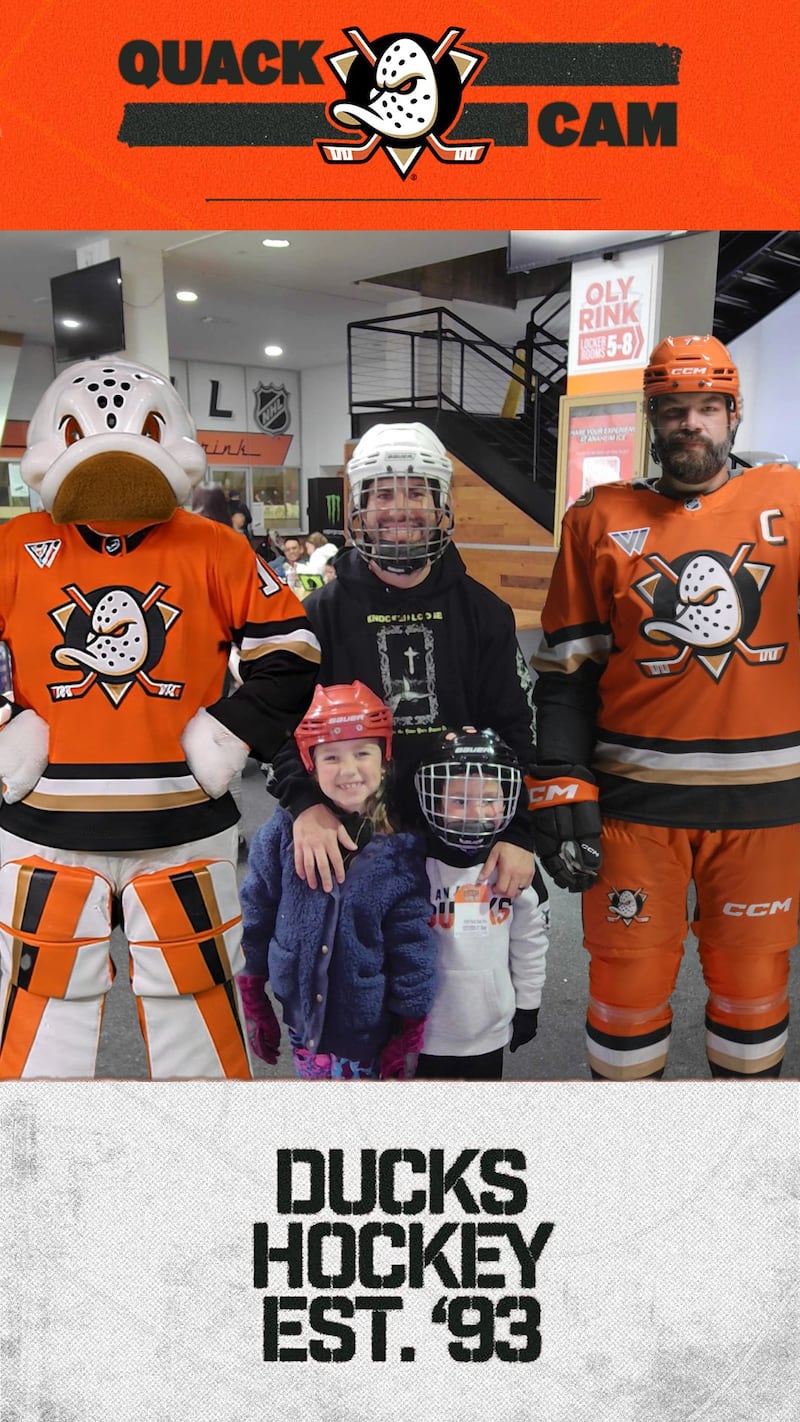 The Ducks’ new augmented reality activation allows visitors to pose virtually for photos with Ducks players or the team’s mascot. Anaheim Ducks