
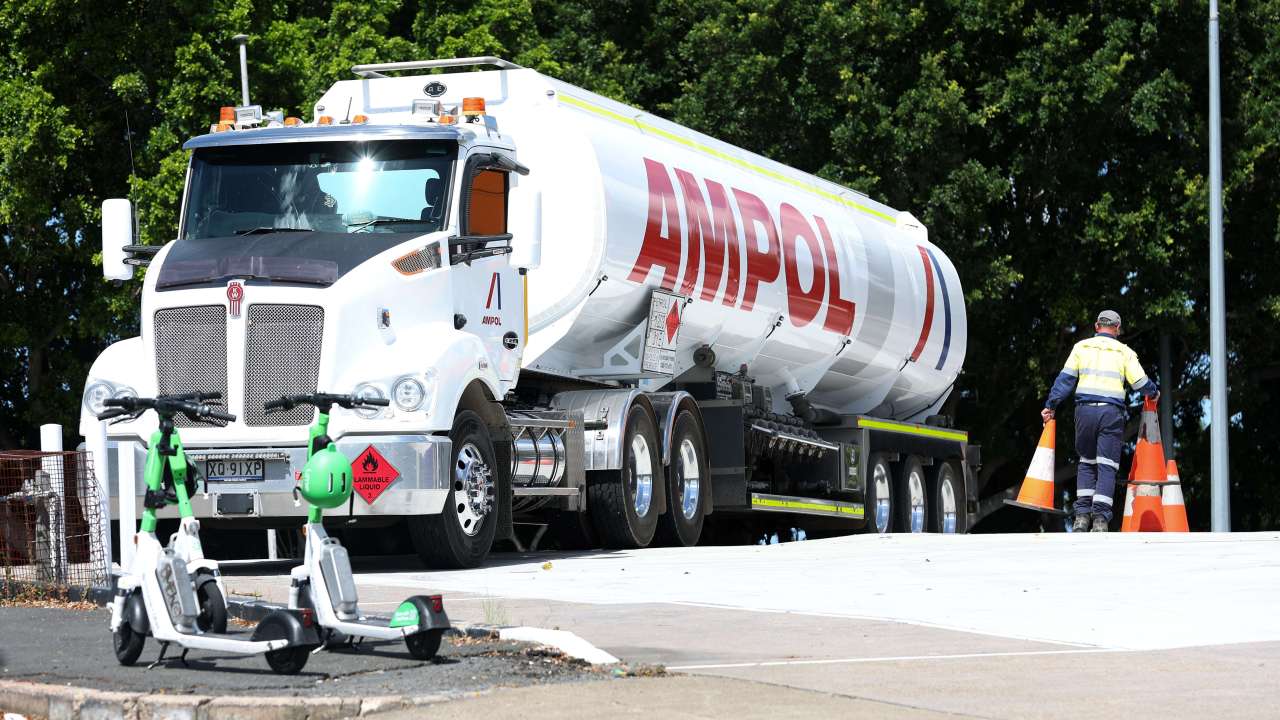
Australians would face higher fuel costs in the long term if the nation purchased more fuel tankers to prepare for a “one-in-50-year” oil crisis, an expert has warned.
Demand for fuel skyrocketed when Iran effectively closed the Strait of Hormuz – with regional Australia suffering intense shortages as it remained at the end of the fuel supply chain.
It raised questions about whether Australia was equipped to handle supply chain shortages and sparked calls for more tankers to deliver fuel to the regions.
RACQ principal economic specialist Ian Jeffreys warned against oversaturating Australia’s fuel supply capabilities, saying it could cost consumers in the long term.
“Do we need to bolster our supply chains? Look, I think not, because this is a one-in-50-year event,” Mr Jeffreys told Business Now.
“Those problems have largely been addressed and if we … doubled the tanker fleet, we’d have a lot of tankers sitting around unused most of the time and we’d all be paying for that.
“That’s the cost of a more robust supply chain. Ultimately (it) would be paid for all of us in higher fuel prices.”
He said the current fuel supply chain operations were best equipped to service Australians in the long-term, despite the brief supply chain disruption.
“The fuel industry, like every other industry, runs a just-in-time supply chain. That’s proven to be the most efficient and the most cost-effective way of delivering product to market,” Mr Jeffreys said.
“Unfortunately, when we have an event such as this, and this is a one-in-50-year event, we do see that supply chain demand exceeding the capacity of the supply chain to deliver.”
His call comes as more uncertainty about oil supply remains after talks between Iran and the United States collapsed.
Iran continues to keep the Strait of Hormuz closed to the vast majority of ships, despite striking a brief ceasefire last week and agreeing to open the strait.
The ongoing fuel shortages are felt across service stations around the nation.
Energy Minister Chris Bowen on Monday confirmed NSW has 109 fuel stations without diesel while Victoria has 34 stations without diesel and 17 without unleaded.
Queensland has 36 without diesel and 20 with no unleaded, while South Australia has four with no diesel and 17 with no unleaded.
WA has seven without diesel and 23 with no unleaded and Tasmania has 10 lacking any diesel and four without unleaded.
NT has four with no diesel and two with no unleaded and the ACT has one station without diesel.