
Moneywise and Yahoo Finance LLC may earn commission or revenue through links in the content below.
Would you ask your child to share in their inheritance? For Eileen, who is in her 60s, this question is not hypothetical.
Eileen’s husband currently receives a check every quarter from his family’s bloodline trust. But the couple recently discovered that if he dies before she does, Eileen won’t inherit his share. Rather, the $2 million trust will pass on to the couple’s daughter, who is next in his family’s bloodline.
In other words, Eileen will receive nothing.
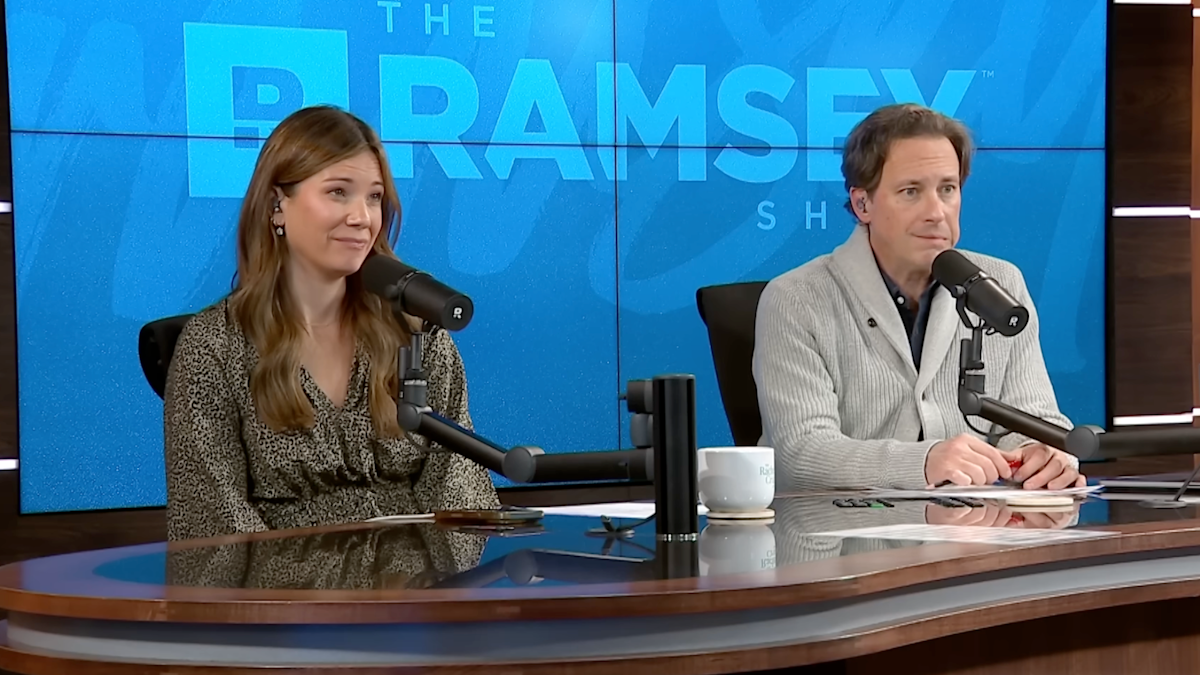
“We’re just wondering if it would be ethical for us to ask her to split the inheritance if he pre-deceases me,” asked Eileen, who lives in Albany, N.Y., during a clip of The Ramsey Show posted to YouTube in March 2026 (1).
But the hosts told Eileen that asking their daughter for a cut of her inheritance feels “gross.” Here’s what the couple could do instead (and what they should have done earlier).
Bloodline trusts, also called dynasty trusts, are used to protect family wealth — particularly as blended families become more commonplace.
For example, while about 1.8 million Americans got divorced in 2023, two-thirds of divorced Americans will go on to marry again, according to an analysis from the Pew Research Center (2). And more than 1 in 5 (21.2%) U.S. couples who lived together in 2021 had children from at least one previous relationship, according to U.S. Census Bureau data (3).
However, most people have no idea bloodline trusts exist or what they actually mean for a surviving spouse’s financial security.
The benefit of a trust is that it bypasses the probate process, and creditors can’t go after trust assets. A bloodline trust, more specifically, can also preserve family wealth for direct descendants (the bloodline), such as children and grandchildren, so assets stay in the family (4).
Once the trustor (the person who creates the trust) passes away, the trust becomes irrevocable. In other words, the terms are final and can’t be changed.
A bloodline trust also protects family wealth from a spouse who divorces a direct descendant and then remarries. That way, the new spouse or stepchildren won’t divert the family’s assets. But it disinherits a beneficiary’s spouse and other loved ones, too, simply because they don’t share the same blood.
Story Continues
And it can backfire.
For example, if a couple has two children — one adopted — the “bloodline child” would inherit the family wealth while the adopted child would receive nothing.
In most states, a surviving spouse has elective share rights (typically 30% to 50% of the estate) that can override a will — a law intended to safeguard the surviving spouse from being left with nothing (5).
But bloodline trusts are structured to avoid this. Many spouses, like Eileen, may not realize they don’t have a legal right to those assets. And there’s nothing her husband can do about it, either. As a beneficiary, he can’t alter the trust or name other beneficiaries.
So, should they really ask their daughter, who is now 24, for a cut — if the situation comes to pass?
“I personally would feel gross about doing that,” said cohost Ken Coleman (1).
Ideally, if the couple wanted to ensure the surviving spouse would be well taken care of, they would have purchased life insurance long ago (since premiums are typically more expensive if you buy insurance later in life). That’s because life insurance provides a guaranteed, tax-free death benefit with immediate liquidity — meaning that it doesn’t go through probate.
If you want to ensure your family isn’t hit with unexpected costs after your death, consider signing up for term life insurance from Ethos.
Ethos is rated “Excellent” on Trustpilot, and has an A+ rating from the Better Business Bureau (BBB). The platform offers simple and affordable coverage for a set period of time — typically between 10 and 30 years.
As a licensed third-party insurance administrator, Ethos has joined forces with some of the industry’s top insurance carriers, such as Banner Life, TruStage Financial and Ameritas Life Insurance.
Ethos also gives you the flexibility to select coverage amounts ranging from $2,000 to $100,000. Premiums start at just $9.80 a month and are guaranteed throughout the term.
You can get coverage in just 10 minutes online or by phone, with no medical exams or blood tests required.
It’s clear from their situation that Eileen and her husband relied too heavily on the bloodline trust. Instead of making forward-looking decisions like taking out a life insurance policy, Eileen and her husband were counting on that trust money to keep coming in.
Currently, they have about $350,000 in savings, including 401(k)s, with about $99,000 left to pay on their mortgage. That might seem like a lot, but it is less than half of the “magic number” most Americans believe they need to retire — about $1.26 million — according to a 2025 survey by Northwestern Mutual (6).
Since both plan to keep working during their 60s, what can they do in the meantime?
“Whatever you guys can do over the next seven to 10 years to invest a lot of money, that’s going to help you be far more comfortable in your 70s and 80s,” said Coleman.
For example, instead of asking their daughter for a cut of her inheritance at her father’s death, they could take the trust money he’s already receiving each quarter and put it into an account in her mother’s name.
Coleman says their focus should be on investing as much as they can at this stage, so that their current income can “turn into a sizable chunk” and provide his wife with a comfortable retirement — should she outlive him — without relying on his family’s bloodline trust.
— With files from Vawn Himmelsbach
Join 250,000+ readers and get Moneywise’s best stories and exclusive interviews first — clear insights curated and delivered weekly. Subscribe now.
We rely only on vetted sources and credible third-party reporting. For details, see our editorial ethics and guidelines.
@TheRamseyShow (1); Pew Research Center (2); U.S. Census Bureau (3); Trust & Will (4); Sallen Law (5); Northwestern Mutual (6)
This article provides information only and should not be construed as advice. It is provided without warranty of any kind.