
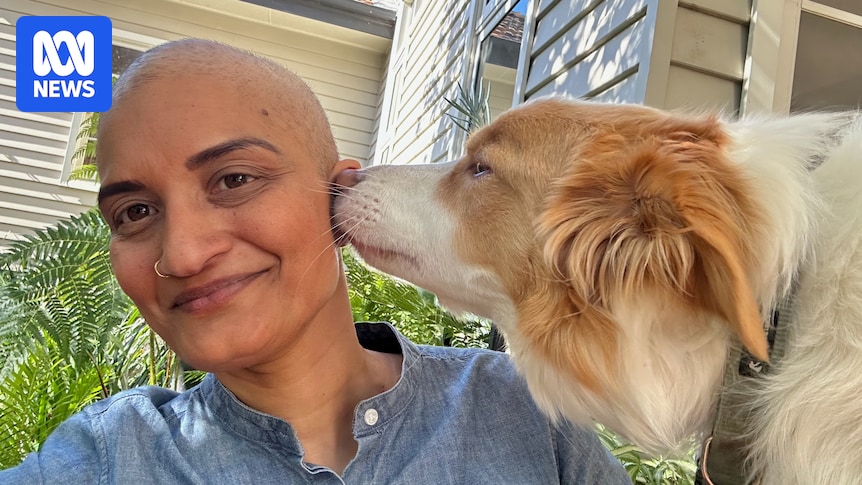
When Aarthi Ayyar-Biddle needed a single mastectomy after being diagnosed with breast cancer, she wondered if removing both breasts would be best.
After weighing up her options, the 45-year-old from Canberra/Ngunnawal land decided to keep her healthy breast and opted against reconstruction, meaning she joined what’s known in the community as a uniboober.
“I am mum of two teenage boys, who I had been able to breastfeed, and I really wanted to model to them what it meant to have a positive body image, with an asymmetrical body and being really confident in that.”
Almost a third of women in Australia who have a have a mastectomy — surgery to remove the breast — have a breast construction afterwards.
ABC podcast Ladies, We Need to Talk spoke with Aarthi about her decision to not reconstruct, and how she has embraced her asymmetrical body.
These are her words.
‘It was all very, very fast’
I had just come back from a lovely, relaxing summer break and was getting ready for work one morning.
I noticed what felt like a lump behind my nipple in my right breast.
Diagnostic tests came back as invasive ductal carcinoma.
I was recommended chemotherapy as my first treatment and get that rolling as soon as possible, followed by surgery and then radiation.
From diagnosis to starting chemotherapy, it was about two to three weeks. It was all very, very fast.
The choice was clear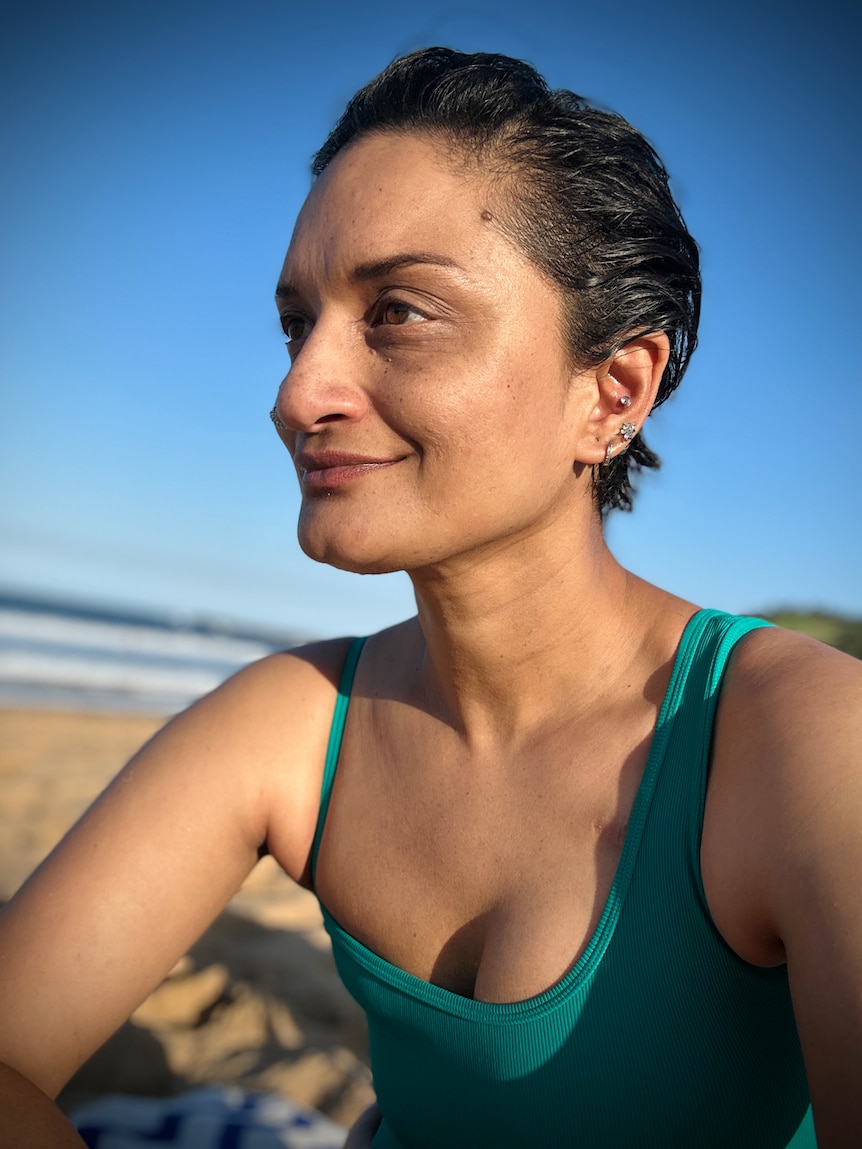
Aarthi has embraced her new body. (Supplied)
After chemotherapy, it was pretty clear — although it had shrunk the tumour — I would need the full mastectomy [on my right breast].
It was pretty confronting, but at the same time I’d had that time going through chemo to sort of mentally prepare myself.
I’d heard about women who’d had a lumpectomy and then ended up having to go back for extra surgeries anyway because the margins hadn’t been cleared.
At that appointment, when I was told I would need to have a mastectomy, I asked the question: “Well, can I have a double mastectomy? Because I don’t want to have to go through this again.”
My doctors basically said if you really want to have the double, we’re not going to say no. But we really recommend you just have a single at this point.
And there were a few reasons for that.
I’d had the genetic testing done and was found not to have any BRCA gene mutation, or any genetic involvement with my cancer.
(If a woman has the BRCA gene, the risk of her getting breast cancer in her lifetime is more than 70 per cent.)
Having a double mastectomy would mean an increased risk of infection as well, and possible delayed recovery time, which would then delay the radiation I was going to be having afterwards.
I was pretty comfortable with the decision to just have the single mastectomy.
Deciding not to reconstruct
I wasn’t super keen on an autologous reconstruction.
(An autologous reconstruction, also known as flap surgery, uses a patient’s own skin, fat, and sometimes muscle from areas like the abdomen, back, or thighs to rebuild a breast mound.)
I’d had a caesarean for my first child and had taken a long time over the years to get back to being physically fit and active.
I felt really strong in my own body and just didn’t want to do anything that might compromise that.
I had lots of conversations with my husband about what it would mean to have only one breast. And how I would feel having one sort of natural breast and then one that was a reconstructed breast. Thinking about the way that it would sit on my chest, versus the way that my other breast is sort of naturally shaped.
He just said, “I will always love you for you, and you’ll always be beautiful to me no matter what.”
[I also asked the breast cancers nurses] if I have a reconstruction, what are the chances I will need to have further surgeries and just be in hospital for longer?
And they said, in your case, because you still have to have radiation, there’s at least a 50 per cent chance.
I just went OK, no, I just don’t want that for myself. Every surgery I have from here on needs to be with the purpose of either saving or prolonging my life.
Pressure to reconstruct or go fully flat
I probably felt more pressure from just seeing the different versions of “normal bodies” just in the public and on social media.
Why Kate chose to ‘stay flat’ after breast cancer
And also, growing up as a South Asian woman, you’re sort of ingrained with a very fixed ideal of what the female form looks like.
I think there’s a little bit of this idea that, “Oh well, if you’re having one removed, you might as well have both.”
And I’ve probably pushed back against that a little bit. While there is this feeling that it’s really freeing to have both removed, and you can bare your chest in public and celebrate not having these breasts, which could get cancer down the track, I think it’s really important to not rush into that decision.
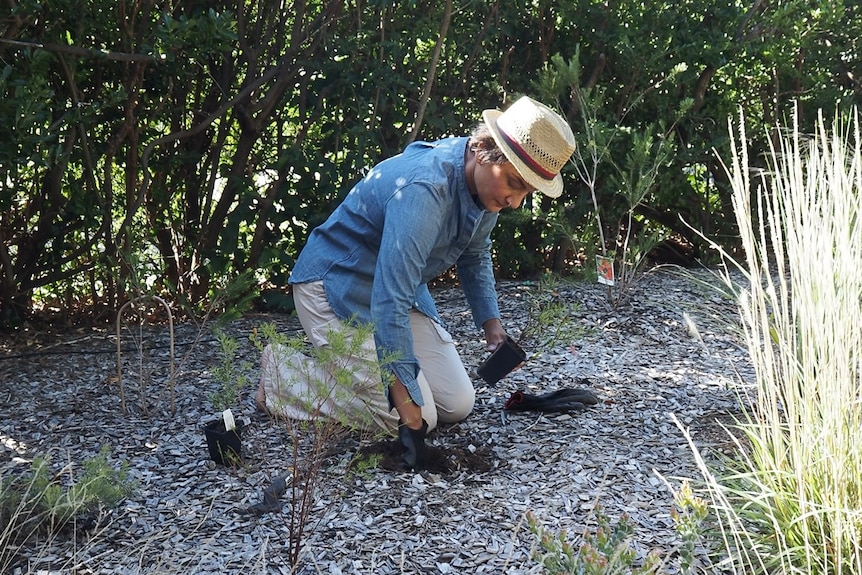
Aarthi likes to focus on all the things her body can do, like enjoy gardening. (Supplied)
And be really clear about what potential benefits there might be to keeping the healthy breast.
It sounds weird, but I still enjoy having one breast. It’s still enjoyable to have that sensation during intimacy.
It’s also helpful for the times where I do want to wear a bra with a prosthesis. It just seems to somehow help keep things in place.
A new normal
Having one breast really feels like the new normal, and I really feel like it’s been the best possible decision for me.
I’m thinking of getting some body art to commemorate what I’ve lived through — probably something to do with nature and flowers.
I’m a gardener, and gardening is one of the things that kept me sane during my treatment last year.