
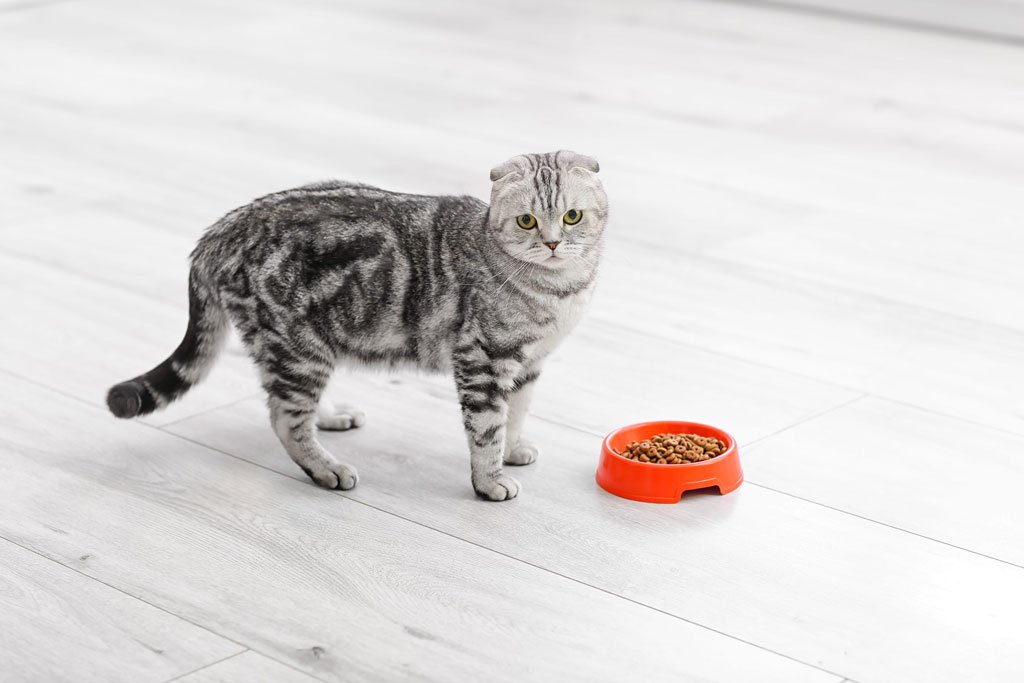
 Photo: serezniy 123rf
Researchers in Japan have shown that domestic cats may stop eating—often leaving food unfinished—not only because they are full, but also because smell plays an important role in regulating feeding motivation.
The study led by a team at Iwate University—and published in Physiology & Behavior—suggests that feeding behaviour in cats is dynamically influenced by olfactory habituation and dishabituation.
In a series of controlled feeding experiments, cats were given food in six consecutive cycles, each consisting of a 10-minute feeding period followed by a 10-minute interval.
The researchers found that when the same food was repeatedly presented, cats gradually reduced their food intake over successive cycles. In contrast, when different foods were presented sequentially, the decrease in intake was significantly attenuated.
In further experiments, the researchers tested whether the decline in intake caused by repeated presentation of the same food could be reversed by introducing a different food. Cats were given the same food for five consecutive trials and a different food in the sixth. Intake decreased significantly from the first to the fifth trial, but increased again when a new food was introduced, regardless of whether it was more or less palatable than the original one.
Remarkably, even without changing the food itself, simply introducing the odour of a different food restored intake. The researchers also found that continuous exposure to the same food odour between feeding cycles led to a further reduction in subsequent food intake. However, this effect was mitigated when a different odour was introduced during the intervals.
“These findings suggest that cats do not stop eating simply because they are full,” Professor Masao Miyazaki said.
“Rather, their feeding motivation decreases as they become accustomed to the smell of the food, and it can be restored by introducing a new odour. Sensory novelty, especially olfactory novelty, can reactivate feeding motivation in cats.”
This study provides the first experimental evidence that odour-dependent habituation and dishabituation may help explain the characteristic pattern of frequent, small meals in domestic cats.
Beyond advancing our understanding of feline feeding behaviour, the findings may also have practical implications. They could help inform new feeding strategies for cats with reduced appetite, improve nutritional management for ageing or sick cats, and support the development of pet foods designed with olfactory variation to help maintain feeding motivation.