
This story is part of Peak, The Athletic’s desk covering the mental side of sports. Sign up for Peak’s newsletter here.
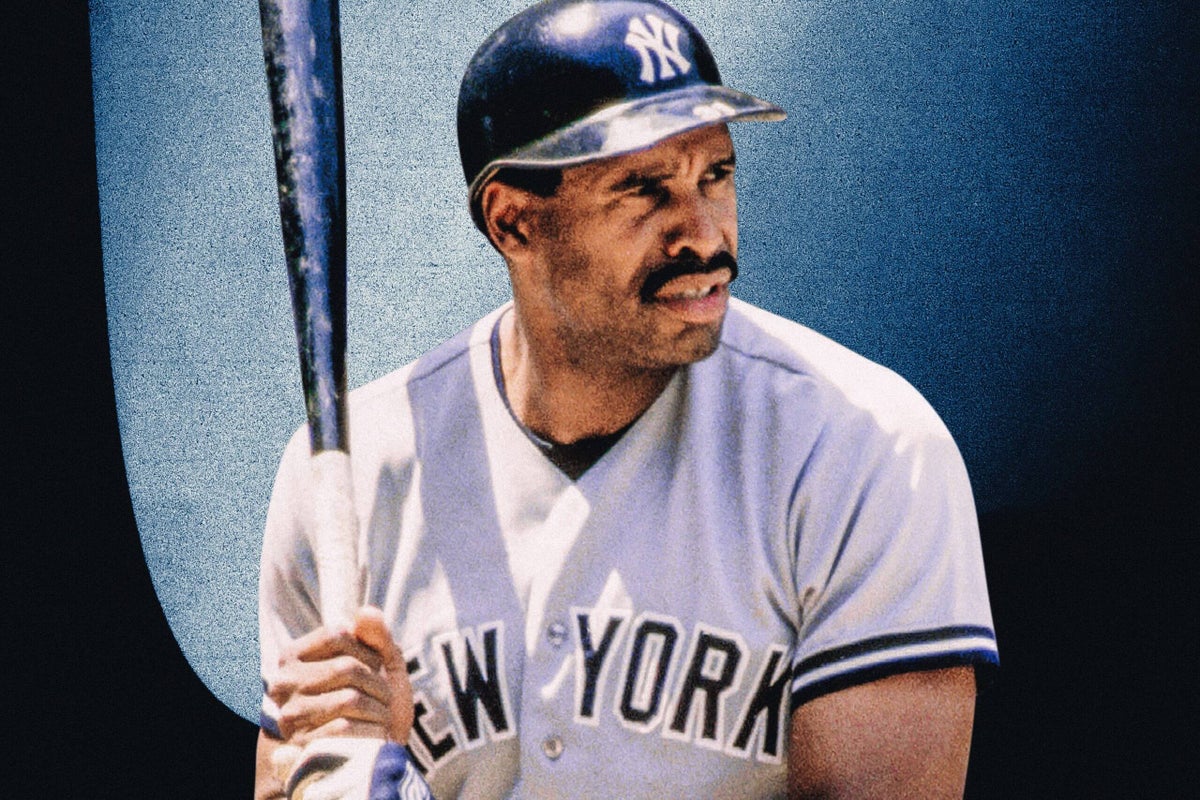
Dave Winfield played 22 years in Major League Baseball, starring for teams including the San Diego Padres and New York Yankees, and was inducted into the Baseball Hall of Fame in 2001. His memoir, “Touching All the Bases,” will be released in September.
These are the three best leaders he came across during his MLB career.
Marvin Miller, executive director of the MLB Players Association
He is one of the most impactful leaders in the history of professional baseball.
I was in the league for nine of his 16 years as executive director. He just solidified my way of thinking about the relationship between Major League Baseball and the players. I was immediately drawn in. He was soft in his words, but he talked about fairness and what it took to accomplish things in negotiations.
I was learning how to become the CEO or the executive of my own professional life.
I was not only in meetings with him, but I sat on long flights next to him and we talked about the issues: professional sports, professional baseball, bargaining. He was a mentor to a large extent and impacted my way of thinking and how much time I allocated to the benefit and well-being of the players. I guess you could multiply that many times for all the people I was able to impact, not only as a player representative but in later years working with the union.
Back then, players didn’t make anything. You had to get a job in the offseason. No multiyear contracts. No free agency. No arbitration. Nobody retired to their yacht or their ranch. It wasn’t like that.
He just had the ability to understand the situation, share it among the members and let the members know that it was all about them; that they were going to be the leaders and, many times, the spokespersons for what they were trying to accomplish. It wasn’t Marvin always up front — not at all. And he certainly didn’t have the loudest voice. But it’s not the volume of your voice that matters; it’s your wisdom and your ability to convey that. People pick that up.
A lot of the key, most influential players in the game stepped forward and stepped up to be the voice for the other players when it could have been perilous to a player’s career back then.
His power was organizing and educating the players and having them take charge. He could educate people to take charge of their own destiny.
Frank Robinson, player-manager for Cleveland
We were never on the same team, and he never managed me. However, there were plenty of stories and lore about Frank Robinson. The grit and the hard-nosed play. He was one of those guys: Yeah, you can hit me with a pitch, but I’m going to do some damage to you.
Frank was the first Black manager in Major League Baseball in 1975. And to be a player-manager? That’s doubly hard, and I know they weren’t paying him twice as much.
Frank was a legend on the field; he is a Hall of Famer. I heard this story: When Frank was the player-manager for Cleveland, one of his players was coming up to bat in a critical situation late in a game. Frank put himself in the game to hit — and I believe he hit a home run. The quote I heard was: “You can’t put a boy in to do a man’s job.”
He was gruff and rough-edged to many people. People didn’t mess with Frank.
Frank’s leadership style was more like a military taskmaster. You go into the Marines and you think you know what you’re doing; you don’t know anything. But you come out and you’re much better off. They’ve taught you a lot, and you’ve improved as a person. That was Frank. Sometimes, you need that hard learning. He was not going to babysit you. Sometimes, you need that tough love to help you advance.
A number of players who played for him told me, “Frank was tough, man, but he gave me some ideas on how to improve my game, how to go about it, how not to make excuses.” Frank was certainly not going to listen to any excuses. Either you did or you didn’t with him.
He was a really good manager. And he was a barrier breaker from racism that was still in your face. One time, the general manager for the Dodgers, Al Campanis, said that Blacks “may not have some of the necessities to be, let’s say, a field manager or perhaps a general manager.” It struck a chord in me.
No one could diminish Frank’s desire for fair treatment, not only for himself but for others who came after him. There are scores of people who are grateful for the path Frank took to demonstrate that people of color could handle any aspect of the baseball industry.
There has to be a first in many industries and trades. I, for one, am happy that Frank Robinson was one of those leaders when I had my career. I saw that doors could be opened, and my confidence was raised.
Joe Morgan, Hall of Fame second baseman
Although Joe and I were never teammates, I didn’t have to play with him to understand his leadership; I could see the influence and impact he had.
The man was MVP of the National League two years in a row when I came into the league. Growing up in Minnesota, I rarely saw the National League play. When I finally saw him play, I said, “How can a dude that small be so dynamic?” I took notes about what made him special on a yellow pad. He could do it all.
Joe was part of one of the best teams of all time, the Big Red Machine. Joe was a leader among a team of leaders. He had Pete Rose. He had Tony Pérez. He had Johnny Bench. He had Ken Griffey Sr. And a Hall of Fame manager, Sparky Anderson. Everybody impacted that team one way or another, but most of them told me that Joe Morgan may be diminutive in size, but he was a Goliath on that team.
When Joe talked, people listened.
Most people could go to a good team, and they would let the players who were there already shine their light and not try to get in their way. Joe was confident among any group of players. There aren’t many teams that will ever be as big and important as the guys on the Big Red Machine. He more than held his own.
What’s cool is that Joe evolved as a player. Because the Joe Morgan in Houston wasn’t anything that you’d write home about. He wasn’t a great leader or necessarily a great teammate in the beginning of his career. It took him years to evolve and grow. By the time he got to Cincinnati on a very important stage, he was ready for his leadership and charisma to flourish.
I got to know him better once he was in the Hall of Fame. We talked about a variety of issues: If guys used steroids, what should we do? People’s personalities and how he approached them. I told him, “Man, I wished we had played together. We would have been great teammates.”
— As told to Jayson Jenks