
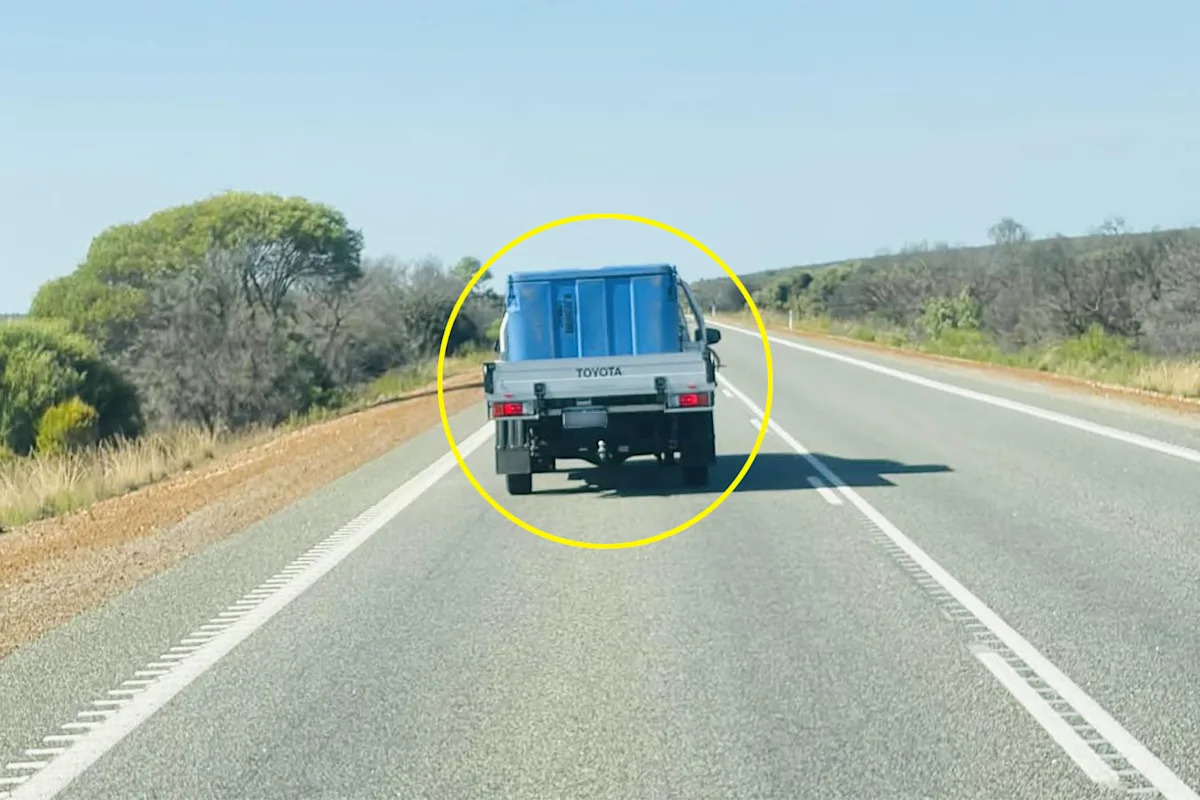
A seemingly ordinary photo of a ute travelling down a rural highway in Western Australia has highlighted just how far local business owners are willing to go in the face of a widespread and highly controversial fishing ban.
Jason Scimone, who owns and operates Southwestern Fresh Fish, told Yahoo News his ute was photographed on a 1,000km journey to a restaurant that was desperate for fresh fish.
“It’s not a deal that happens every week, because it’s 1,000 kilometres away,” he said.
“But that was something that worked for us and worked for them, and now they’re very happy because that saved their Easter.”
Jason, a second-generation fisherman whose father started the company in 1979, said it shows how important fresh fish is to locals.
Since the ban began on January 1, the market has been flooded with imported fish.
“Some eateries went straight to imported. Others refused,” he said.
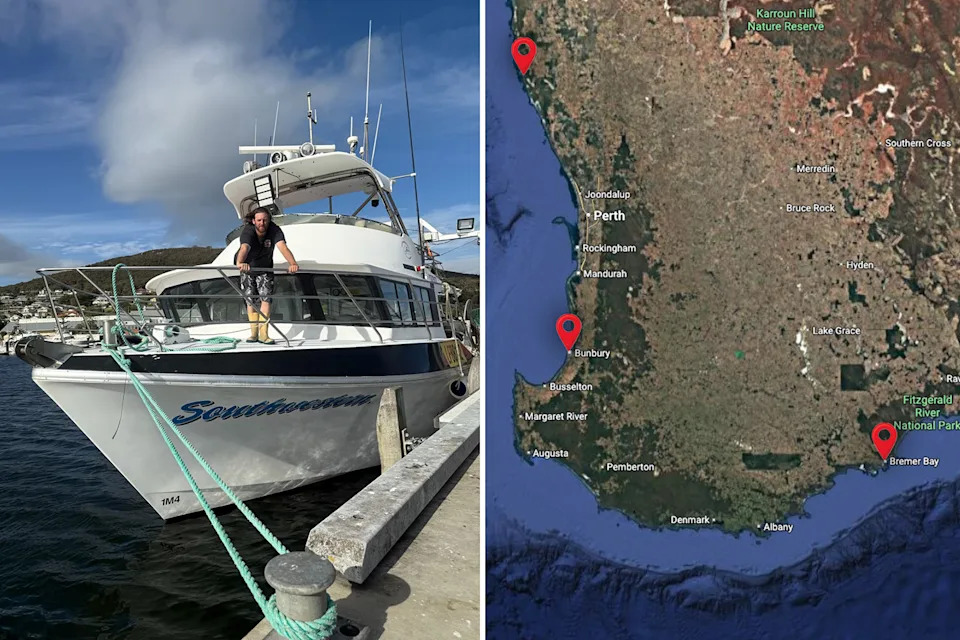
Jason Scimone owns and operates Southwestern Fresh Fish. The fish travelled from Bremer Bay on the south coast, to Bunbury in the west and Cervantes to the north of Perth. Source: Southwestern Fresh Fish/Google Maps
One of those venues, The Club Cervantes, lies in the small, former fishing town of Cervantes, roughly 200km north of Perth.
Jason said his boat had unloaded the fish in Bremer Bay on the state’s south coast, on the Wednesday, before being driven 450km to their processing factory in Bunbury.
From there, a large insulated fish bin carrying 300kg of fillets was driven a further four hours north to Cervantes, arriving on Thursday — just in time for Good Friday trading.
Fishing bans ‘decimated’ the industry
The bans came into force on January 1 this year, and were “completely out of nowhere”, Jason said.
Fishermen within the exclusion zone were given just three weeks to cease operations, with the industry “decimated” overnight.
The ban prevents fishermen from targeting demersal species like dhufish, pink snapper and red emperor, and covers 900km of the WA coastline from Kalbarri to Augusta. Other restrictions are in place for the rest of the state’s coast.
As a result, Jason moved his business to the state’s south coast where he has continued to fish, but he remains uncertain of what the future holds in the long term.
He said he’s fought to keep his fish prices stable despite the supply and demand issues and a steep increase in fuel costs.
“We did find that as soon as we lifted the price, the sales slowed. And our ethos is get it in the door and get it out, and sell it as fresh as possible. We will not sit on fish hoping that it sells for a better price.”
He said there are still peak periods where people “splurge”, like Christmas and Easter, but overall he’s noticed people struggling to justify the cost of what used to be an affordable meal.
“No one’s got any money because of the fuel and the cost of living… Easter was an exception, but generally, you can just see a lot of people are hurting,” he said.
Do you have a story tip? Email: newsroomau@yahoonews.com.
You can also follow us on Facebook, Instagram, TikTok, Twitter and YouTube.