
Ambitious goals to improve Queensland’s child safety department were “hamstrung” by underfunding as it struggled to recover from pressures caused by the COVID pandemic, an inquiry has heard.
The child safety commission of inquiry was launched in May by the state LNP government to review systemic problems.
Deidre Mulkerin, who led the department as director-general from 2020 through to 2024 under the former Labor administration, gave evidence at the inquiry on Tuesday.
The inquiry heard the department had been dealing with an “exponential growth” in costs when she started the role.
Goals to improve outcomes and budget deficits were set in 2023, including having 91 per cent of children in family-based foster and kinship care, rather than residential care, by 2027.
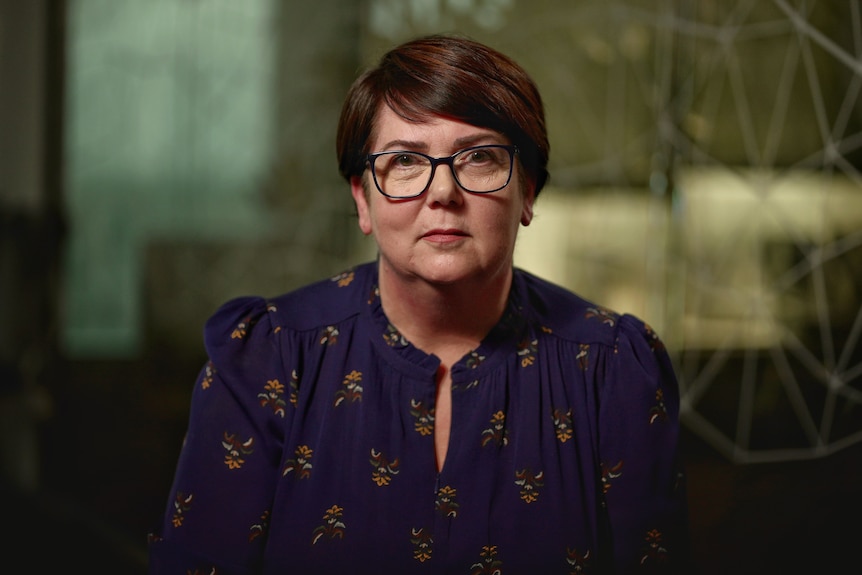
The inquiry heard Deidre Mulkerin had requested $1.5 billion in government funding to deliver on the department’s targets. (ABC News: Mark Leonardi)
Ms Mulkerin, who worked with four different child safety ministers, told the inquiry that goal was unrealistic.
“It is plainly obvious now, in hindsight, that from the very beginning the ask about residential care … was difficult to achieve.
“The trend was not heading down, it was heading up.”
At that time, she had requested $1.5 billion in government funding to deliver on the targets, but was allocated only around $280 million.
“This is obviously an ambitious and optimistic plan which sets very serious goals,” counsel assisting the inquiry Joshua Forrest said.
“Do you agree that the success of those goals was essentially hamstrung by the lack of new funds?”
“Yes, particularly the residential care target,” Ms Mulkerin responded.
In practical terms, inquiry commissioner Paul Anastassiou KC and Ms Mulkerin agreed it meant the “window of opportunity” to make a positive difference in the lives of some children in care had closed.
COVID pressures
While the child safety department was under financial pressure at the start of Ms Mulkerin’s tenure, she told the inquiry the pandemic exacerbated issues across the system.
She described a “dramatic” spike of around 500 children entering the child safety system as groups, including school and disability support and community agencies, closed due to lockdowns.
Children in residential care in Queensland
The increase was largely made up of teenagers who were new to the system and had complex needs.
Furthermore, Ms Mulkerin said closed borders meant the pool of workers to recruit from interstate and overseas “literally overnight evaporated”.
“It was a highly disruptive time that disrupted a lot of the usual routines and work that we undertook,” she said.
Ms Mulkerin told the inquiry she incorrectly expected those children to return home once the pandemic ended.
“I think that that was because it showed how seriously under pressure those particular families were,” she said.
“So in a sense, they fell apart, and then they just could not resume care of their own children.”
Lack of First Nations workforce
The inquiry heard around half of the children in the child protection system were from Indigenous backgrounds.
Under questioning from the commissioner, Ms Mulkerin acknowledged the “lifelong outcomes” and “power imbalance” regarding the department removing children from their parents or carers.
She told the inquiry a majority “white workforce” could be to the detriment of First Nations children.
“It’s [the department] predominantly staffed by non-Aboriginal and Torres Strait Islander people,” Ms Mulkerin said.
“I don’t think that that necessarily serves the interests of First Nations children.”
The inquiry is expected to hear from former child safety minister and current shadow environment minister, Leanne Linard, later this week.