
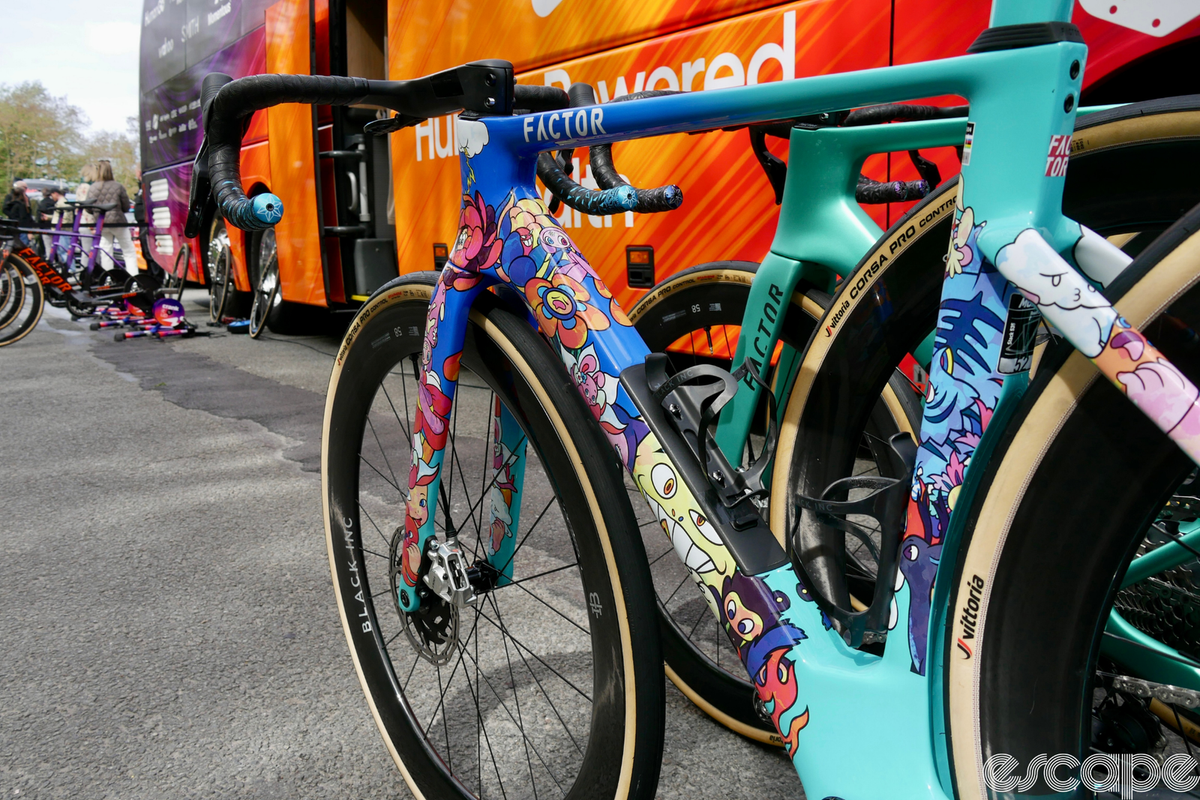
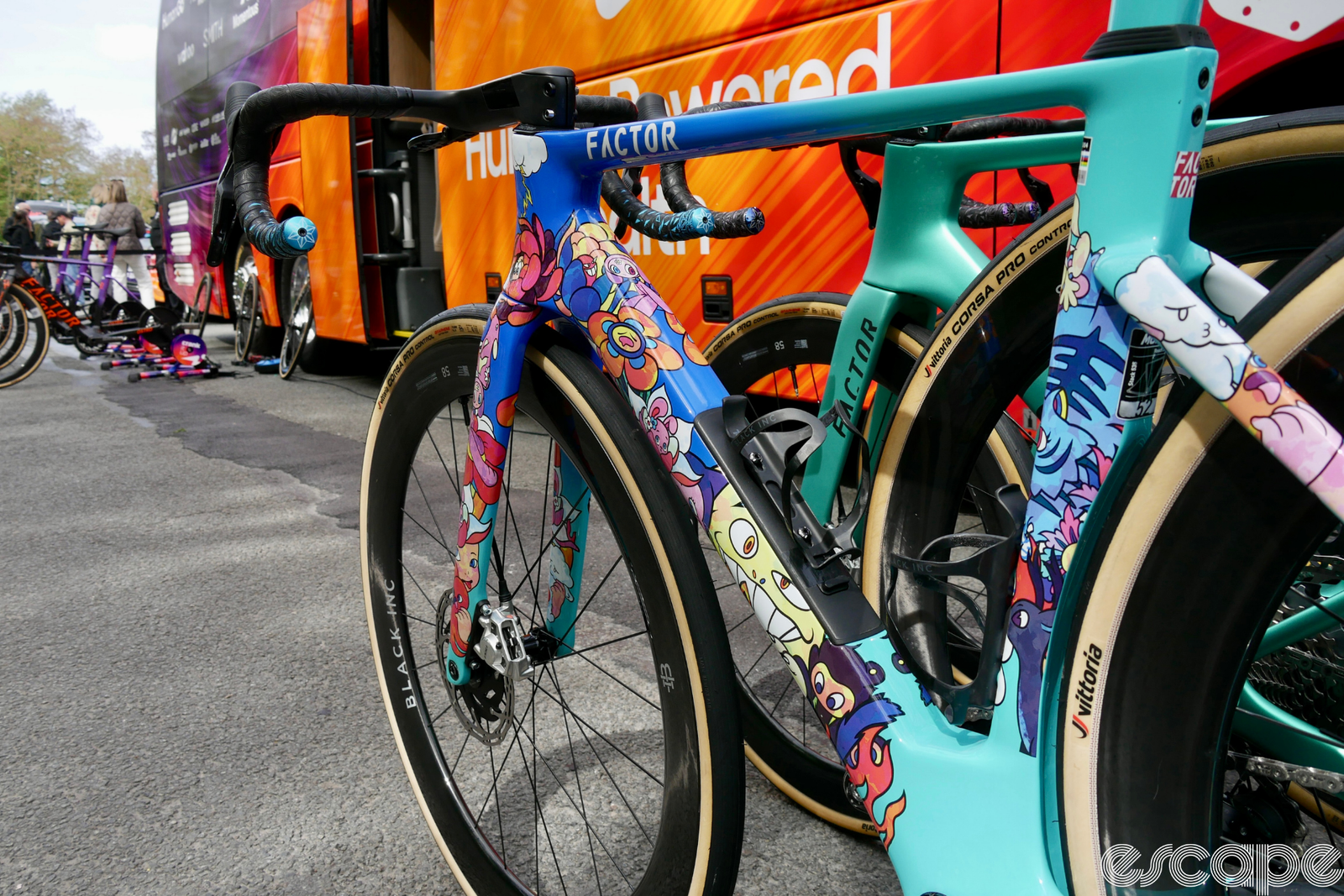
1x drivetrains ruled the roost at this year’s edition, with new wheels and new bikes also taking to the start line.

Alex Hunt
I wrote a piece last year about how the Roubaix race bike used to be something special. Wild and wacky bikes would frequently get wheeled out for this one race every year, where the traditional rulebook for equipment would get ripped up.
Since the turn of the disc-brake era, and even more so in the past few years, the bikes at the front of Paris-Roubaix have been decidedly ordinary. Long gone are the days of suspension-equipped bikes like Pinarello’s K8-S, and even Specialized’s bike that is named after the race made its final journey to the velodrome in 2023.
Roubaix bikes used to be special. What happened?
After another aero bike lockout on the Paris-Roubaix podium last year, bikes specifically aimed at taming the Hell of the North are quickly becoming a thing of the past.
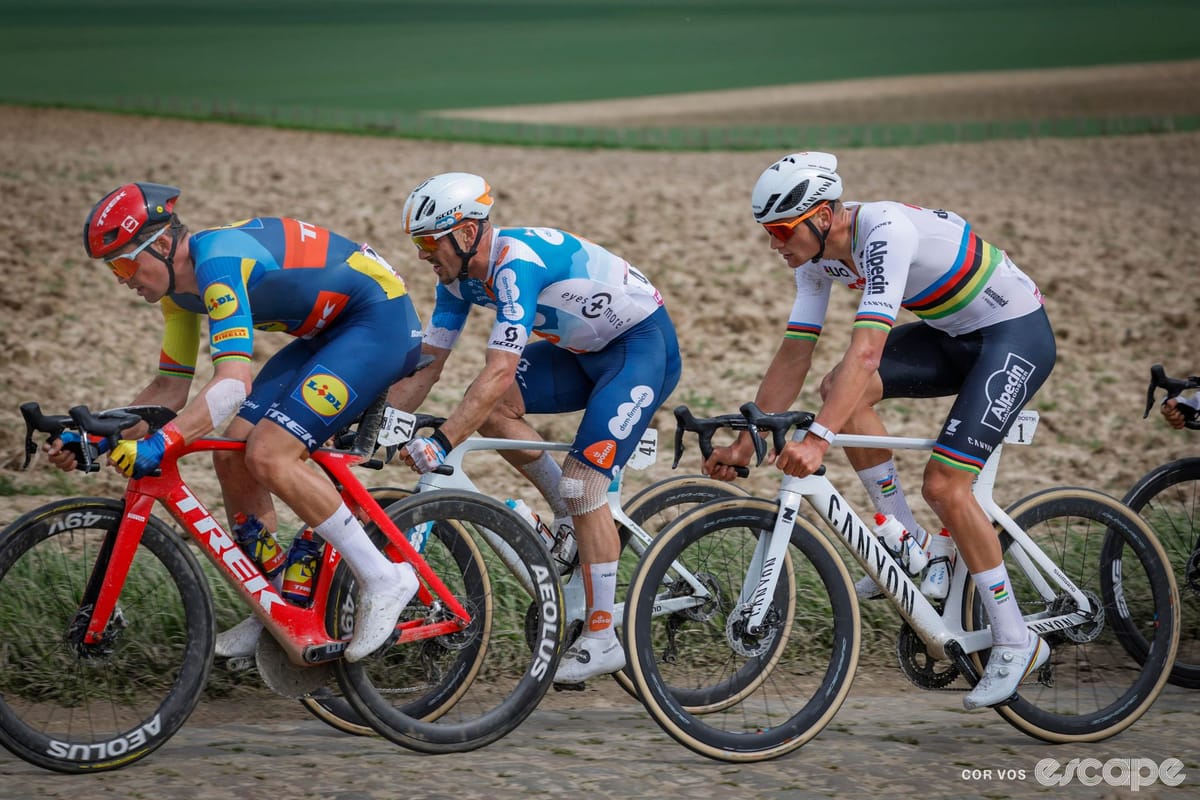
For the last six editions (including this one) in the men’s race, the winner has rolled in on a standard aero bike, albeit with slightly wider tyres fitted than normal. With race-winning speeds often over 47 km/h – this year’s aggressive race and its dry weather and general cross-tailwind produced a new record at a whopping 48.9 km/h average – aerodynamics have become the unavoidable primary concern, even in a race with the parcours of Roubaix.
In the women’s races, the dominance of the aero bike hasn’t fully taken over. In the race’s short history, the first two editions were won on endurance bikes (both on Trek’s Domane), three have now been won on all-rounders (Specialized’s Tarmac has two wins, and the Cannondale SuperSix won in 2023). Only once has a dedicated aero road bike taken the win when Pauline Ferrand-Prévot won last year on the Cervelo S5, the same winning bike as the men’s race this year under Wout van Aert.
A large part of the damping of quirky Roubaix tech was due to wider tyres offering the benefits that suspension systems and other niche products had sought to solve. However, while the Roubaix tech parade may have quieted down in recent years, it is now the tyres themselves – and the tech surrounding them – that is pushing things forward yet again.
From tunable inflatable tyre inserts to 35 mm tyres popping up everywhere, and from unreleased tyres to new endurance bikes and hybrid groupsets, Paris-Roubaix 2026 had it all. Here’s what we saw:
The Ineos Grenadiers has used 1x drivetrains at Roubaix in previous years, but for 2026 the team took things a step further. Rather than racing on the standard full Dura-Ace groupset, the team created a hybrid Dura-Ace/XTR setup.
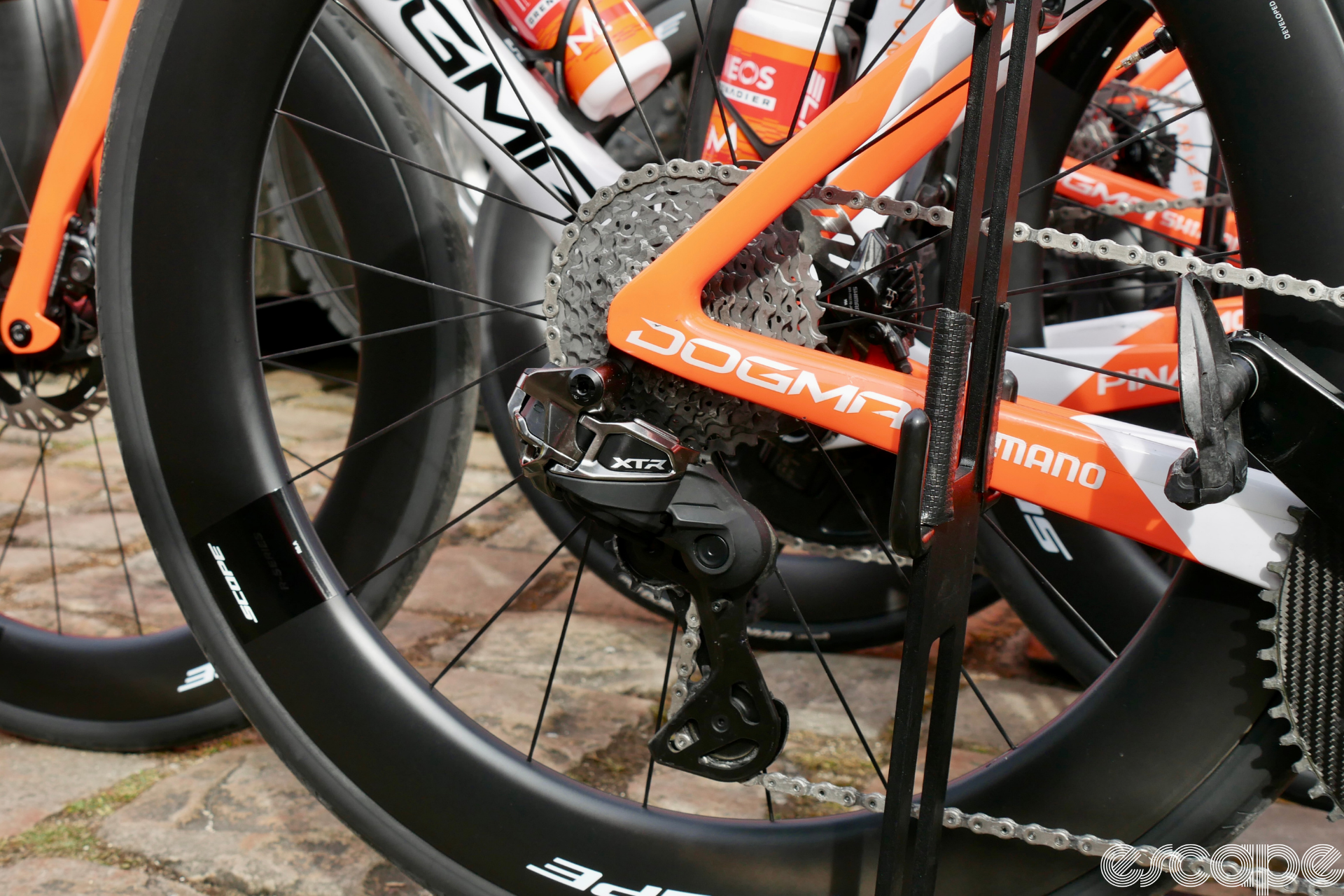
Of course, the XTR rear derailleur hasn’t been drafted in to accommodate a massive cassette; with just 1,300 metres of climbing across 258 km of racing it’s one of the flattest days on the WorldTour. Instead, the move likely comes down to durability and chain retention. The XTR derailleur is designed to shrug off hits from rocks and roots, making it a more dependable choice in the event of a crash. And as a 1x-specific component, it is also developed to increase chain retention; while it lacks a clutch, it uses a dual-spring system with higher spring tension than a standard Dura-Ace alternative, which would certainly help on the cobbles and with a 1x system.
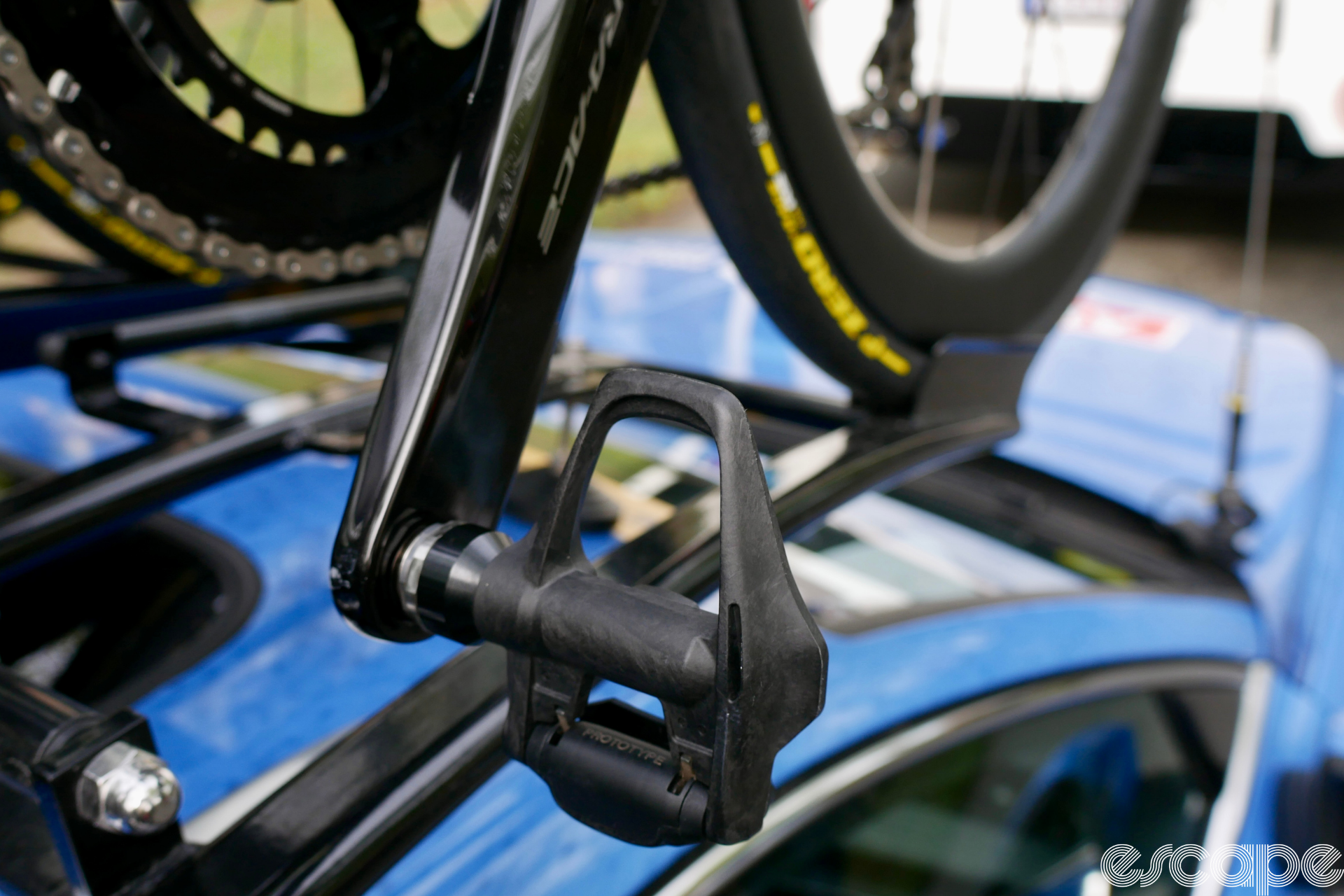
Sticking with Shimano, an updated version of the brand’s flagship Dura-Ace road pedal was spotted on Jasper Philipsen’s bike ahead of the race. While the changes are subtle, it looks as though a slimmer body has been used to reduce stack height.
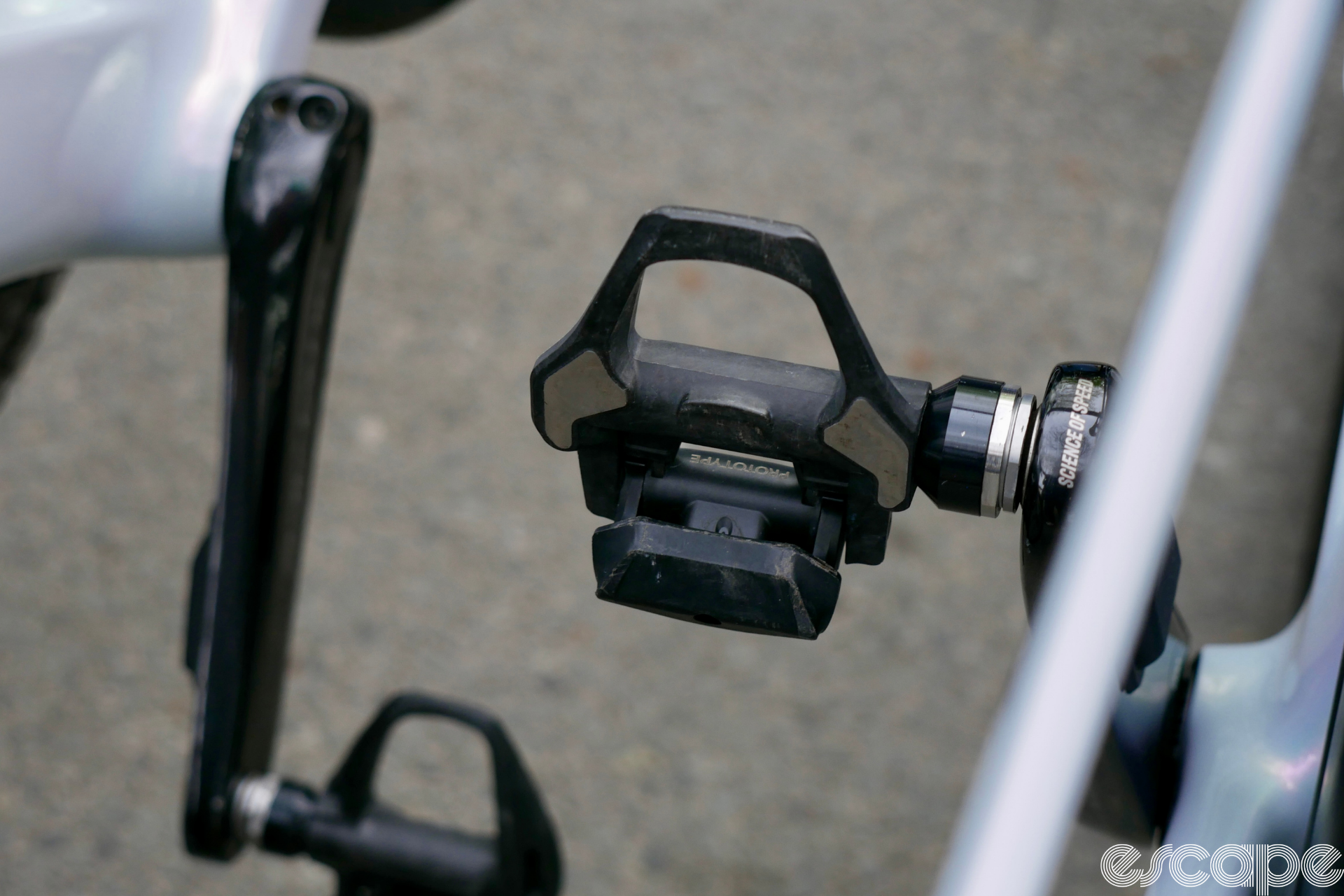
The only real tell is the word “prototype” stamped across the rear of the pedal—or having the previous model to hand. From a distance, there is very little to separate the new pedal from the existing one. Unfortunately for both Shimano and three-time winner Mathieu van der Poel, the big question after the race was whether these pedals dashed his chances of winning after a failed bike swap in the Trouée d’Arenberg, where the defending champion seemingly couldn’t clip into his teammate’s bike.
There were no gravel bikes at the start of Roubaix this year, but there were some gravel wheels from Picnic-PostNL’s wheel partner, Ursus. The Arya G is the latest performance gravel wheelset from the brand, using new spokes from Sapim.
This post is for paying subscribers only
Subscribe now
Already have an account? Sign in
Did we do a good job with this story?
👍Yep
👎Nope