

Listen to this article
Estimated 2 minutes
The audio version of this article is generated by AI-based technology. Mispronunciations can occur. We are working with our partners to continually review and improve the results.
Canadians will get a better sense of the country’s finances amid a global turbulence and shocks to the energy supply chain later this month when the Liberals table their spring economic statement.
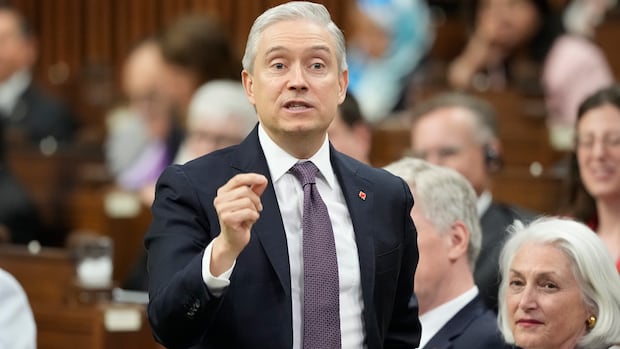
Finance Minister François-Philippe Champagne announced in the House of Commons that update will come on April 28, exactly one year since the federal election that kept the Liberals in power.
The announcement also comes a day after the government clinched a majority, allowing the Liberals to pass legislation through the House of Commons more quickly.
The economic update will be closely watched as Canadians experience rising energy prices caused by the U.S.-Israel led war in Iran, which has choked off oil exports in the Strait of Hormuz.
Earlier in the day, Prime Minister Mark Carney announced the government is temporarily removing the federal excise tax on gas and diesel and suggested the fiscal update will have additional measures to support Canadians.
“This is going to be a plan that is going to help families, it’s going to help our industry, it’s going to help our nation,” Champagne said in the House.
Last year the government announced the end of the long-held tradition of presenting a spring budget and instead, inspired by the U.K., moved the budget to the fall.
The government’s fiscal updates, which have become known as “mini budgets,” now switch from the fall to the spring.
The Liberals’ Nov. 4 budget projected a deficit of $78.3 billion for the fiscal year that ended March 31 and a more than $65-billion deficit for the current fiscal year.