
Just a single, grainy black-and-white photograph was all that was handed to sculptor Patricia Moseley.
Suffragist Mary Lee looked on from the nearly 90-year-old photo, and today, the life-like bronze bust — created from that image — is admired by the thousands who walk past it along North Terrace in Adelaide.
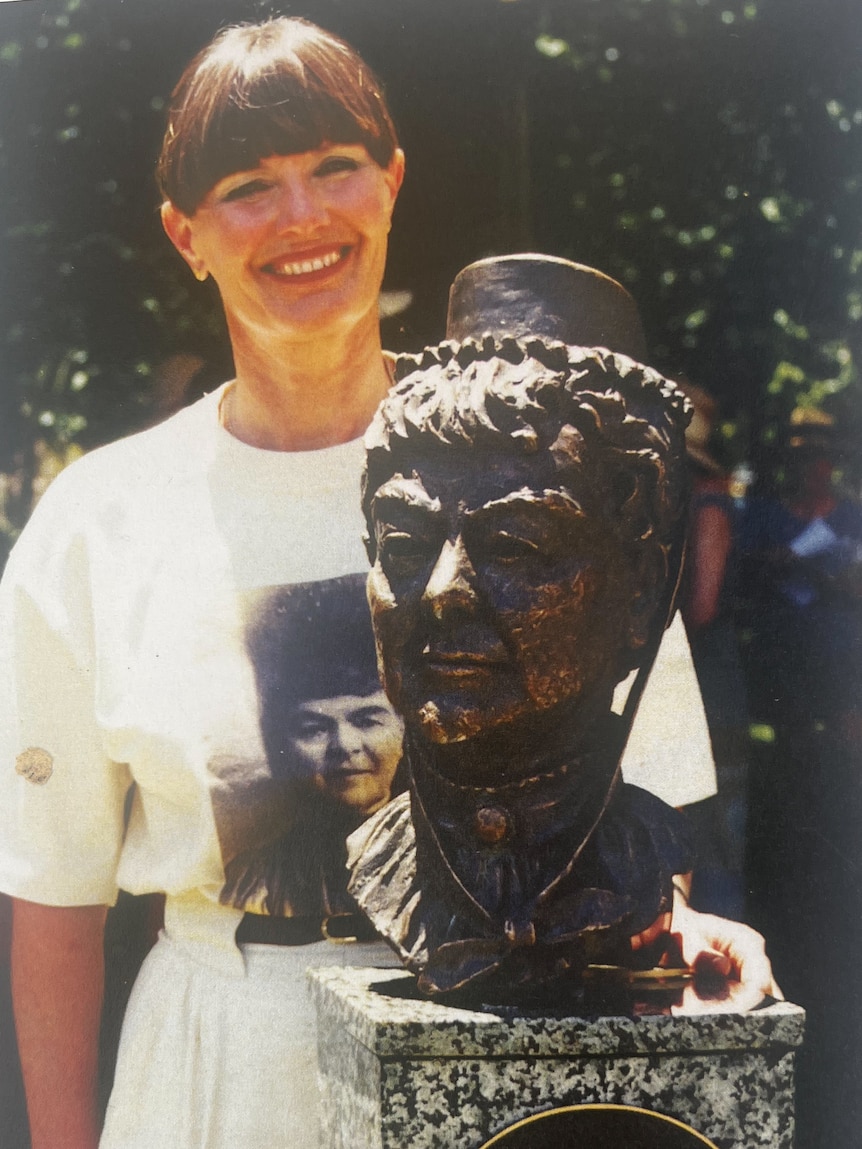
Pat Moseley created the bronze bust of women’s rights campaigner Mary Lee for Prince Henry Gardens on North Terrace. (Supplied: Moseley family)
But while much is known about the subject of the bust, far less has been told about its maker.
Born in the saddle
Born in 1941, Patricia Anne Moseley grew up on the family farm near Keith in South Australia’s South East.
The Moseley family’s pioneering, political and pastoral descendants are embedded in state history — from Glenelg’s Moseley Square to early politician James Grey Moseley.
Pat Moseley spent most of her young life on horseback and working alongside her father, well-known community man Don Moseley, who was at one point the district’s only mechanic.
“A natural horsewoman, Pat would saddle her mare and ride out to the local shows in neighbouring towns, or to the Coorong to camp, fish, collect cockles and find driftwood before riding home again,” recalled her childhood friend of 60 years, Claire Elliot.
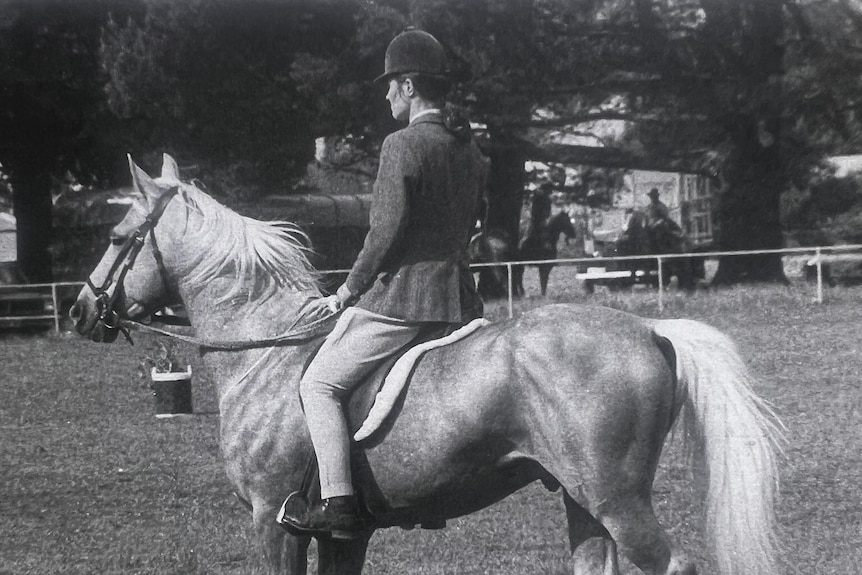
Pat Moseley on palomino Aureate, 1971. (Supplied: Moseley family)
“Pat’s affinity with horses remained a lifelong passion. She acquired her thoroughbred trainer’s licence in the 1960s — becoming the first woman in South Australia to do so.”
But the woman who wore moleskin trousers, worked alongside her father, mustered stock, hunted rabbits for skins and shore dead sheep for the wool — which was worth good money at the time — also had an innate artistic gift.
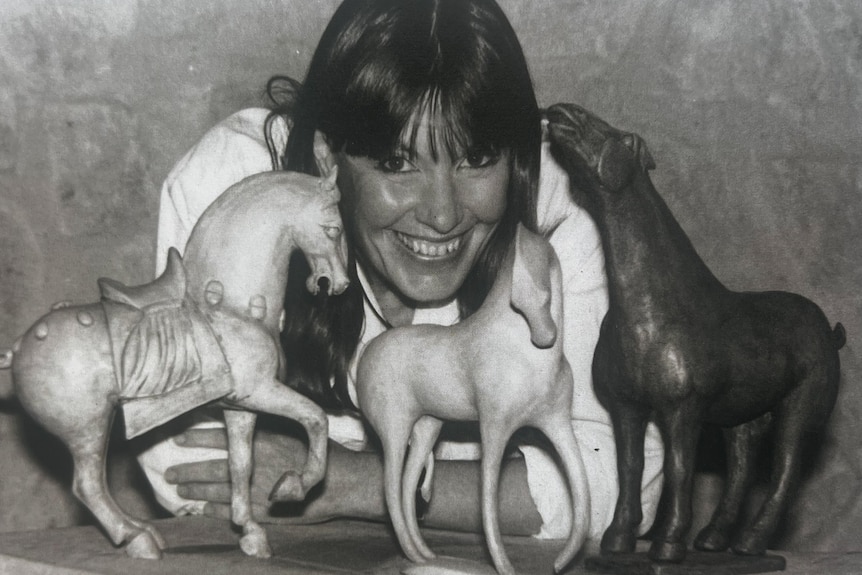
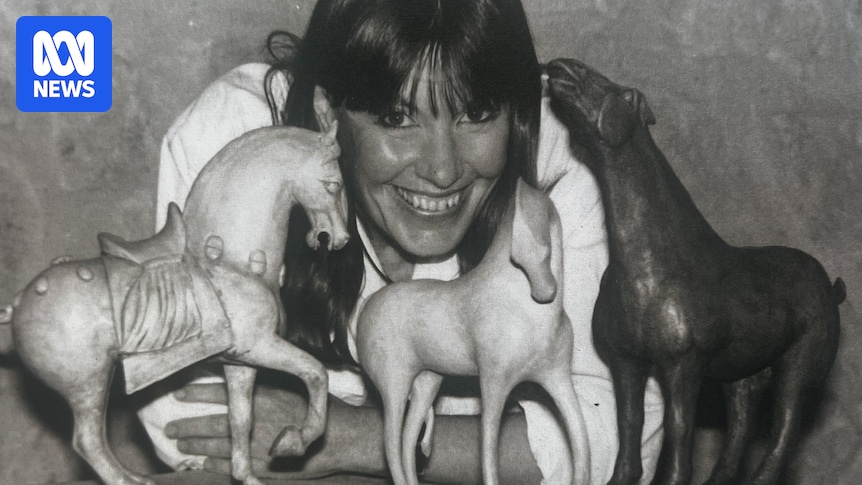
Patricia Moseley pictured with clay-fired horses. (Supplied: Moseley family)
Self-taught sculptor
“I didn’t begin sculpting until 1982, when I was looking for something ‘to do’ when my son went to school,” Pat Moseley wrote in her 2019 memoir.
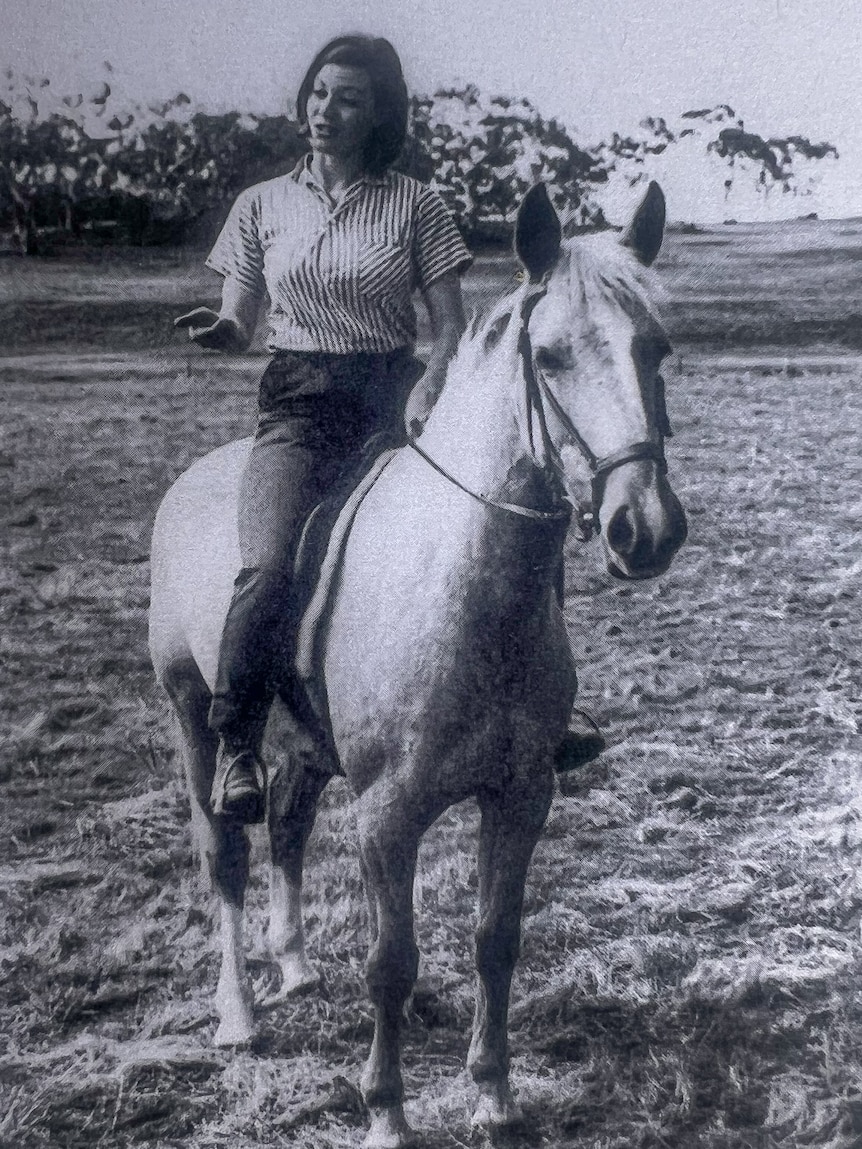
Pat Moseley on Lola May near Keith in 1966. (Supplied: Moseley family)
“Being unhappy in my marriage, and with a still grieving mother after the loss of my father, I turned to a piece of Mount Gambier stone ashlar and carved a relief of my daughter using my grandfather’s chisels,” she explained.
Pat Moseley’s photographic memory and ability to create life-like sculptures from single photographs was “extraordinary”, according to long-time friend James Yates.
“She could reproduce facial features very accurately, but she was also able to bring out the personality of her subjects — they look like they’re about to strike up a conversation,” he said.
With nowhere in Adelaide to study classical sculpture techniques in the 1980s, Pat Moseley travelled to Italy and studied briefly at the Lorenzo De Medici Institute in Florence, which she later said “enriched but did not guide” her own work.
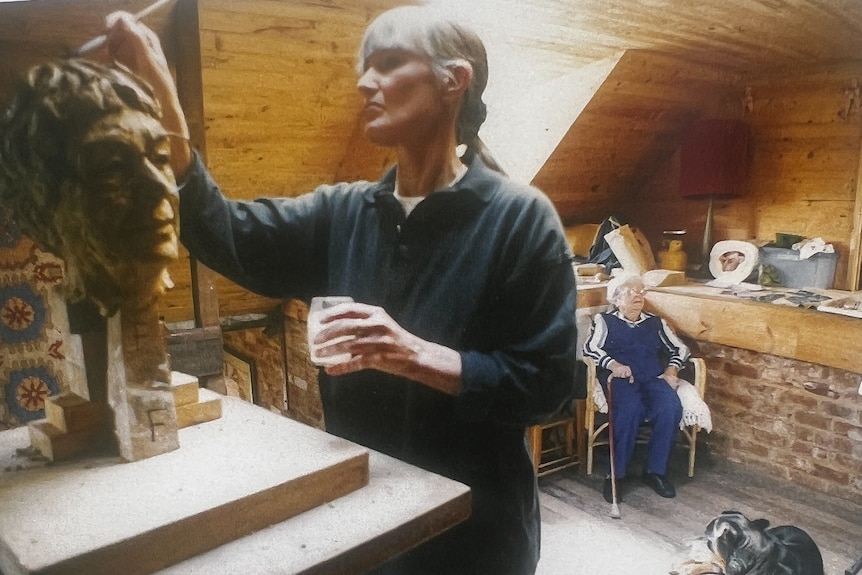
Patricia Moseley sculpting Ruth Tuck OAM in 1997. Ruth was one of the only subjects to sit for Pat, who mostly worked from photographs alone. (Supplied: Moseley family)
Upon returning home to Avenue Range and, later, Robe, Ms Moseley took on commissions from private families, well-known figures and public projects.
“Most of her works came about from word of mouth,” Mr Yates said.
“From her time in the racing industry, she went on to create busts of Colin and David Hayes, and Bart Cummings AM.”
In 2005, Ms Moseley read the story of Tom Kruse — mailman of the Birdsville Track — and commented to her partner John Hinge that the legendary outback figure should be immortalised.
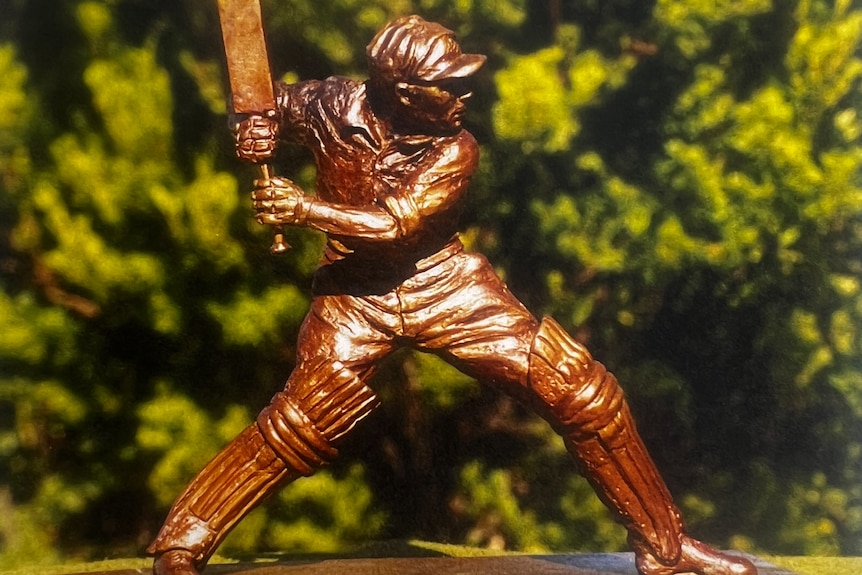
Bronze maquette of Sir Donald Bradman (1999) by Pat Moseley. (Supplied: Moseley family)
“The Tom Kruse bust has been reproduced now four times — including at the Birdwood Motor Museum, Maree, Birdsville and in his home town of Waterloo in South Australia,” Mr Hinge said.
Other significant works include sculptures of prominent South Australians Sir Donald Bradman, Adam Lindsay Gordon, Ruth Tuck, and Hugh Stretton, as well as Vivian Bullwinkel at Millicent, and explorers Nicolas Baudin and Matthew Flinders who look out over Guichen Bay in Robe, where Ms Moseley and Mr Hinge retired.
Calls for memorial tribute
“I think Pat flew under the radar considering just how exceptional she was,” Mr Yates said.
“I’d like to see a public memorial or something lasting to commemorate her achievements and recognise her contribution to the arts here in South Australia.”
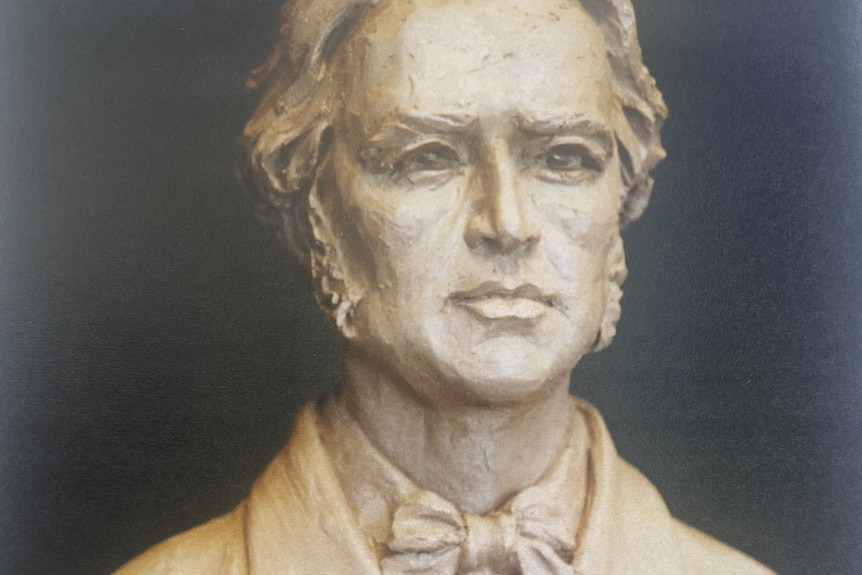
Clay maquette of Adam Lindsay Gordon (2004) by Pat Moseley. (Supplied: Moseley family)
Mr Yates said a plaque near the Robe busts would also “show how much she did for local arts here in the South East”.
In an ABC radio interview in 2012, Ms Moseley said she never went on to teach sculpture.
“I [got] the feeling people sometimes thought I was being selfish not sharing my ability to create portrait sculpture sometimes from just one existing photo … but I cannot tell you how the transference occurs from my looking at a photo and what occurs through my eyes and hands to the clay portrait — thus bringing out personality and character,” she said.
“I think it helps to have an eidetic mind where you can envisage all the bits as a whole. I think in pictures. Show me a picture or a face and I will never forget it.”
Patricia Moseley was inducted as a Fellow of the Royal South Australian Society of Arts, and died in Robe last month, aged 85.
More news from regional SA