
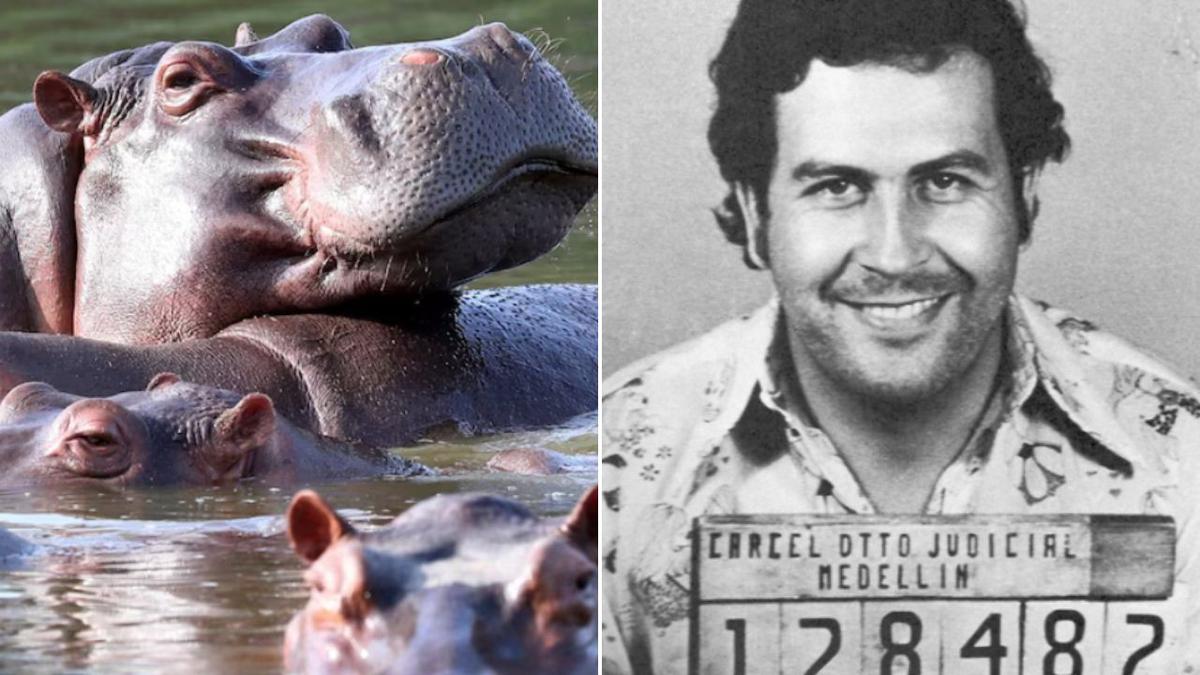
Colombia has authorised a plan to cull dozens of Pablo Escobar’s so‑called “cocaine hippos”, warning the booming herd is threatening villagers and pushing native species out of fragile river systems.
Environment Minister Irene Velez confirmed the government will target up to 80 hippos, saying years of sterilisation attempts and relocation proposals have failed to slow the population’s rapid growth.
“If we don’t do this we will not be able to control the population,” Vélez said on Monday.
Know the news with the 7NEWS app: Download today Arrow
“We have to take this action to preserve our ecosystems.”
The animals descend from four hippos Escobar illegally imported in the 1980s for his private zoo at Hacienda Napoles. After the drug lord’s death in 1993, most of his exotic animals were removed — but the hippos were left behind.
The hippos have abundant food and no natural predators, quickly multiplying into an estimated 170 by 2022 and have since been spotted more than 100km from the original ranch.
 Hippo key rings are displayed for sale at a souvenir shop near the Hacienda Nápoles Park in 2020. Credit: AP
Authorities say the hippos now pose a serious risk to nearby communities, with residents encountering the aggressive animals in rivers and farmland.
Environmental agencies warn they are also competing with native species such as river manatees and damaging waterways with large volumes of waste.
Colombia is the only country outside Africa with a wild hippo population.
The government has previously explored sending some animals to overseas sanctuaries, but the cost — estimated at US$3.5 million (A$5m)— and concerns about disease and genetics have stalled the plan.
Despite the risks, the hippos have become a tourist draw around Hacienda Napoles, which now operates as a theme park featuring waterslides, a zoo and hippo‑spotting tours. Locals sell hippo‑themed souvenirs, and the animals remain one of the park’s biggest attractions.
Animal rights groups have condemned the cull, arguing the hippos are victims of decades of government inaction.
Senator and animal welfare advocate Andrea Padilla labelled the plan “cruel”, writing that “killings and massacres will never be acceptable” on a X post.
For more than a decade, successive governments have attempted to neuter some of the animals, but the operations are dangerous, costly and too slow to keep pace with the herd’s growth.
Search ends in tragedy as Jordan Dawson’s brother found dead
2 min read
Victoria Police investigating sexual assault allegations against Katy Perry
2 min read