
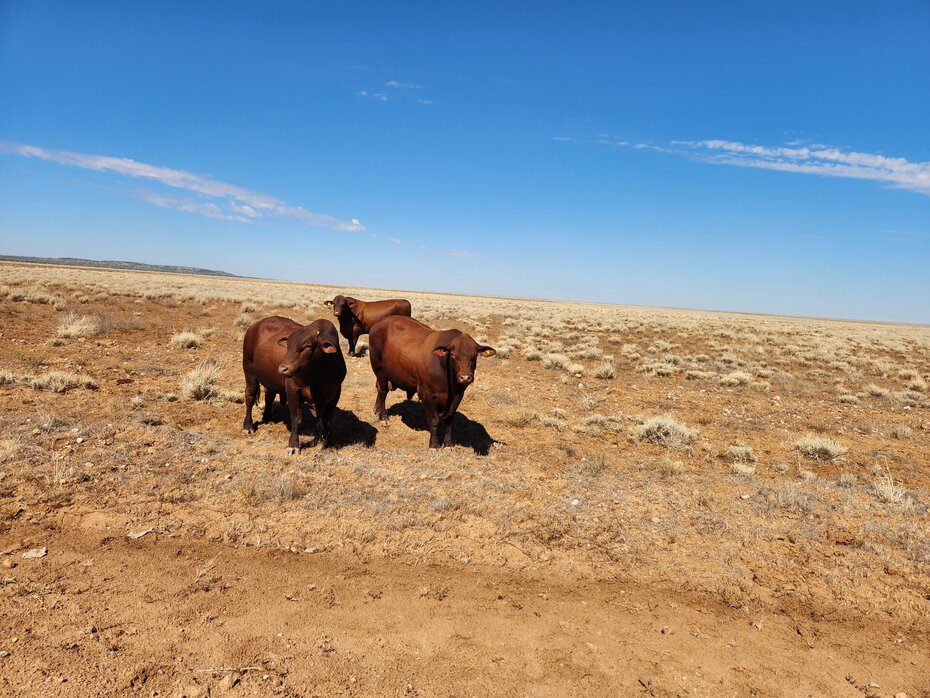
A CLIENT recently made a change in their genetics and was keen to see what the results were. Not content to wait for their agent to tell them theirs were the best cattle around, they set about collecting good data to measure the impact.
Some background first; the business started at a (far western Queensland) station, effectively from scratch, a decade ago. Beginning with only a small mob of breeding females, many females had to be purchased in to build up numbers. Heavy selection pressure was placed on the females to produce a calf within the desired window each year; any that didn’t were traded out of the system and replaced.
A lot of thought and effort went into identifying a suitable bull supplier. A suitable breed was identified with adequate depth of genetics and quality BREEDPLAN data. Within this breed, a seedstock source with integrity and a high indexing herd was identified. A bull team was put together with the desired genetic profile, at reasonable cost, whose relevant $index averaged the top 20th percentile of the breed. All bulls introduced into the herd had to have passed a bull breeding soundness evaluation (BBSE) by 15months, ensuring early age of puberty and paving the way for successful yearling mating.
 These genetics multiplied through the herd over the years, and fertility and herd productivity improved accordingly. A bull breeding nucleus was set up to breed home bred bulls, multiplying breed leading genetics from the seedstock source. There is a full suite of EBV data on all homebred bulls, and they must also pass a BBSE at 12-15months. The improving herd genetics along with disciplined management resulted in the business’ performance moving to the top 25% of our dataset, which consists of 11% of the northern beef herd. Their cost of production over the last three years has averaged $1.21/kg LW.
As the herd stabilised in breed content, they looked to introduce a second breed to provide hybrid vigour and to further target specific traits. The process began again to identify a suitable breed and stud. This was done and F1 females are now joining the breeding herd.
Weaning weights of animals were collected, as were the pregnancy rates of the yearling heifers. The manager identified that the weaning weights were heavier and pregnancy rates higher for the F1s when compared to the established breed. This was great to hear, but before the champagne was popped, I questioned whether
the sample size was big enough for us to have confidence in the results,
the differences could be attributed to any confounding variables, such as the animals being in different paddocks, and if,
the differences were statistically significant.
These are the type of questions that should be asked whenever we are presented with such claims. His response was to send me the data and suggest I figure it out!
I did so and found that all weaners and yearling heifers were measured and that the differences (between the F1s and established breed) were significant (P <0.01) for both weaning weights and pregnancy test results. Paddock also had a significant effect for weaning weights, but the effect of breed did not depend on the paddock in which the animals were raised, indicating F1s performed consistently better across all paddocks. P < 0.01 means that if there were no true difference between the groups, then there is less than a 1% chance we would see differences this large simply due to random variation.
The below graphs show the weaning weights and the pregnancy rate data.


The two measures are obviously related; the heavier weaning weights led to heavier joining weights which will have contributed to the increased conceptions. How much of the difference is due to trait difference between breeds and how much is due to hybrid vigour (heterosis) is unknown, but the majority would be heterosis.
There is nothing new in heterosis, it has been well proven. The message here is that collecting good data and ensuring it is properly analysed will allow you to confidently assess the impact of changes you make in your management. Going by eye, relying on anecdotal opinions or measuring a handful of animals to get the answer you want are not sufficient measures of change.
There is also a bigger message here I think, that trusting the science underpinning genetics and selecting for the economically important traits does pay off over time. It can be hard to see year to year, and seasonal fluctuations confound the results. However, over time the benefits are cumulative and do flow through, providing you stay the course and management is of a standard for the benefits to be realised.
The plan for this business is to continue with the two breeds, continuously introducing leading genetics from both into the herd. They will also keep measuring performance and use this to inform their decisions along the way. These data are from a good season; they are very interested to see how the results compare in a tougher season.
We’re grateful to this business for allowing us to be part of their journey and also to Dr Michael Wellington of Daly Waters for checking our statistical analysis.
If you want to better understand your own herd and business performance, contact us to discuss analysis. You can also identify the leading seedstock sources across Australia by downloading the freely available Top Studs publication.
Ian McLean is the managing director of Bush Agribusiness headquartered in Toowoomba.