
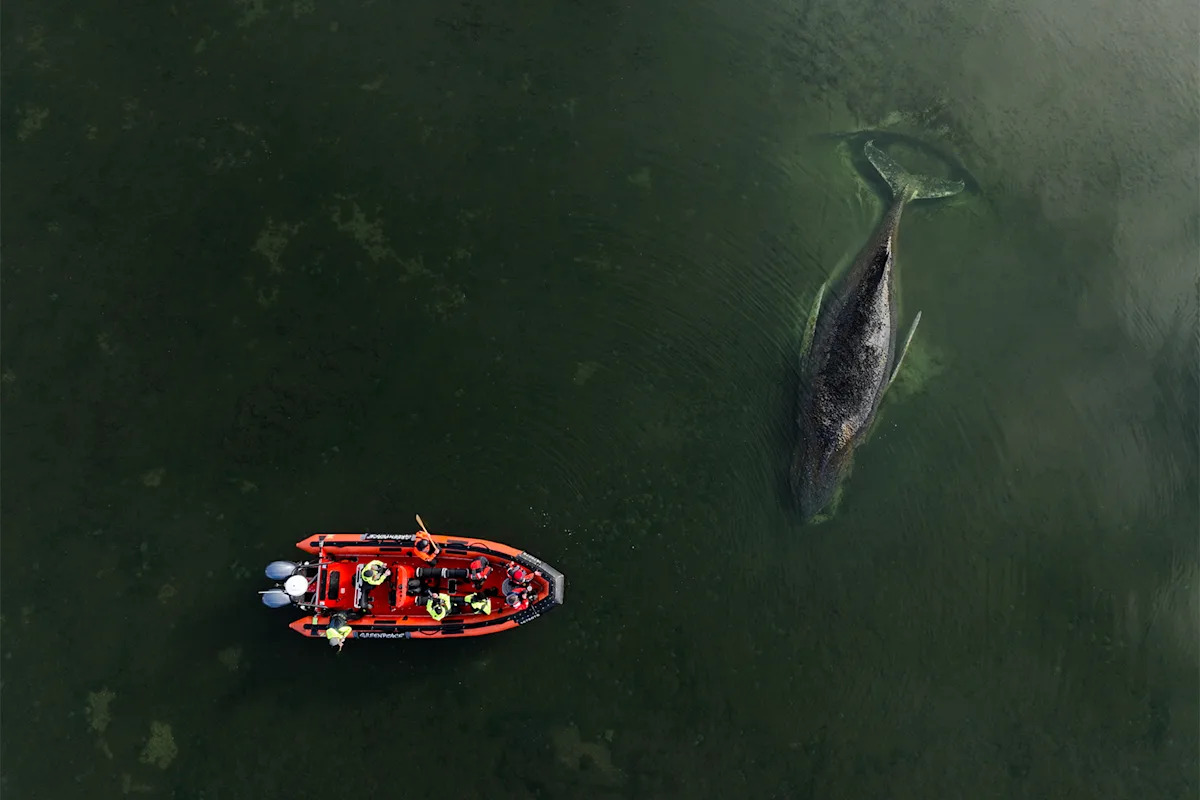
A 10-metre-long humpback whale is being controversially left in “peace” to die after it became stranded on a sandbank.
The animal’s welfare has captured the attention of an entire nation after it slowly drifted off course into the Baltic Sea off the north coast of Germany, a location experts say the species is “not supposed to be”.
Since March, misinformation has spread online, its fate has become politicised, members of the public have tried to swim to it, and scammers have reportedly set up fake donation drives.
Specialists and rescuers, supported by local chapters of Greenpeace and Sea Shepherd, have repeatedly attempted to free the whale, but it has continued to strand itself.
On Tuesday, state environment minister Tim Backhaus told local media the animal is beyond saving, a decision that was backed by the local mayor and some experts.

Nicola, 58, from Munich jumped into the water and swam towards the stranded whale. Source: Bild
Whale could take weeks to find ‘final peace’
But at least two leading specialists in whale strandings and rescue who have examined footage of the whale told Yahoo News its death could take weeks.
One of them is Dr Olaf Meynecke, a German whale researcher based at Australia’s Griffith University who has been advising local rescuers about the animal’s predicament.
“It doesn’t look like it’s completely starved, so it has still energy reserves, and that also means a large animal like this doesn’t just simply pass away,” he warned last night.
“It can take many weeks for a large animal like this to actually pass away, which is extremely sad, of course, and the current situation is understandably frustrating for people to watch.
“It’s actually heartbreaking to see how this animal is continually suffering to be there on the sandbank, unable to move and also taking its time to actually find its final peace.”
Death threats and police interceptions as whale dies
Affectionately named “Timmy” by locals, at least two members of the public have tried to take matters into their own hands and swim out to the whale, but they were intercepted by police.
“The whale isn’t dying. He’s crying. He’s full of life,” a woman in her 50s claimed as she spoke to Bild on Sunday.
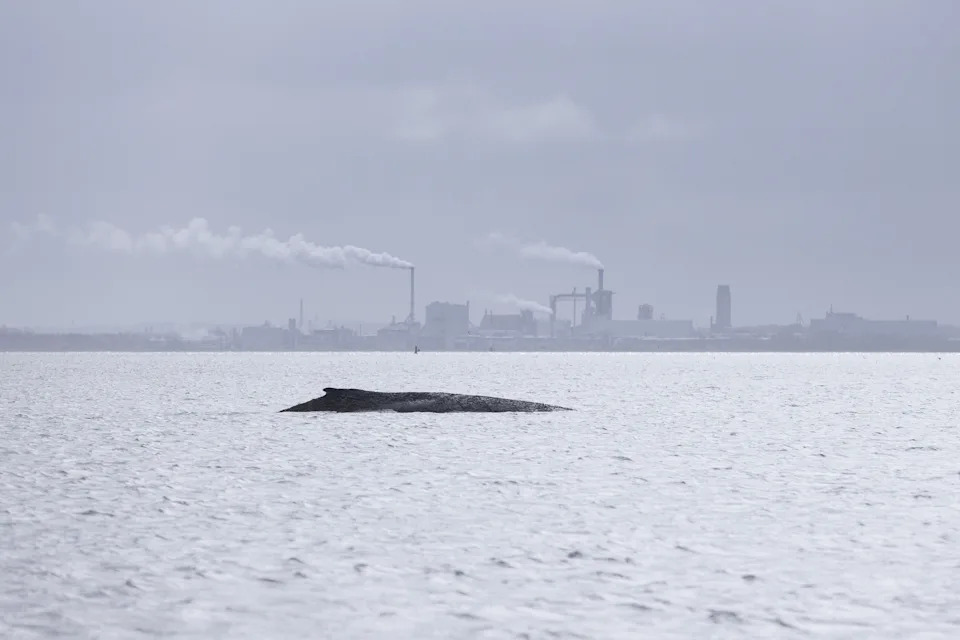
The humpback swims close to Poel in the Baltic Sea on March 31. Source: Daniel Müller/Greenpeace
(© Daniel Müller / Greenpeace)
Daniela von Schaper from Greenpeace Germany said she’s being inundated by people trying to share their own ideas about how to rescue the whale, and some have become abusive.
“It’s really hard to watch him dying, and to hear from people that think we’re not doing anything,” she said.
Greenpeace agrees with the government that the animal is too weak to be rescued.
“It seems like the whale is just too weak, he has disease with his skin, and we don’t know if he has injuries inside,” von Schaper added.
Death threat fears could delay pain relief
Experts agree the whale’s situation points to a much greater problem.
Nets were cut from the humpback’s body in early March by Sea Shepherd, but efforts to remove them from its mouth failed.
After he stranded on March 22, multiple attempts were made to free the animal, but it has languished on the Bay of Kirchsee, off the village of Poel, since March 31.
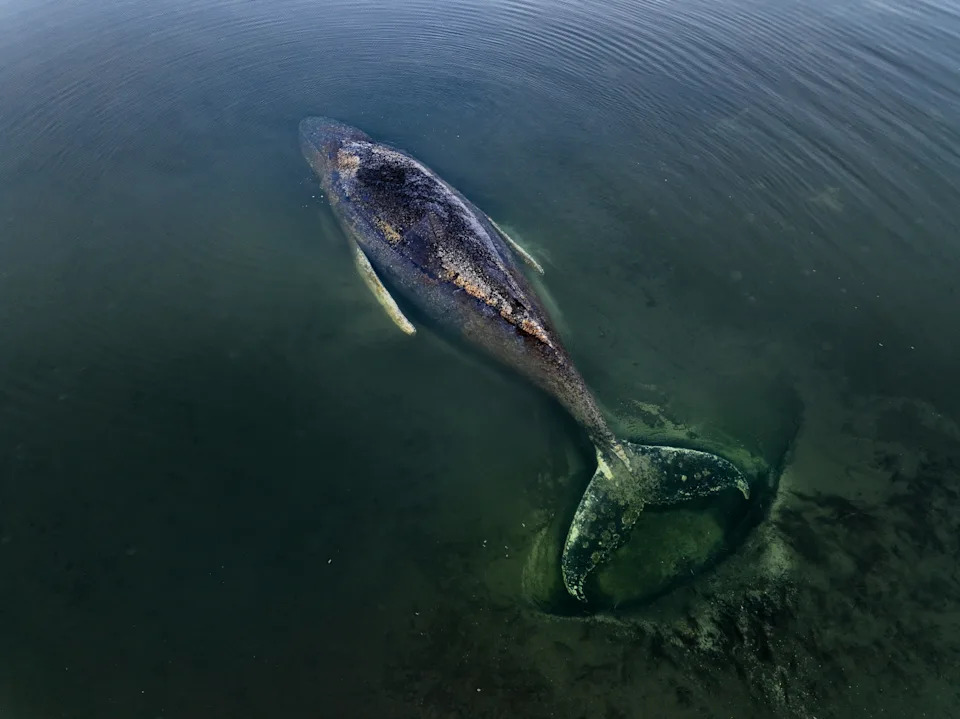
The whale’s skin is thought to have been impacted by the water’s low salinity. Source: Florian Manz/Greenpeace
(© Florian Manz / Greenpeace)
The water’s low salinity is damaging its skin, and there is little food, but the species can live for months without eating.
Dr Meynecke said it could be possible to locate a vein and sedate the whale to ease its pain, but he fears the widespread public interest could deter agencies from intervening.
“If anything goes wrong, then there is obviously fear that this will result in further death threats,” he said.
“They are absolutely not OK, and they’re not helping anyone, certainly not the whale.”
Bigger problem facing whales
One expert who requested anonymity due to the sensitivity of the situation said it was important that a necropsy be performed to confirm the exact cause of its decline.
Dr Meynecke suspects there is a “pattern of whales becoming displaced, noting a beluga and a fin whale have recently been reported off course in the Baltic Sea.
Fishing nets, ship strikes, underwater noise, over-fishing, and climate change are all known contributors to whale deaths.
Greenpeace hopes the public attention around Timmy’s fate will prompt members of the public to advocate for humpbacks more generally.
“This is a bigger problem, and what we see happening to whales is a mirror to the harm we are doing to the oceans,” von Schaper said.
Do you have a story tip? Email: newsroomau@yahoonews.com.
You can also follow us on Facebook, Instagram, TikTok, Twitter and YouTube.