
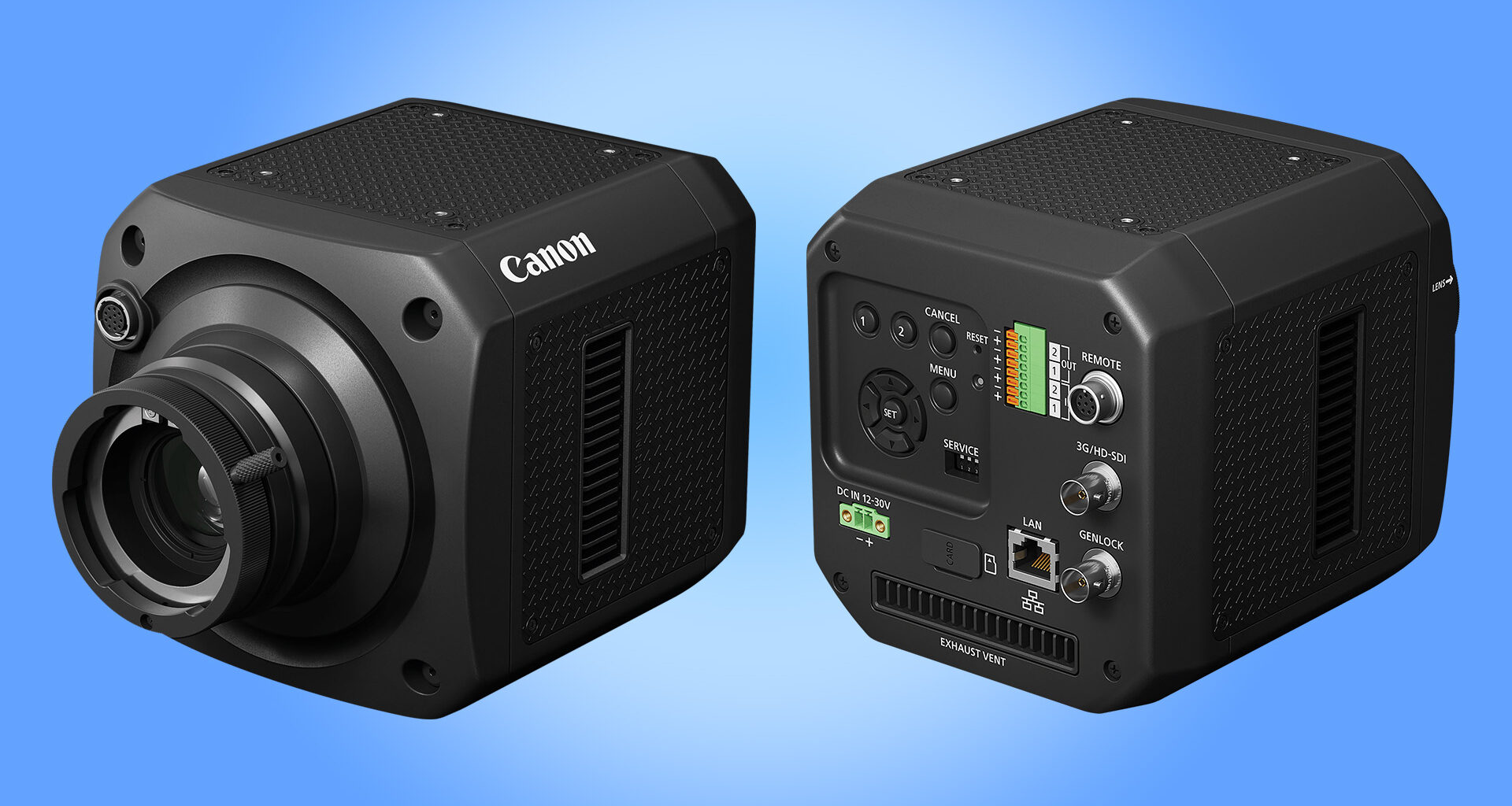
Canon has unveiled the MS-510 at NAB 2026, a successor to the MS-500 that pushes SPAD sensor low-light performance even further. Featuring a new 1-inch SPAD sensor with a minimum subject illumination of 0.0006 lux and improved near-infrared capabilities, the multi-purpose camera is aimed at security, surveillance, and specialist imaging applications where seeing in near-total darkness is non-negotiable.
Canon’s ultra-high-sensitivity camera lineup has been quietly evolving for over a decade. It started with the ME20F-SH in 2015, a full-frame box camera that stunned the industry with its 4 million ISO capability. Then came the MS-500 in 2023, which introduced Canon’s first commercially available SPAD (Single Photon Avalanche Diode) sensor, achieving 0.001 lux minimum illumination. Now the MS-510 takes that same foundational technology and refines it, delivering a meaningful sensitivity improvement while also addressing near-infrared performance, a feature that matters enormously for nighttime surveillance and long-distance detection.
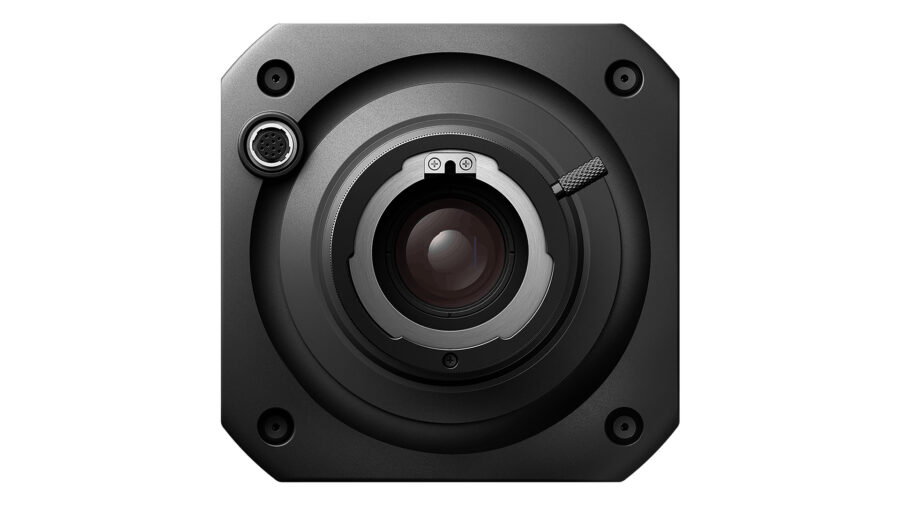 Canon MS-510 camera from the front. Image credit: CanonHow the SPAD sensor differs from CMOS
For those unfamiliar with the technology, SPAD sensors operate on a fundamentally different principle than the CMOS sensors used in virtually every cinema and mirrorless camera on the market. Rather than accumulating photons as an analog charge and converting them to a digital signal (a process that inherently introduces readout noise), SPAD sensors count individual photons. When a single photon strikes a pixel, it triggers an avalanche effect that amplifies the signal approximately one million times, producing a clean digital pulse.
The MS-510’s 1-inch SPAD sensor retains the same 3.2 million total pixels (approximately 2.1 million effective) as its predecessor, keeping the camera at a maximum resolution of 1920 x 1080. This is not a resolution play; it is a sensitivity play. The minimum subject illumination figure drops from 0.001 lux on the MS-500 to 0.0006 lux on the MS-510, measured under Night Mode color output with no light accumulation, f/1.4 equivalent, 1/30 shutter speed, 50 IRE, maximum gain of 84 dB, and CrispImg2 Custom Picture preset. That improvement may sound incremental on paper, but at these extreme low-light levels, every fraction of a lux matters.
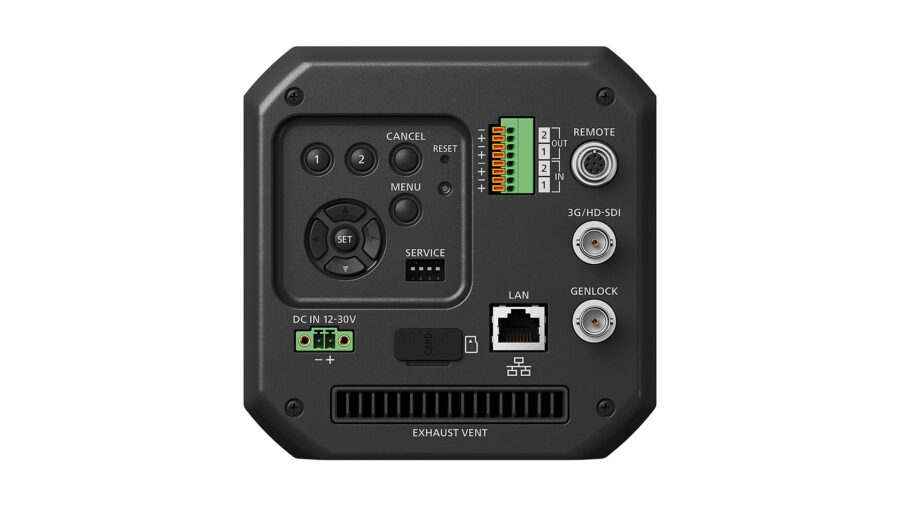 Canon MS-510 camera from the back. Image credit: CanonBroadcast lens compatibility and built-in magnification
Like the MS-500, the MS-510 uses a B4 bayonet lens mount based on BTA S-1005B standards, giving it direct compatibility with Canon’s extensive lineup of 2/3-inch ultra-telephoto broadcast zoom lenses. Since most broadcast lens optics are designed for 2/3-inch sensors, the MS-510 incorporates a built-in magnifying optical system that matches the incoming image circle to the 1-inch SPAD sensor. This allows operators to mount broadcast lenses directly without cropping or adapting, and it is a critical feature for the long-range surveillance applications Canon is targeting.
The camera outputs via 3G/HD-SDI (4:2:2 10-bit) through a single BNC jack. Frame rate options cover the usual broadcast bases: 59.94p, 50p, 29.97p, and 25p at 1080 resolution, plus 59.94p and 50p at 720. A GenLock BNC input is included for multi-camera synchronization, and serial remote control runs through RS-232C/RS-422/RS-485, supporting Canon’s proprietary NU protocol as well as Pelco-D. For IP-based workflows, there is an RJ-45 LAN terminal for video streaming and camera control, with support for ONVIF Profile S, H.264, H.265/HEVC, and JPEG compression.
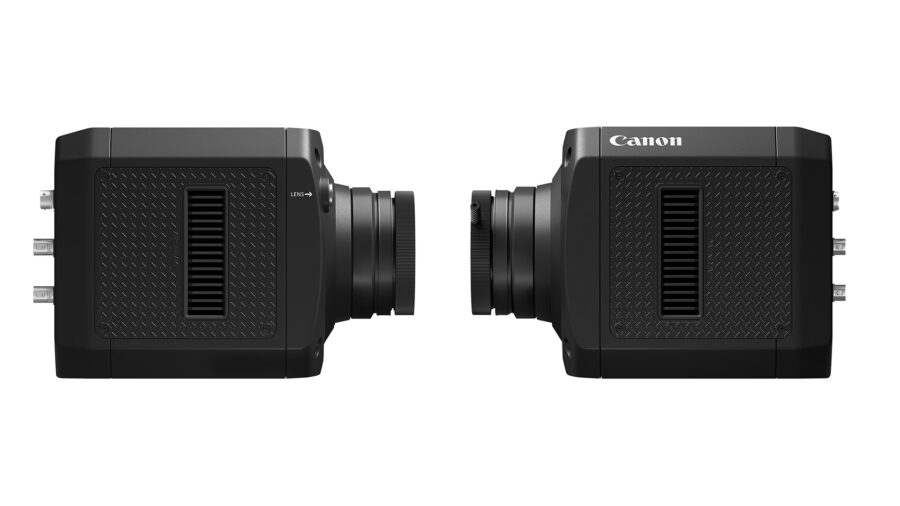 Canon MS-510 camera side views. Image credit: CanonImage processing and environmental resilience
The MS-510 includes Haze Compensation, which automatically reduces interference from mist and atmospheric haze while adjusting contrast. Smart Shade Control corrects highlights and shadows to maintain image integrity in challenging lighting. Diffraction Correction and Chromatic Aberration Correction are available for supported lenses. Users can create up to 20 customized image quality settings, or choose from built-in Custom Picture presets: CrispImg2 (optimized for resolution and contrast with noise suppression), BT.709 Standard, and Canon 709.
The Day/Night switch can be set to Auto, Day Mode, or Night Mode. In Night Mode, the IR cut filter retracts via motor to allow infrared light to reach the sensor, boosting sensitivity further. Canon specifically highlights improved NIR (near-infrared) capabilities on the MS-510, describing this as a tactical advantage for night operations and long-distance detection, though detailed specifications for the NIR improvements remain under NDA.
A single motor-operated ND filter provides approximately 1/64 density (about 6 stops). Shutter speed ranges from 1/4000s to 1/4s depending on frame rate. Gain runs from 0.0 to 84.0 dB, with AGC upper/lower limit control available.
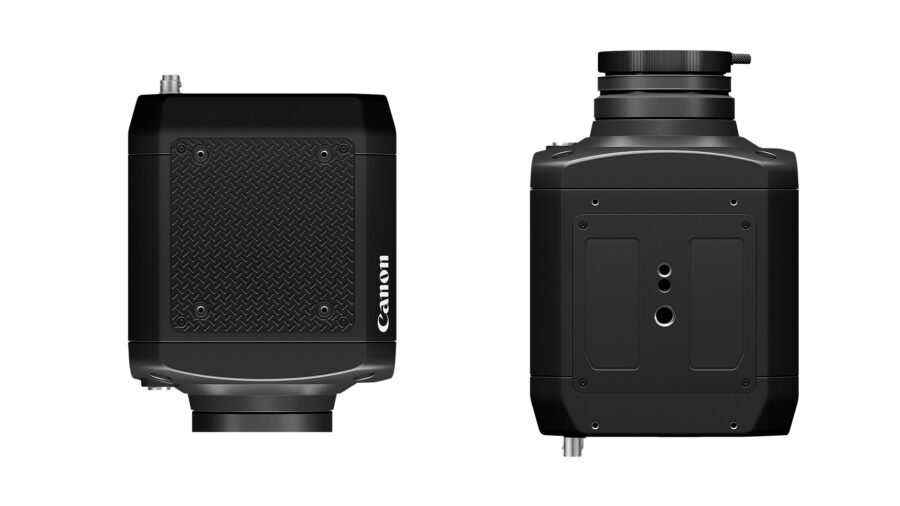 Canon MS-510 camera top and bottom views. Image credit: CanonA camera built for existing ecosystems
Canon has designed the MS-510 to integrate into the same security and monitoring infrastructures that already support the MS-500. The shared protocol stack (NU, Pelco-D, ONVIF, WebView) means that organizations running MS-500 systems should be able to incorporate the new camera without overhauling their control infrastructure.
The camera body measures approximately 128 x 128 x 184mm (5.04 x 5.04 x 7.24 inches) excluding protrusions and weighs roughly 2.2 kg (4.86 lbs) body only. It accepts 12 to 30V DC external power, drawing a maximum of 23.7W. The operating temperature range spans a wide -20°C to +45°C (-4°F to +113°F), with a startup range of -10°C to +45°C and storage tolerance from -30°C to +60°C.
It is worth noting the spec sheet lists a microSD card slot and an external device I/O terminal (two inputs, two outputs), both marked “for future expansion.” Whether Canon plans firmware updates to activate recording or accessory integration remains to be seen.
Pricing, availability, and where to see it
The Canon MS-510 is priced at an estimated $22,800, which is a notable reduction from the MS-500’s $25,200 launch price. It is scheduled to be available later this year. The camera will be on display at NAB 2026 in Canon’s booth #C3825 from April 19 to 22 in Las Vegas, where attendees can see captured footage demonstrating the camera’s low-light color imaging. It will also appear at the SPIE Defense+Security show in National Harbor, Maryland from April 28 to 30.
Are you working in security, wildlife, or specialist low-light applications? Does the MS-510’s sensitivity improvement move the needle for your workflow? Don’t hesitate to let us know in the comments below!