
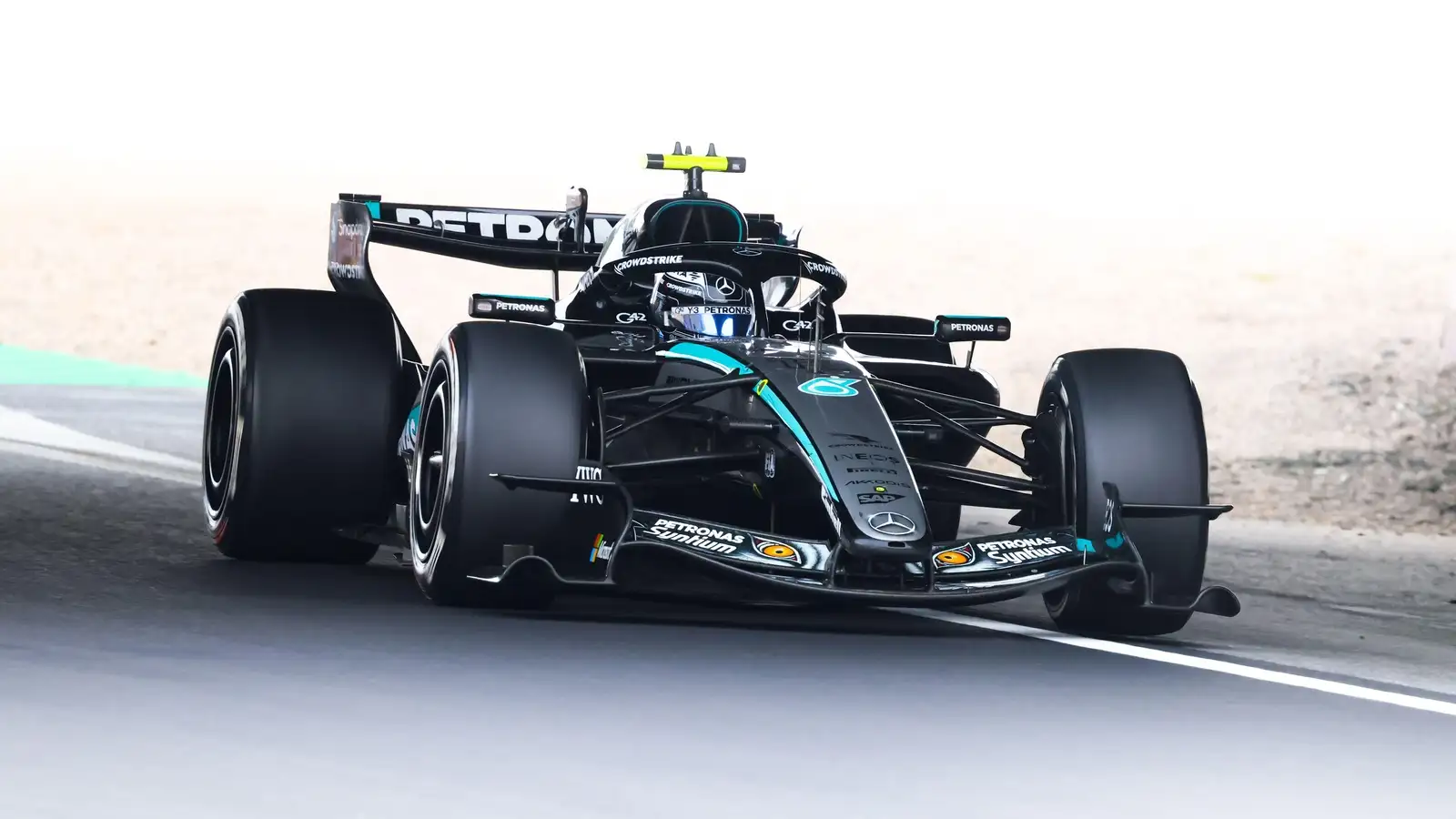
The FIA has moved to close off a clever F1 2026 qualifying trick being exploited by Mercedes and Red Bull.
Mercedes and Red Bull were named in widespread reports last winter that some F1 2026 power unit manufacturers have exploited a loophole in the new engine regulations related to compression ratios.
FIA intervenes over Mercedes, Red Bull qualifying trick
Want more PlanetF1.com coverage? Add us as a preferred source on Google to your favourites list for news you can trust
The saga came to a head prior to the season-opening Australian Grand Prix when the FIA announced that changes to the way compression ratios are measured will come into effect from June 1.
Following the recent Japanese Grand Prix, it emerged that Mercedes and Red Bull had also been exploiting a clever engine trick in qualifying conditions.
As first reported by The Race, Red Bull and Mercedes had found a way to circumvent mandatory power reduction requirements on the approach to the timing line on qualifying laps, which normally sees cars reduce energy deployment by 50 kilowatts per second.
All eyes on ADUO: The F1 2026 engine safety net
What is ADUO? The FIA lifeline that could rescue Honda
Explained: F1’s complex power unit upgrade system
Avoiding this so-called ‘ramp-down effect’ allowed Mercedes and Red Bull to maintain maximum deployment for longer, gaining advantages of around 50-100kW over their competitors whose power was being gradually reduced.
The trick took advantage of a rule allowing teams to shut down the MGU-K to prevent component damage during technical problems.
Although the MGU-K shutdown triggers a 60-second lockout period that would normally prove hugely costly in racing situations, the effect of no power from the MGU-K is negligible on a cooldown lap in qualifying conditions.
Following complaints from rival teams, PlanetF1.com understands that the FIA has issued a technical directive making it clear that the trick should only be used in emergency situations, as originally intended, and not in the search for performance gains.
It is said that Ferrari raised safety concerns with the FIA over the trick over recent weeks.
Mercedes driver Kimi Antonelli and Red Bull’s Max Verstappen were both seen moving slowly through the fast esses section in practice in Japan, with the Mercedes-powered Williams of Alex Albon stopping on track at Suzuka due to complications with the trick.
Rival teams are understood to have first noticed Mercedes and Red Bull Powertrains-engined cars employing the trick in Australia.
The trick was not used at the second race in China due to the relatively short distance between the final corner and the timing line.
Additional reporting by Thomas Maher
Want to be the first to know exclusive information from the F1 paddock? Join our broadcast channel on WhatsApp to get the scoop on the latest developments from our team of accredited journalists.
You can also subscribe to the PlanetF1 YouTube channel for exclusive features, hear from our paddock journalists with stories from the heart of Formula 1 and much more!
Read next: F1 team valuations surge as Ferrari tops billion-dollar boom