
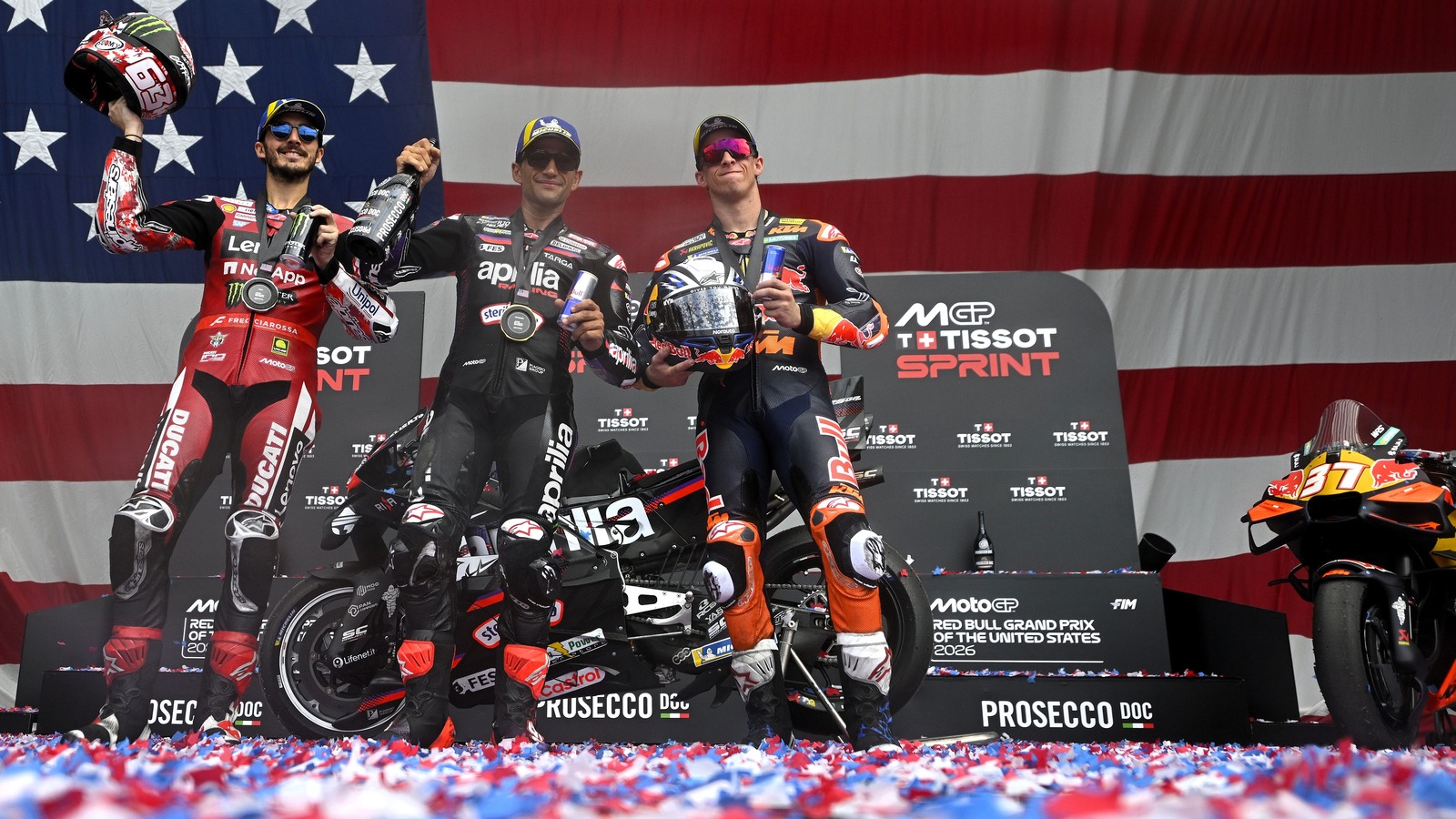
The unpopular issue of MotoGP post-race tyre pressure penalties reared its head again at the recent COTA round.
The result was changed after the Sprint medal ceremony, with Pedro Acosta demoted from third for failing to achieve the required 30% of laps over the specified minimum front pressure.
There was also another indirect ‘casualty’.
Joan Mir had crashed while trying to catch Acosta on the final lap, pushing over the limit in search of Honda’s first podium of the year – which he would later have inherited if he had settled for fourth.
Instead, Enea Bastianini was promoted to third. But with Acosta’s penalty issued two hours after the chequered flag, Tech3 missed out on the chance to properly celebrate their debut rostrum of the season.
Article continues below ADVERTISEMENT
Article continues below ADVERTISEMENT
KTM’s Pit Beirer labelled the ‘real-time’ tyre pressure regulations and post-race penalties – in place since the start of 2024 – as “absurd”.
The switch from Michelin to Pirelli for 2027 provides a natural opportunity to revise the regulations and penalties.
At the very least, new minimum pressure values will be required to suit the revised Italian tyres.
Speaking before the latest controversy, Pirelli Motorcycle Racing director Giorgio Barbier began by emphasising that pressure limits are based on safety concerns.
“I know that everyone is not happy, because of what happens after the end of the race,” Barbier told Crash.net, when asked for his opinion on the current rules.
Article continues below ADVERTISEMENT
Article continues below ADVERTISEMENT
“But, if the present [tyre] supplier strongly asks for this rule, it’s because they believe that this might bring a safety problem.
“So, if they fix something, it’s because they believe that, under a certain limit, you might have another problem.”
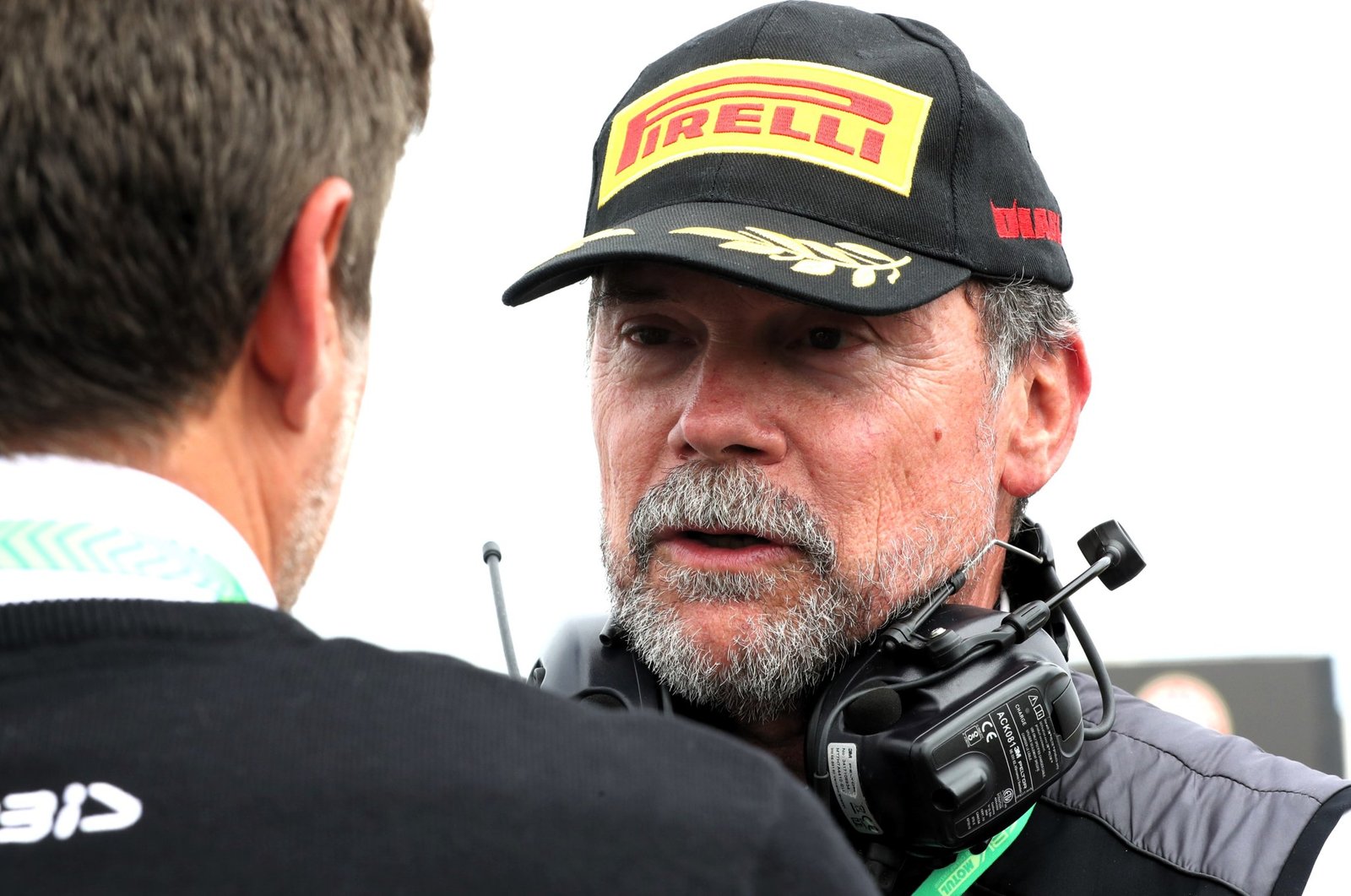
Pirelli Motorcycle Racing director Giorgio Barbier.
© Gold & Goose
However, the magnitude of current in-race pressure fluctuations makes it difficult for teams to predict a correct starting pressure.
Especially when trying to account for potential ‘dirty air’ behind other bikes, which significantly raises front tyre temperature and pressure.
Article continues below ADVERTISEMENT
Article continues below ADVERTISEMENT
Pirelli’s tyre construction “probably” relies less on tyre deformation to generate grip, meaning it is likely to operate at a higher minimum pressure than the current 1.8 bar front and 1.68 bar rear.
Whether that alone will help with pressure variation is unclear, but the 2027 machines will also have reduced performance, and therefore tyre stress, due to smaller engines and a ban on ride-height devices.
However, aerodynamics, although reduced, will still be significant, meaning the effect of ‘dirty air’ will remain.
“I don’t know yet what will happen with our tyres,” Barbier said.
“For sure, we’ve got different casing, different dimensions, different compounds [compared to Michelin] and so that means how the pressure works inside our tyres will be different.
Article continues below ADVERTISEMENT
Article continues below ADVERTISEMENT
“For instance, we will have for sure a higher [working] pressure than what they are using now.
“The need for deflection they’ve got now… probably it’s not as necessary with our tyres.
“But we don’t know for sure. Because we are not used to this kind of braking, this kind of aero, or the overheating [in dirty air].
“So I don’t know yet how much our front tyre will be influenced in a race situation. That’s also hard to simulate in a test.
“But we will start fixing a new [pressure] limit with our tyres and looking at how they behave, and then we will decide what to do [with the regulations].
Article continues below ADVERTISEMENT
Article continues below ADVERTISEMENT
“For sure, there will be rules. But we have to study, model and understand [what they should be].”
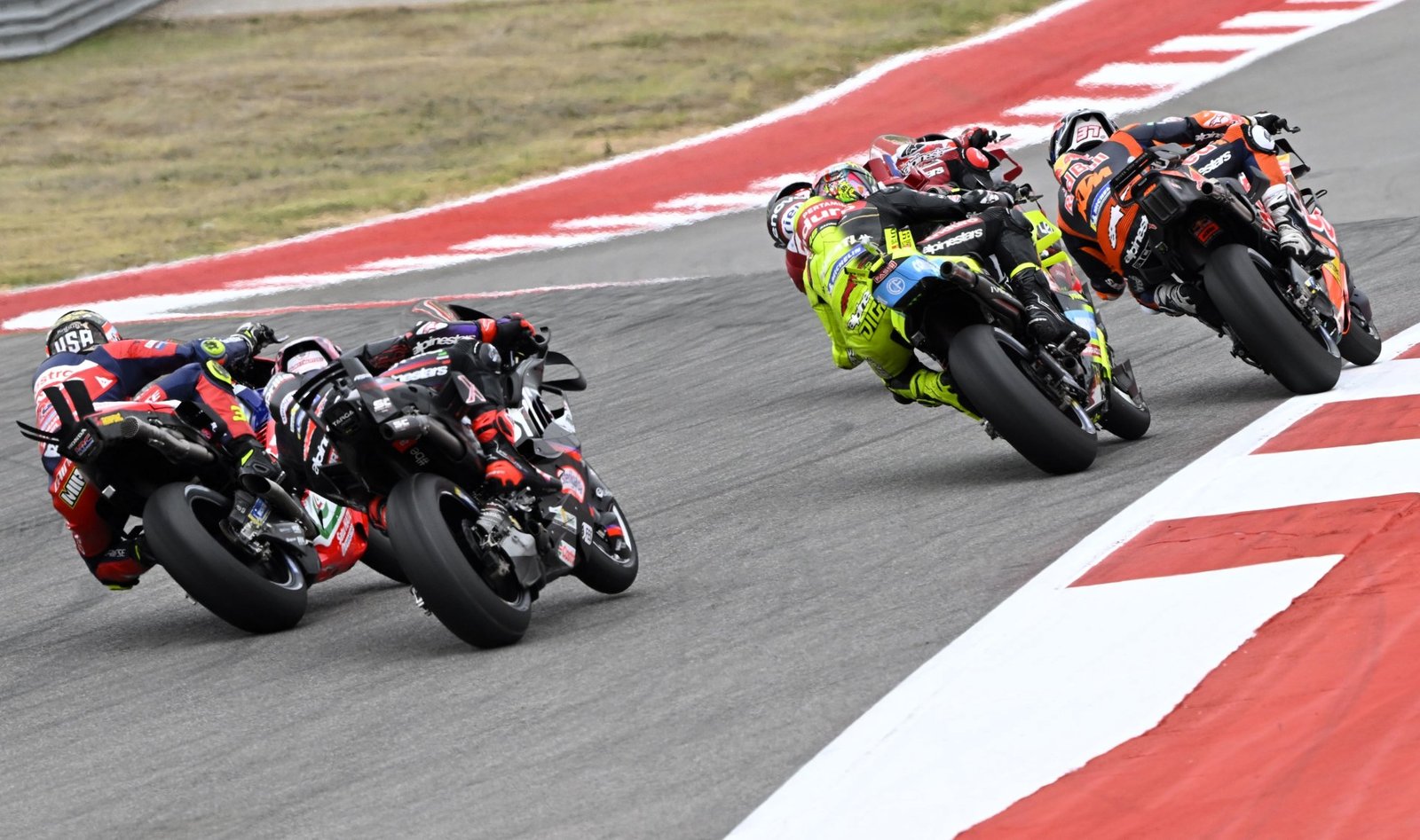
2026 US MotoGP Sprint race action.
© Gold and Goose
Although cautious to avoid committing to specific changes until enough data has been gathered, Barbier made clear that race results should be decided on track.
“For sure, we will pay attention to this [tyre pressure penalties]. Because it’s important that the race can ‘finish’ at the chequered flag.”
Subscribe to our MotoGP Newsletter