
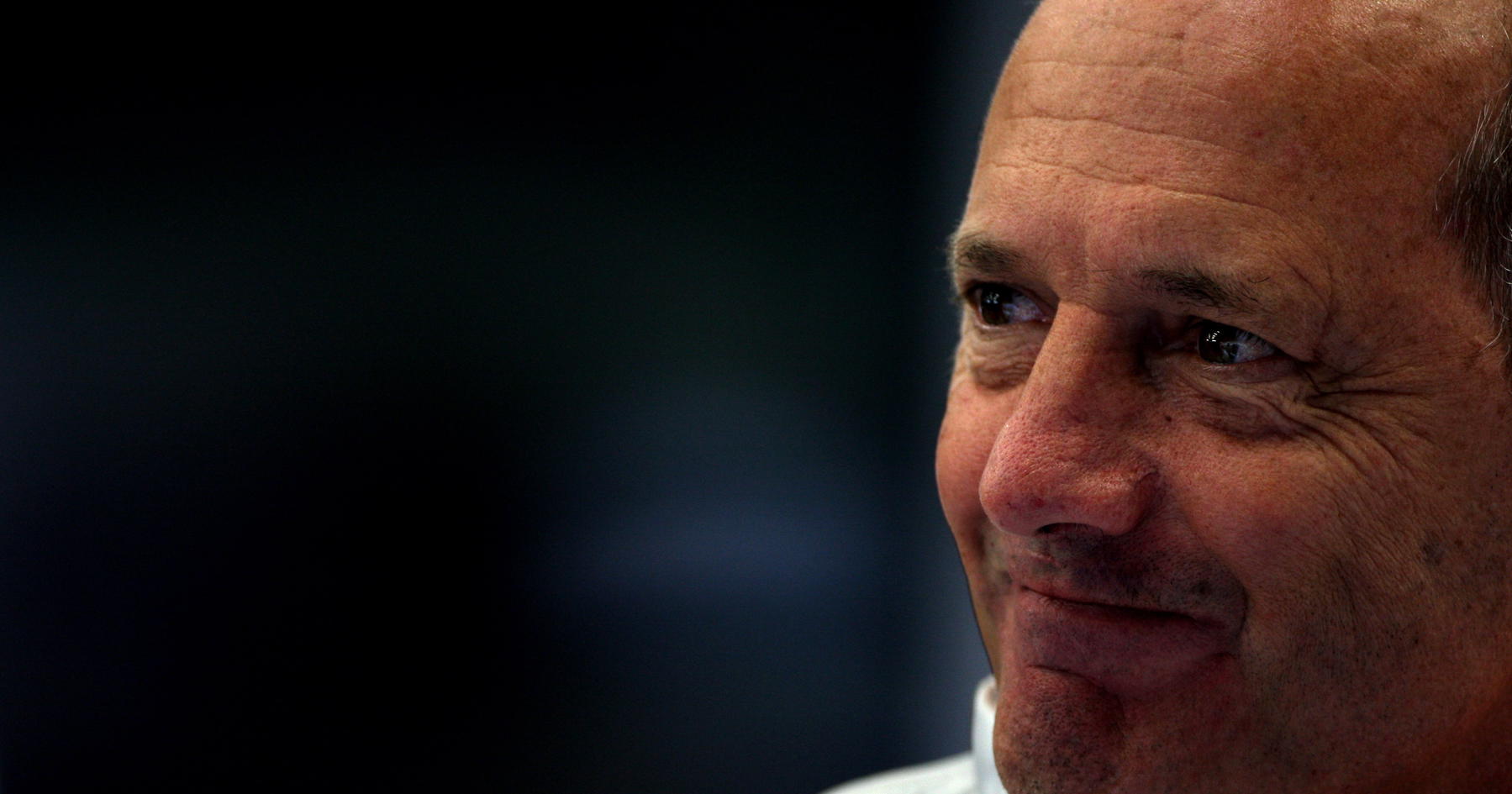
Ron Dennis stepped down as McLaren’s chief executive and chairman on 16 April 2009, bringing to a close 28 years at the helm of one of Formula 1’s most successful teams.
It was a tenure marred in its final years by scandal and controversy that had tarnished the reputation he had spent decades building.
The departure came just weeks after the Liegate affair, in which Dennis’s team was found to have deliberately misled stewards at the Australian Grand Prix about team radio instructions given to Lewis Hamilton.
Combined with the £50 million financial and sporting devastation of the 2007 Spygate scandal, Dennis’s exit appeared as much a consequence of mounting pressure from within and without as it was his own decision.
Reflecting on his departure, Dennis struck a defiant yet resigned tone, acknowledging the combative nature that had defined his career.
“I admit I’m not always easy to get on with. I admit I’ve always fought hard for McLaren in Formula 1,” he said.
“I doubt if Max Mosley or Bernie Ecclestone will be displeased by my decision. But no one asked me to do it. It was my decision.”
A legacy built and nearly destroyed
Dennis had transformed McLaren from a team on the decline into the sport’s most dominant force. Between 1984 and 1998, the team secured seven constructors’ championships and nine drivers’ titles with Niki Lauda, Alain Prost, Ayrton Senna, and Mika Häkkinen. In 2008, Lewis Hamilton had returned the team to winning ways.
Yet by 2009, the meticulous standards and uncompromising personality that had driven McLaren’s success had become liabilities.
Dennis’s refusal to bend in his conflicts with FIA president Max Mosley, particularly in the wake of Spygate, had left him increasingly isolated.
Spygate, the 2007 espionage scandal in which McLaren was found in possession of 780 pages of confidential Ferrari technical documents, resulted in the team’s exclusion from that year’s constructors’ championship and a record $100 million fine, later reduced to approximately $52 million after accounting for lost prize money and travel subsidies.
The episode cast a long shadow over Dennis’s final years, straining relationships both within the sport and inside his own team.
Liegate and the final straw
The controversy that directly preceded Dennis’s resignation was, if anything, even more damaging.
At the 2009 season opener in Australia, Hamilton let Toyota’s Jarno Trulli pass him behind the safety car after Trulli had run off track.
When stewards penalised Trulli 25 seconds for an illegal overtake, promoting Hamilton to third, questions were raised about whether McLaren had instructed Hamilton to yield the position.
In post-race interviews, Hamilton admitted the team had told him to let Trulli through. Yet when questioned by stewards, both Hamilton and McLaren sporting director Dave Ryan denied any such instruction had been given, despite the existence of team radio recordings that proved otherwise.
The truth emerged one week later at the Malaysian Grand Prix when the radio communications surfaced. Hamilton was immediately disqualified from his Australian podium, Dave Ryan was sacked after 35 years with the team, and McLaren received a suspended three-race ban.
Hamilton issued a public apology, admitting he had lied under instruction from the team.
The timing of Dennis’s resignation, announced just days before the FIA World Motor Sport Council hearing into Liegate, fuelled speculation that the scandal had forced his hand, though he publicly insisted otherwise.
© xpb.cc
Relationships fractured
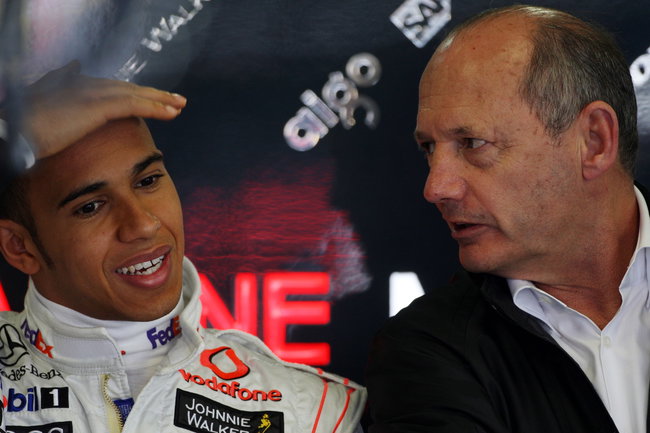
Among those reportedly distancing themselves from Dennis as his authority crumbled was Hamilton himself, along with his father and manager, Anthony Hamilton.
The relationship between Dennis and the driver he had nurtured since Hamilton was 13 years old had become strained, and with Dennis out of the picture, Hamilton was said to be more content to remain at McLaren under the leadership of Martin Whitmarsh, who had already taken over as team principal in March 2009 and now assumed Dennis’s chief executive role.
Dennis’s combative relationship with Mosley had also reached breaking point. The two had clashed repeatedly over cost-cutting measures, governance issues and the handling of Spygate, with Mosley reportedly relishing the opportunity to rid the sport of one of his most vocal critics.
Yet whilst the circumstances of his exit suggested a man beaten by enemies within and without, Dennis’s departure was far from the end of his Formula 1 story.
After four years away from the top job, he would return to lead McLaren once again in 2014, proving that even the most turbulent of exits need not be final.
For now, though, on this day 17 years ago, one of the sport’s most decorated and divisive figures stepped aside, leaving behind a legacy of triumph and recent controversy.