
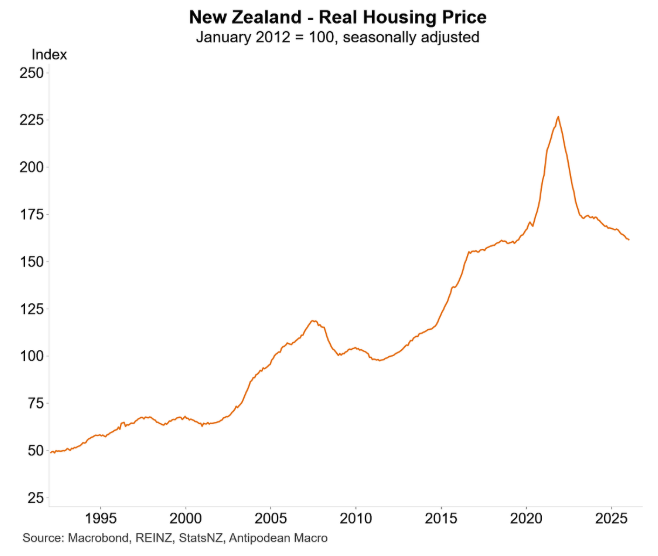
As illustrated below by Justin Fabo from Antipodean Macro, New Zealand home values have fallen by more than 30% in real inflation-adjusted terms, back to 2019 levels:
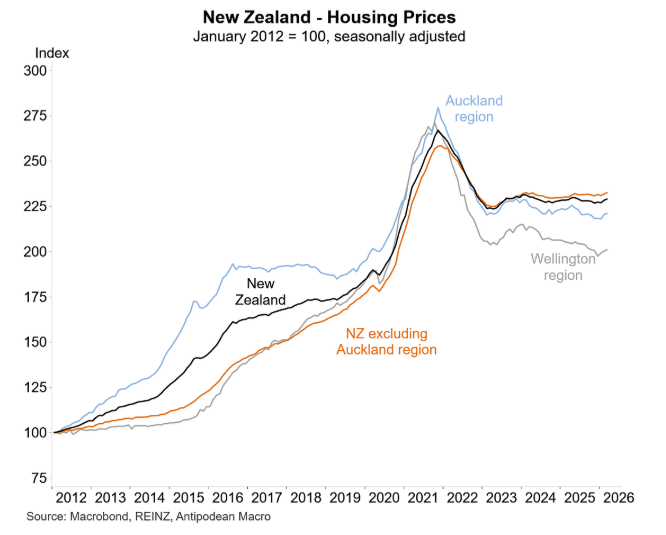
The latest house price results from the Real Estate Institute of New Zealand (REINZ) recorded a second consecutive monthly gain, rising by 0.3% in March.
Advertisement
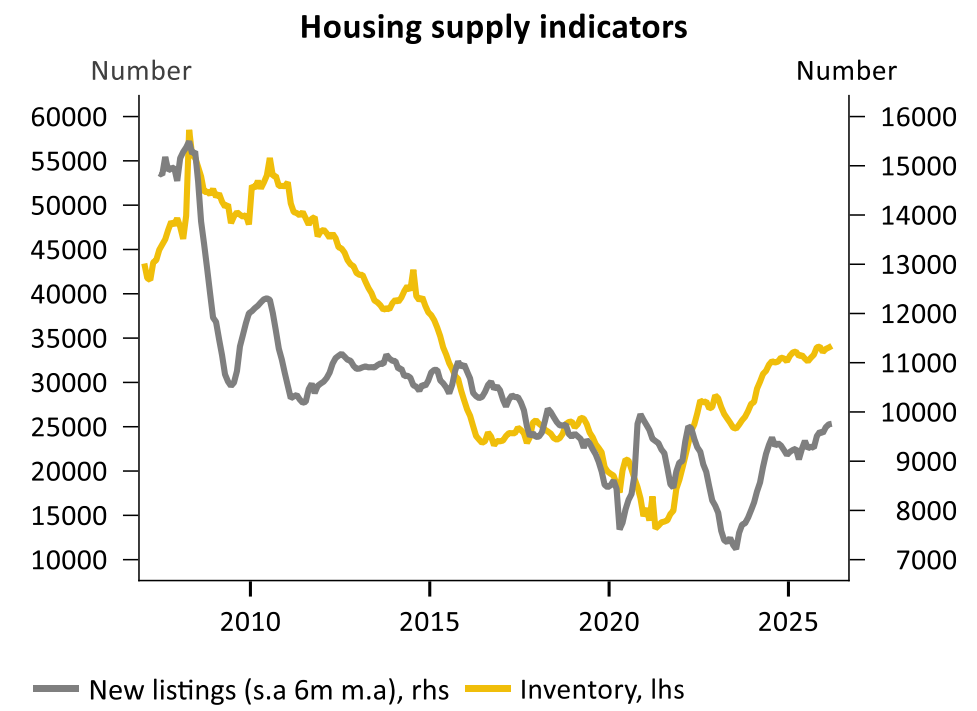
However, house sales fell by a sizable 4.6% over the month, while new listings and market inventory continued to climb, pushing available stock to its highest level in 11 years and strengthening buyers’ negotiating position.
Therefore, the March data highlighted emerging downside risks to both home prices and sales in the months ahead, as the ongoing conflict in the Middle East continues to weigh on market conditions.
Major bank ASB believes that elevated new listings and the growing inventory overhang in the market will further dampen any potential improvement in house prices. ASB, therefore, expects home prices to remain flat over the year.
Advertisement
The other major New Zealand banks are equally, if not more, bearish on the housing market.
According to ANZ’s latest Property Focus report, New Zealand home prices are expected to decline by 2% in 2026, reversing its earlier projection of a 2% increase. This is due to rising mortgage rates, lower buyer confidence, and global uncertainty stemming from the Middle East conflict.
Advertisement
These headwinds coincide with a high number of for-sale listings, low sales volumes, declining auction clearance rates, and low buyer confidence.
Housing supply is also surpassing demand, resulting in longer time-to-sell periods.
Westpac economists also expect New Zealand home prices to decline by roughly 1% in 2026, reversing their previous forecast of a 4% increase.
Advertisement
Westpac expects the housing market to weaken due to declining consumer confidence, employment, and GDP growth, as well as rising inflation and mortgage rates.
Finally, BNZ Chief Economist Mike Jones says New Zealand’s housing outlook has weakened sharply as the Middle East conflict reshapes the macro environment. The bank now expects flat house prices in 2026, instead of the previously forecast +2%, and warns that real (inflation‑adjusted) house prices may keep falling until mid‑2027, returning to late‑2016 levels.
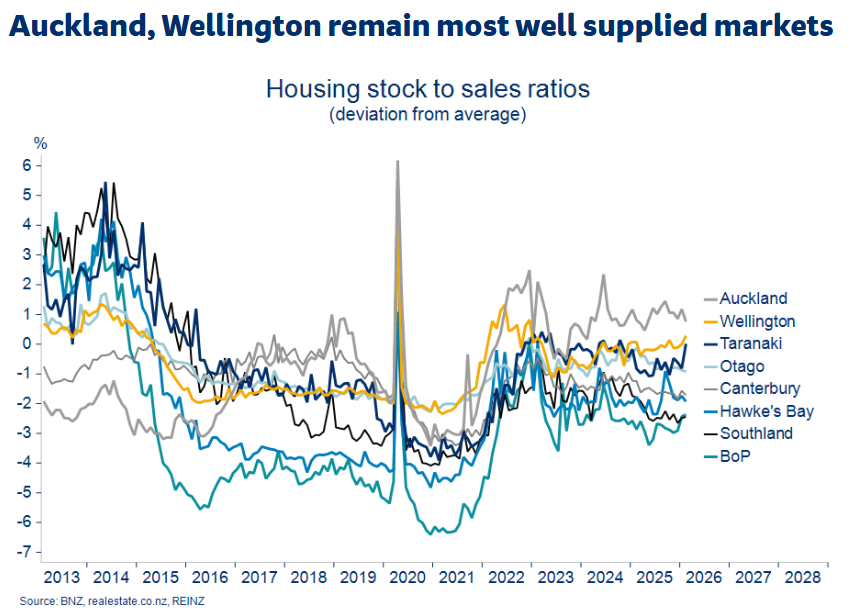
Jones notes that housing supply is strong, dwelling consents are up, listings are high, and inventory is tracking at 11‑year highs.
Advertisement
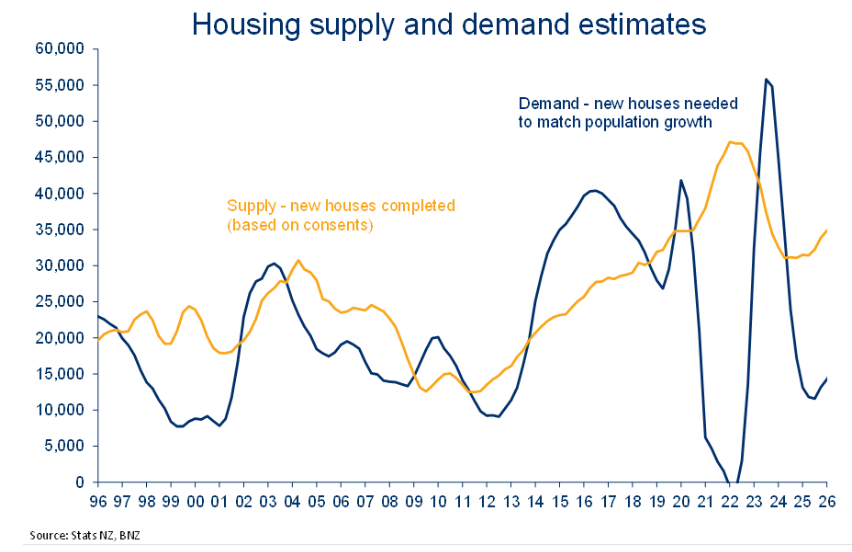
Auckland and Wellington remain the most well‑supplied markets.
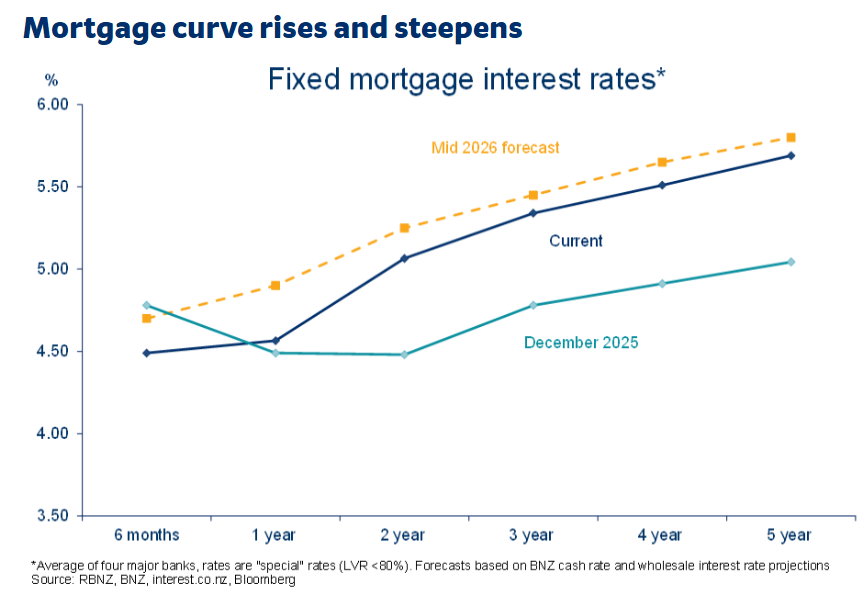
BNZ forecasts that mortgage rates are likely to rise earlier than expected due to wholesale rate jumps.
Advertisement
The bank expects the Reserve Bank to lift the official cash rate in September and December.
As a result, floating mortgage rates could reach 6.0–6.5% by year-end, whereas fixed rates (especially 3–5 year terms) face upward pressure from global rate moves.
Advertisement
Given that CPI inflation in New Zealand is expected to rise by more than 4% in 2026 due to the global energy shock, real home prices are set to take another sharp leg down, potentially falling to 2016 levels by mid-2027.