
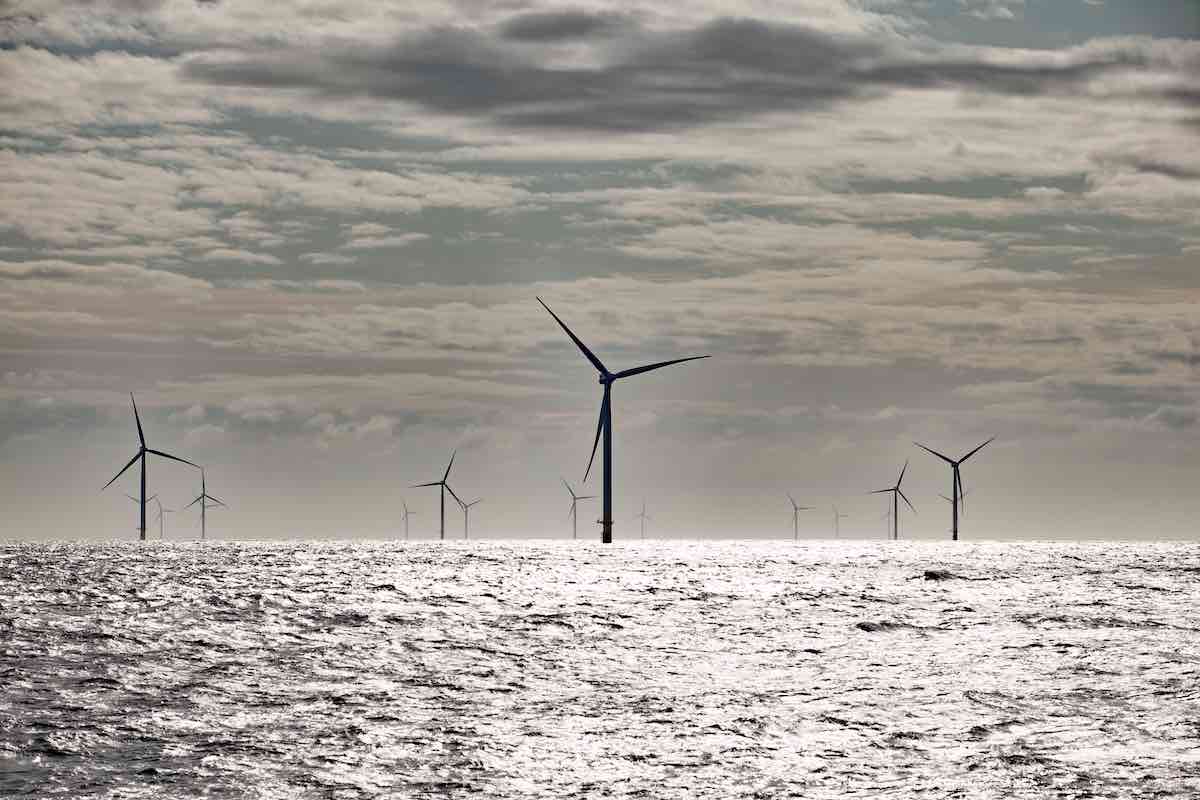
The UK has been setting new renewable energy generation records, while also pushing its share of imported energy – and particularly gas – to the lowest level since 2004 as it continues to wean itself off fossil fuels.
The Energy and Climate Intelligence Unit (ECIU) has analysed new government data to show that 46 per cent of primary energy used to supply electricity to the United Kingdom was imported in 2025, down from 48 per cent in 2024, and well down on the peak of 67 per cent recorded back in 2013.
“The expansion of renewables is more than making up for the ongoing decline in North Sea gas output which has happened even under decades of policy to maximise extraction,” said Dr Simon Cran-McGreehin, head of analysis at the ECIU.
Over 53 per cent of the energy used for UK electricity supplies came from UK sources in 2025, up from 51 per cent in 2024, with renewables accounting for the majority of this improvement.
In fact, the renewable energy share of electricity generation was a record 52.5 per cent in 2025, the second year in a row where more than half of total generation came from renewables.
And this number is continuing to grow, as highlighted by the fourth quarter figures, which saw the renewable share of generation account for 54.5 per cent, 6.4 percentage points up on the fourth quarter in 2024.
Two new maximum generation records have also been reported in the last few weeks, including on March 25 at 1:30pm, when wind energy across Great Britain (as distinct from the United Kingdom, which includes Northern Ireland) generated 23,880 megawatts (MW), beating the previous maximum generation record of 23,825 MW set on 5 December 2024.
According to the country’s National Energy System Operator (NESO), at the time wind generated this new record, it was providing 60 per cent of Great Britain’s electricity – enough electricity to power over 23 million homes.
Conversely, at the time the British wind energy fleet hit this new record, gas-fired power plants were providing only 2.3 per cent of the grid’s electricity.
NESO also reported late last week that Great Britain had broken solar power records two days in a row, hitting a maximum generation of 14,147 MW on Monday, April 6, followed a day later by a new maximum generation record of 14,414 MW – enough to power 11 million homes.
These records came much earlier in the year than normal, breaking the record last set in July of 2024.
At the time the record was broken on Tuesday, solar was generating 35 per cent of Great Britain’s electricity consumption.
“As solar and wind power become more commonplace, the price of electricity will come down, especially at times of abundant generation,” said Chris Hewett, chief executive of Solar Energy UK.
“With sunnier weather ahead of us, combined with more and more installations being deployed, it is inevitable that further records will be set, putting further downward pressure on prices and reducing Britain’s dependence on expensive gas.”
If you would like to join more than 29,000 others and get the latest clean energy news delivered straight to your inbox, for free, please click here to subscribe to our free daily newsletter.

Joshua S. Hill is a Melbourne-based journalist who has been writing about climate change, clean technology, and electric vehicles for over 15 years. He has been reporting on electric vehicles and clean technologies for Renew Economy and The Driven since 2012. His preferred mode of transport is his feet.