
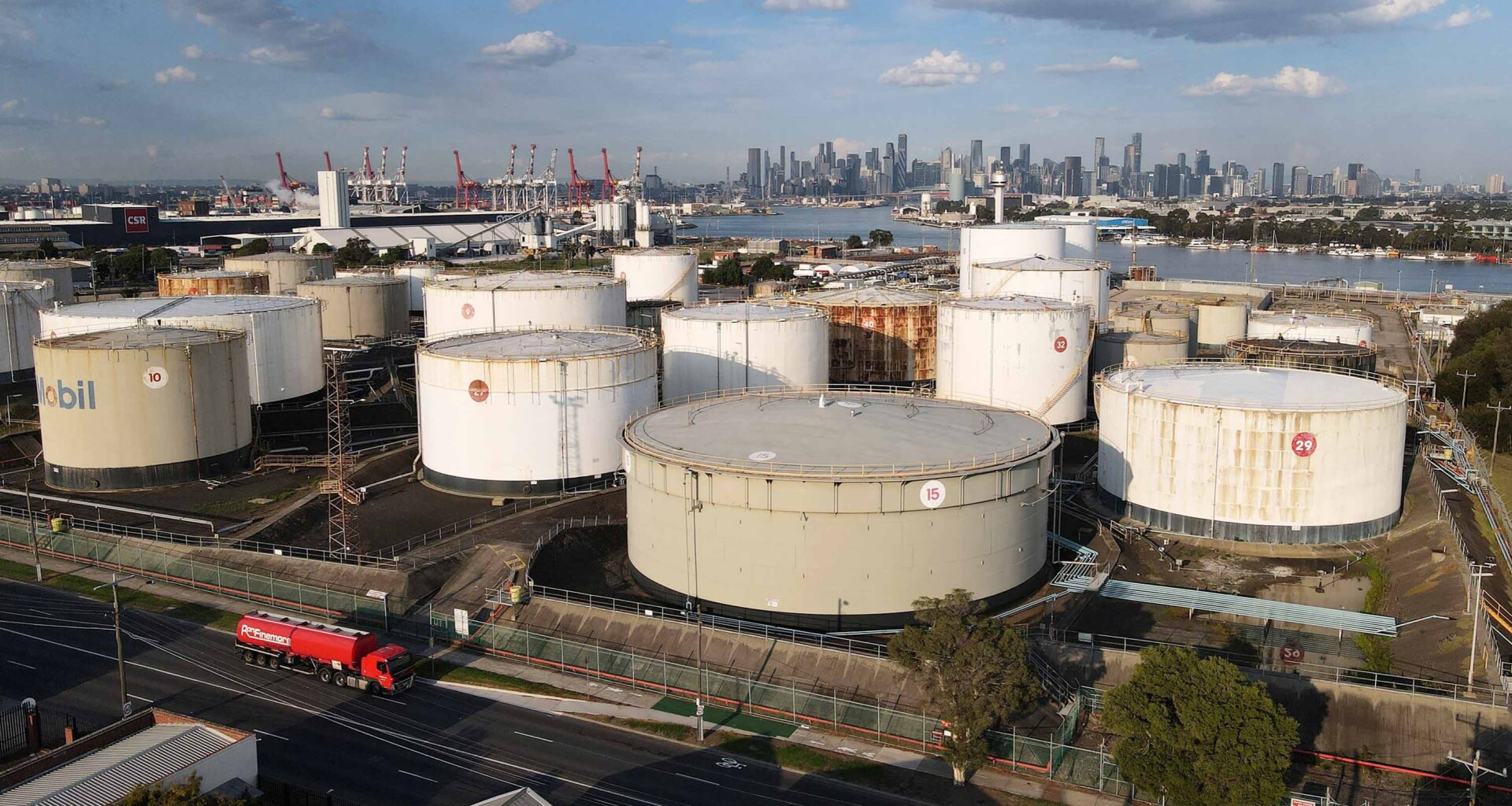
A shortage of oil reserves leaves the country unprepared for the fuel crisis
Australia’s inflation rate is forecast to outpace that of any other developed country as the crisis in Iran continues and the Strait of Hormuz remains closed, shows the IMF’s April World Economic Outlook.
Inflation is expected to increase by 1 percentage point from the previous IMF October forecast. Meanwhile, National Australia Bank’s March Business Survey shows business confidence plunging to the lowest levels since Covid-19.
“Even economies with strong resource endowments remain vulnerable when essential inputs depend on a narrow set of routes, fuels and processing hubs,” says Julien Chaisse, professor of transnational economic governance at the City University of Hong Kong. “Once energy prices move, the shock does not stay in energy — it passes through into fertiliser, transport, food and wider production costs.”
Data from the University of Technology Sydney shows that around 30 per cent of Australia’s refined oil needs to pass through the Strait of Hormuz as its sources in South Korea and Singapore import from the Middle East.
The breakdown in supply has caused fuel prices to rise dramatically, with petrol prices increasing by 29.3 per cent since the war began and diesel prices soaring by 65.3 per cent, according to Global Petrol Prices.
And, unlike its peers, Australia has failed to meet the International Energy Agency’s mandate of 90-day oil reserves.
On April 14, the IEA cut its oil forecast, calling the situation the “largest disruption in history” to the global oil supply.
In its latest forecast, the IMF urges the Australian government to avoid implementing cost of living relief measures, such as cutting the fuel excise, which could push inflation even higher.
A fire at Viva Energy Group’s Geelong refinery — one of the country’s two oil refineries — on April 15 will further damp fuel production, says Australia’s energy department.
Energy policy future
The Institute for Energy Economics and Financial Analysis in a March 23 report argues that the fuel crisis highlights the need for the country to reduce its dependence on oil and strengthen electrification through government policy measures.
The Australian Energy Market Operator says renewables supplied more than half of the country’s energy supply in the fourth quarter of 2025, and the crisis could help speed up the transition.
“The fuel crisis is providing some tailwinds to the energy transition and we’re seeing early signs of that in Australia, in areas like [electric vehicle] sales,” says Australian Sustainable Finance Institute chief executive Kristy Graham.
“It has shifted energy security from a long-term consideration to an immediate constraint, reinforcing Australia’s role as a [liquefied natural gas] supplier and the need to reduce our exposure to fossil fuel prices,” she continues.
The fuel crisis is providing some tailwinds to the energy transition and we’re seeing early signs of that in Australia, in areas like EV sales
“A decarbonised energy system, low-emissions transport and accelerating the decarbonisation of industry is very much aligned with Australia’s long-term energy security. Policy settings need to recognise this alignment, take a long-term view and continue to ensure capital can be directed with confidence.”
Australia’s Labour government, along with the Green party, has proposed a gas export tax on oil and gas companies as their stock prices soar with the added war premium.
Fossil fuel majors are earning an additional $30mn an hour, finds a Guardian analysis, while the stock of Australian-based oil and gas company Santos has increased by around 18 per cent since the start of the war.
“It’s reasonable for governments to review taxation settings to make sure they reflect market conditions and deliver fair value, but the key is predictability,” says Export Council of Australia chief executive Arnold Jorge of the government’s tax proposal.
“Sudden or retrospective changes, especially during a global energy crisis, send the wrong signal to investors and trading partners,” he adds. “If reforms are considered, they need to be transparent, consultative and phased in with clear notice.”