
Mike Figueroa, a boxing trainer from the Bronx, arrived at ATLAS High School in Queens, New York, one day last year and was quickly pulled aside by the principal, Elizabeth Messmann. A student was on the verge of dropping out, and she thought Figueroa could help, as he tells it.
It wasn’t about academics or a lack of credits. The student, like the vast majority of those at the school, was new to this country. He was living in a shelter and struggling with an unsafe situation there. Perhaps, he believed it would be better to give up on getting his high school diploma and find a job.
For many young immigrants, education can feel like a waste of however long they have here in the United States when they could be working. That way, in case they get deported, at least they will have earned some money to take back to their home country.
According to Figueroa, the student’s mother had come to the school to disenroll him. But, before she could, the principal told the coach that the student loved boxing. Maybe, there was a way they could convince him to stay at ATLAS.
And so, Figueroa made a deal with him: private boxing classes in exchange for improved attendance.
School uses boxing to bring back kids scared of ICE
At a high school predominately made up of newly arrived immigrants in Queens, New York, the student population is shrinking, and chronic absenteeism is on the rise amid immigration crackdowns around the country. A storage closet-turned boxing gym offers students an escape, and a reason to stay in school. CNN spent time with 18-year-old Gabriela as she trains, and dreams of a future in the ring.
School uses boxing to bring back kids scared of ICE
3:04
“And he eventually graduated last year,” Figueroa told CNN Sports. “Once he saw this, and he knew that if, ‘I don’t go, I lose this,’ then he was here all the time.”
That’s the impact Figueroa and Messmann hope to have with the boxing club and other unconventional programs at ATLAS. The school serves a unique demographic with the goal of giving them outlets and opportunities that acknowledge those circumstances.
Around 85 percent of the student population at ATLAS arrived in the United States in the past three years, Messmann says. Many are Spanish speakers learning English for the first time. The school says it does not systematically track the documentation status of students. But often it comes up in the course of establishing which city-wide programs students are eligible for or in helping them apply for colleges. Messmann estimates that more than 50% of the student population is “in the process of becoming documented.”
Enrollment at ATLAS boomed as the Covid-19 pandemic lessened, and the student body expanded to about 1,400. But the Trump administration’s ICE crackdowns across the country risk reversing the gains made at ATLAS: As of March 31, enrollment has plummeted to 732 students – well short of the 1,181 school administrators expected this school year.
“One of the biggest challenges we’re facing as a community is attendance – chronic absenteeism. Children are coming to school less frequently, and I think part of it is that they don’t feel safe transiting to school,” Messmann said.
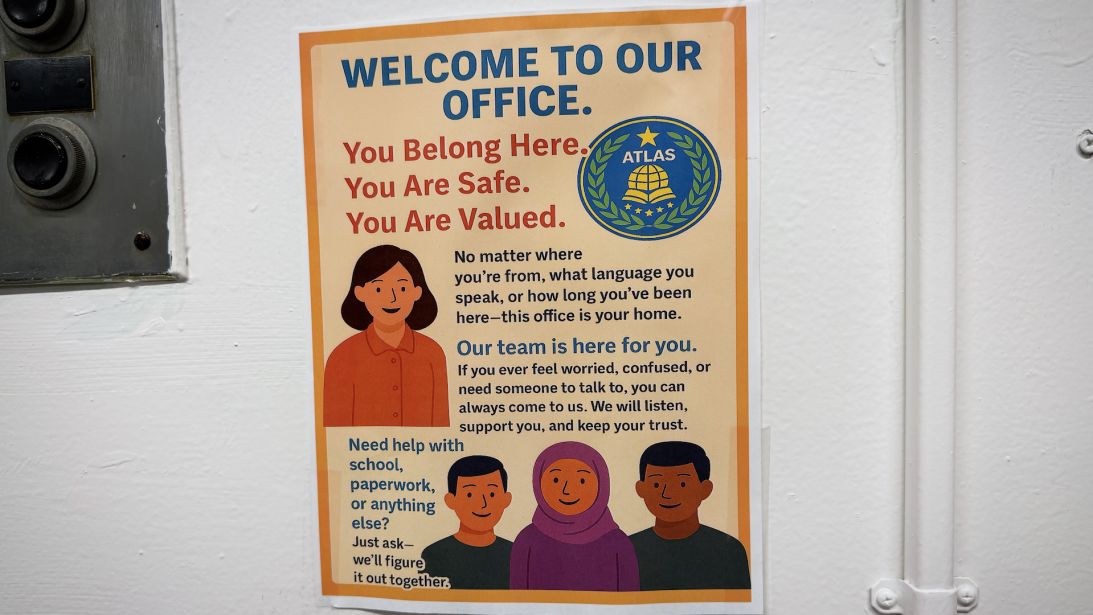
Signage around the school speaks directly to creating a welcoming environment.
“You Belong Here. You Are Safe. You Are Valued,” reads a poster that appears throughout hallways and classrooms. The text goes on to assure students that no matter their language or length of time in this country, they should feel at home in the classroom and with their teachers. A sticker on a door proclaims I AM AN UNAFRAID EDUCATOR who works “with and for undocumented students & families.”
Messmann is explicit about the considerations that come with educating newly arrived immigrants who are understandably anxious about their future in America.
“We do hear from parents that they are afraid to send their children to school, or they are anticipating being deported,” Messmann said. “And because they have this feeling or sense that they will soon be facing deportation, they maybe aren’t really committing to the school – to the process of getting an education – because they are choosing to work.”
The school, then, needs to serve as both a refuge from outside anxiety, and a realistic facilitator for a better future, all while trying to convince students and their families that education serves a role in both those initiatives.
“So, I think that leads us to really try to be innovative in the programs that we offer,” Messmann said.
That means a community closet arranged to look like a real boutique, so students can get what they need, but also get a retail experience — both shopping at and staffing a store. And clubs that offer students the chance to learn how to fix an iPhone or cut hair or be a nail technician.
“Those types of programs are programs of interest to students,” Messmann said. “But also, ways that our students can earn a living while they are becoming documented.”
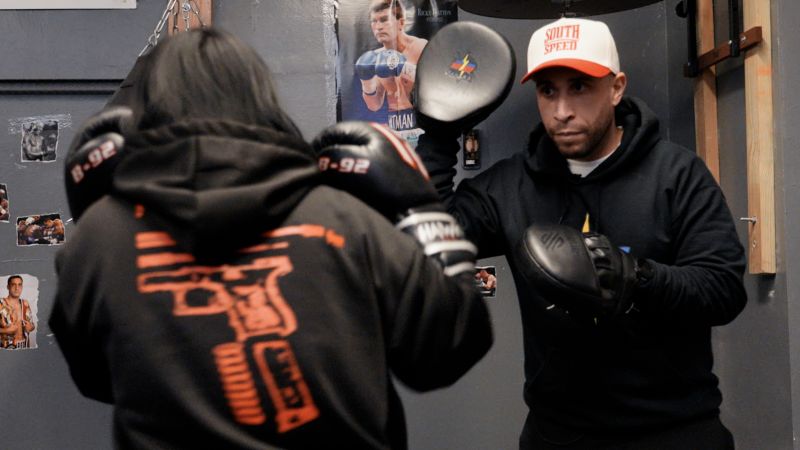
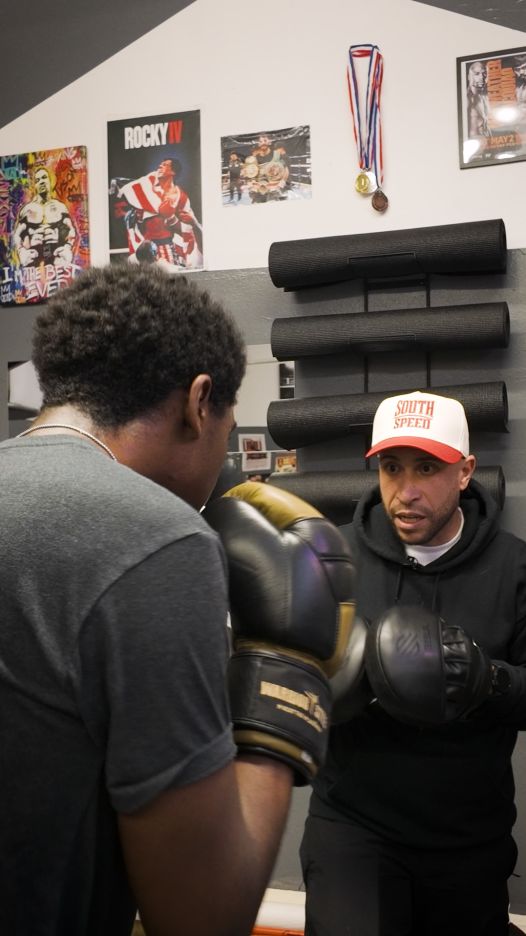
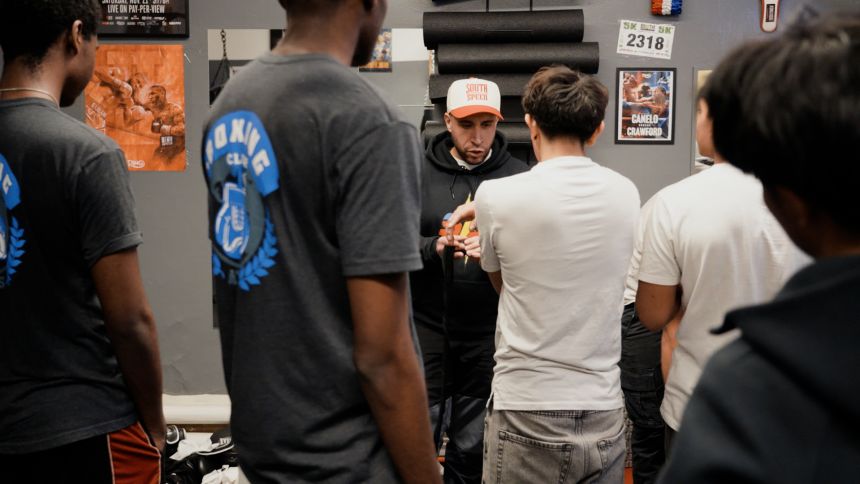
And behind the auditorium stage, up an echoey stairwell, is a former storage closet that’s been turned into a boxing gym. There, gangly teens in squeaky sneakers practice their English outside a classroom setting, build community amongst themselves, channel whatever fears or frustrations they may be feeling into physical expression, and work towards a coaching certification that gives them earning opportunities.
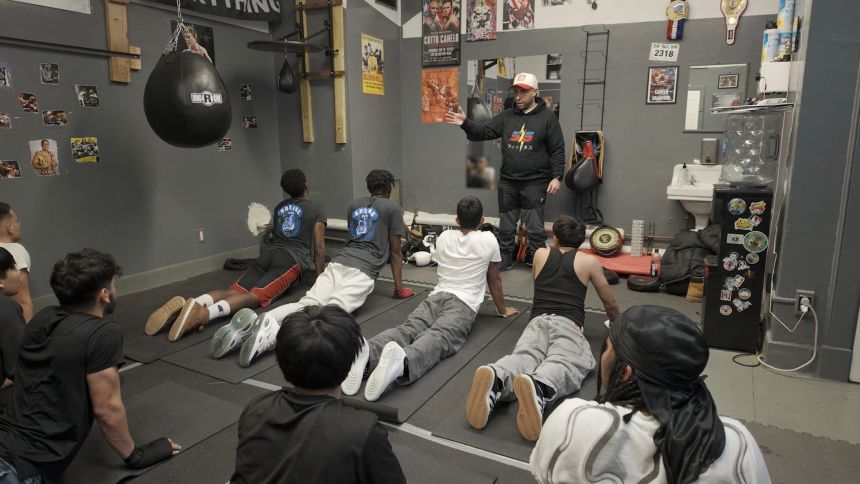
It’s a place where it’s safe for them to be seen, to stand out and speak up.
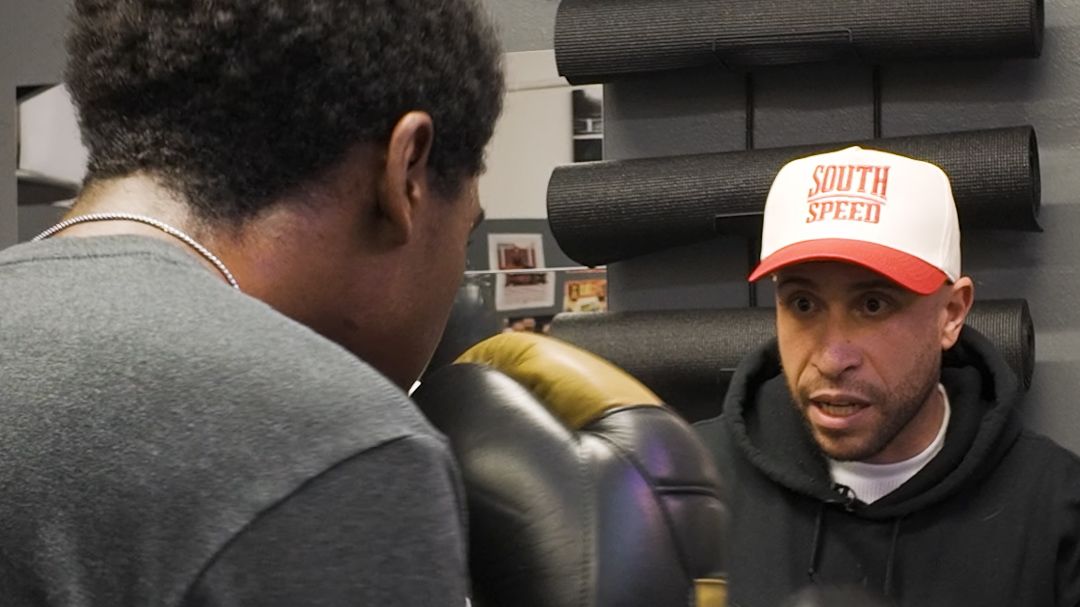
“I think they just want to be noticed,” Figueroa said. “So, I’ll tell them, ‘Listen, great job. You’ve done great.’”
The transformation of the space happened in the summer of 2024. Messmann reached out to Figueroa, who was training clients around the city along with teaching at different high schools, and showed him the space. He worked with the custodians to lay down exercise mats, hang heavy bags, and plaster the walls with posters of famous fights.
When the 2024-25 school year started, the boxing club was among the untraditional offerings ATLAS provided.
It started with a thud.
“All the heavy bags literally fell at the same time, simultaneously,” Figueroa said of a moment early on in the program’s existence when the punching bags fell off their stands, a learning moment in an attempt to turn the storage closet into a gym.
“But, at that time, we already had the engagement of the students.”
One of those students is James.
It took James, now 18, and his father a month to travel from Ecuador to New York. “Bus, train, avión (plane), boat, too,” he said of the journey.
“My dad was so nervous,” he said. But James denies feeling nervous as well: “I have in my mind, ‘Relax, relax.’”
Sitting still has always made James anxious. The physicality of travel helped keep the concerns at bay. “Sometimes,” he said, “when I move, I can’t feel nervous.”
His life in Ecuador was full of family – including 27 cousins – and friends at school, where James was president of the student government. He left all of that behind, most painfully his mother and sister because of “the problems,” he said, “the economic problems. The country is dangerous.”
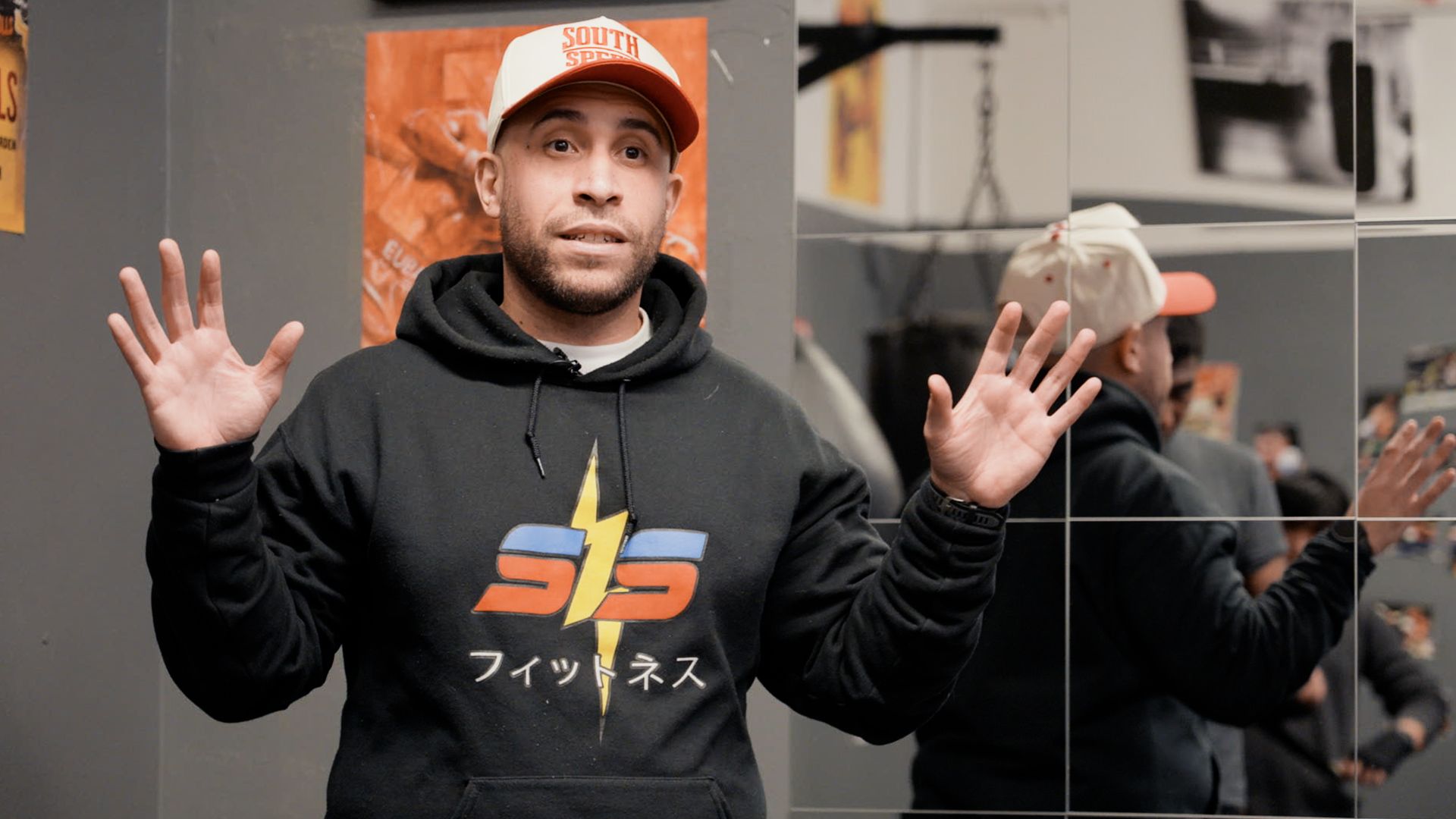
ATLAS High School boxing coach speaks to CNN

ATLAS High School boxing coach speaks to CNN
0:40
James and his father arrived in New York two years ago, without legal documentation. For that reason, CNN agreed to use only the first names of the students, like James, in this story, as they have fears about their safety.
Initially, James was working. After all, that was why he had come here – to earn money for his family. But last fall, he started at ATLAS. He was amazed at the free school supplies, the diversity of the student body, and the quality of the teachers. In New York, everything is so fast – you can buy something online and have it the next day.
But that November, when Donald Trump was elected for a second term as president, James admits he felt “a little nervous.”
“I worry all the time for my students. They ask me frequently to write on their behalf, advocating for them when they have to go to immigration appointments, to court,” Messman said. “And I write them the letter and then I pray that they come back the next day because I don’t know what’s going to happen when they go.”
Recently, a student who was just three classes short of graduating was deported. Students at ATLAS are reluctant to talk about the political climate. They’re wary of outing their status and, Messmann believes, don’t feel like they have a voice in this country.
The anxiety in the school is palpable, she says.
“I think the climate has everyone on edge,” Figueroa said. “But the boxing program has definitely brought solace and comfort to them.”
Every morning, James’ dad tells him to be careful. He’s still more nervous than his son. But James admits he likely wouldn’t say anything even if he was scared. When he talks to his mother back in Ecuador, he tells her everything is good – even when it’s not.
“Don’t do (that), guys,” he jokes about this strategy to suppress his emotions. “Communicate.”
Instead, he channels his feelings into music, which he started writing when he came to America, and boxing, which allows him to clear his head.
“When I leave the gym, I feel like, ‘Oh, I’m good.’ I’m not stressed, no problems,” James said. “I have peace of my mind.”
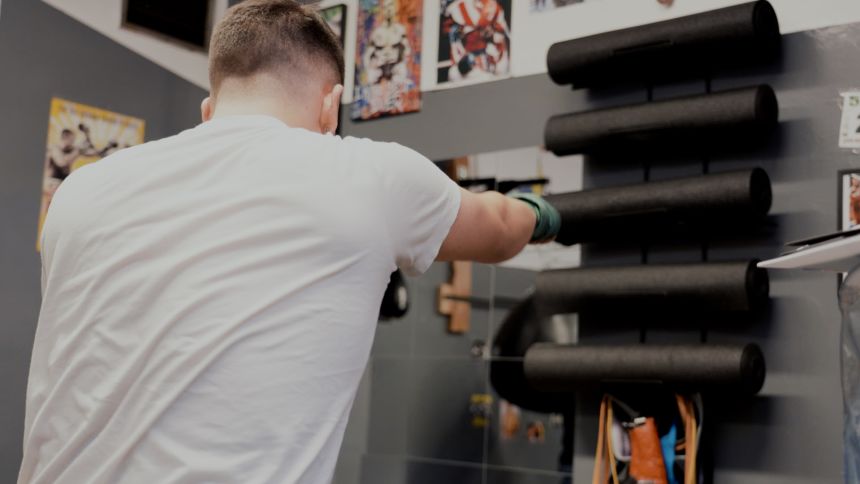
A group of about 20 boys train on Tuesdays and Thursdays after the school day is done. On Wednesday, at lunchtime, coach Figueroa trains a smaller group of girls to box. That’s a new offering this school year, inspired, in part, by an 18-year-old junior named Gabriela.
Gabriela says she was 10 years old when she learned that the people she believed were her parents were actually her grandparents. They told her that her mother had left their home in El Salvador to move to America. And that Gabriela would eventually join her – and a little brother she didn’t know existed – in New York.
In 2021, when she was 13, Gabriela got on an airplane for the first time to meet the stranger who had given birth to her.
“I just know that now she’s my mother and he’s my brother,” Gabriela said, “But, I don’t know, I don’t feel like that.”
It was her mother, though, who told her about the immigrant depression.
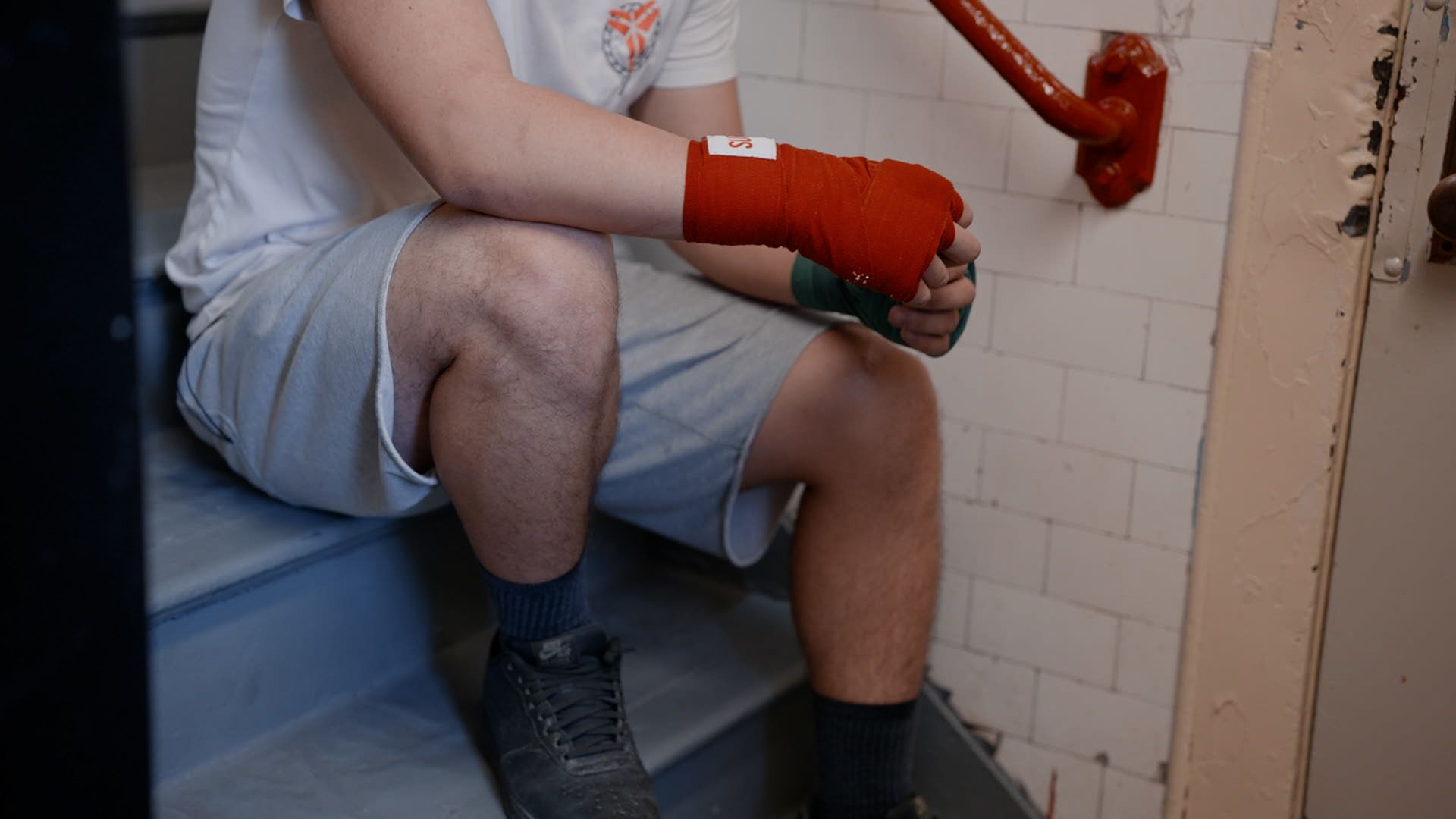
Student at ATLAS High School speaks to CNN Sports about the importance of the school’s boxing program

Student at ATLAS High School speaks to CNN Sports about the importance of the school’s boxing program
0:25
“Everyone has it,” she said. “And people who doesn’t know that issue is saying something like, ‘You’re going to forget about it.’ But that’s not true. Because I’ve been five years here in New York City, and I’m still have the feeling that my life is there. But I know it’s not.”
She misses the food and the weather in El Salvador. On TikTok, she sees the videos of immigration arrests around the US. Recently, her mother showed her a video of a young boy being detained. Gabriela is not used to seeing her mother get emotional, but this made her cry.
Gabriela cried, too – for the young boy in the video, for her younger brother whom she worries about, and for her mother who works 14-hour shifts at a restaurant and still fears for her children.
“It is really hard for me because I love her,” Gabriela said.
Initially, Gabriela attended a different high school in the city, transferring to ATLAS because it had more opportunities. It was a difficult transition. She’s introverted and the sheer number of students at ATLAS was overwhelming at first. She wanted to transfer again. But then she met coach Figueroa and found what she had always been looking for.
“Since I was a kid, I really want to try boxing,” Gabriela said. Now, she spends all week waiting for the thing that makes her excited to go to school. “Only Wednesday, and only for boxing.”
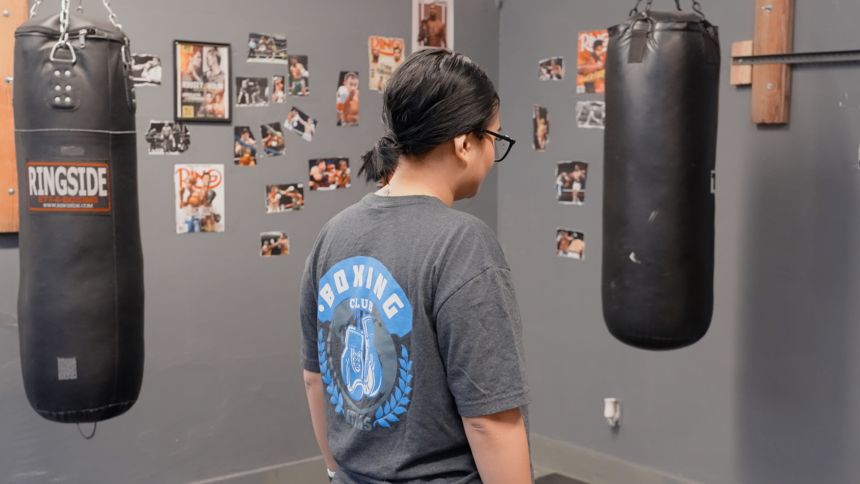
Not long after she started training, Gabriela asked Figueroa when she could spar. It indicated to him that she was serious about the sport. Gabriela is smart and studious and describes herself as not very social. She’s committed to her studies and to the gym. Sometimes, she thinks she wants to be a lawyer when she grows up, but she has another dream as well.
“That’s my dream, boxing,” Gabriela said. “My goal is to have a fight, a professional fight. Someday, not now.”
She’s good, and she knows it. In the gym, she doesn’t mind being the center of attention and she is. Figueroa says the other girls get a little hypnotized watching her pummel the punching bags with intensity.
“I’ve been doing this for 20 years maybe, and there’s certain people that you can kind of see and, yeah, if she was doing this four times a week and we had a bigger space and could get a more focused girls’ program, I think honestly, she could beat up a lot of boys, to be honest,” Figueroa said. “Yeah, she’s that good.”
“Ten out of ten,” she said of her boxing prowess.
Gabriela’s grandmother doesn’t know about the boxing, Gabriela fears she would worry too much. But when she imagines her future in the ring, Gabriela pictures her whole family there, watching her. There’s reggaeton music playing, all her favorite songs and artists. And an emcee is announcing her to the crowd: “My name, my age, my information,” she imagines.
In her dreams, boxing is a ticket to a future where there is no need to be demure and nothing to conceal.
Gabriela’s boxing dream is a big one. But there are more practical aspirations for the boxing program that don’t involve headlining a prize fight someday. This semester, Figueroa introduced a new curriculum that allows senior students to work toward becoming certified trainers.
They’re learning how to lead, how to communicate clearly in English, how to instill confidence in others while encouraging improvement. And, also, they’re establishing a vocational credential.
“What’s great about personal training, as you know, is that it’s something that you can do really anytime, anywhere,” Messmann said. “It’s enticing to the students because they see it as something that they can do for employment.”
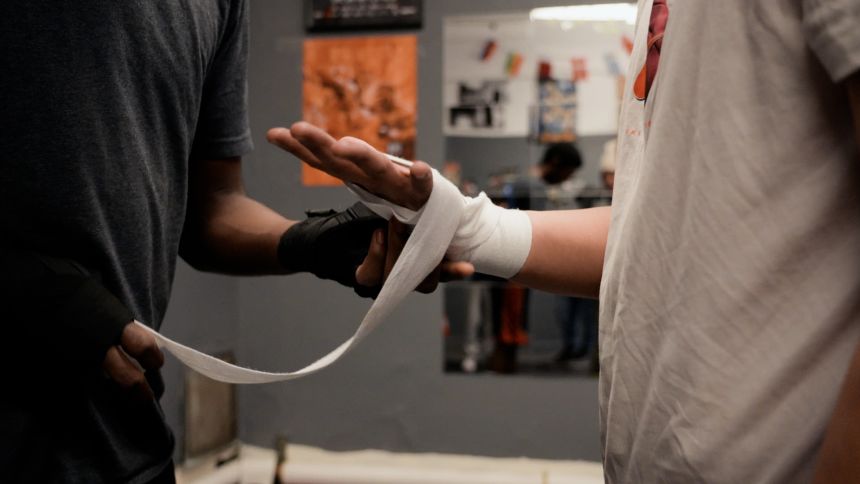
James likes the teaching they’re doing in the gym this semester as they practice coaching one another. It fits with the same gregarious personality that once inspired him to serve as student body president in Ecuador. His positivity is an asset in motivating others, even as practicality motivates him.
“When you learn how to teach in boxing, it’s more doors you can open,” he said.
Figueroa, who James said is like a big brother to him, envisions expanding the boxing program to other schools – and employing the graduates to help him coach the next generation of students.
James can see himself doing something like that. But he also wants to go to college, improve his English. “And the rest of the time I have here is just work. Make money, help my mom, and help my family,” James said.
The rest of the time he has – he doesn’t know how long that will be, and he’s not confident he’ll get to decide for himself. Asked if he thinks he will eventually get deported, James doesn’t equivocate.
“Me? Yeah,” he said. “I think so.”