
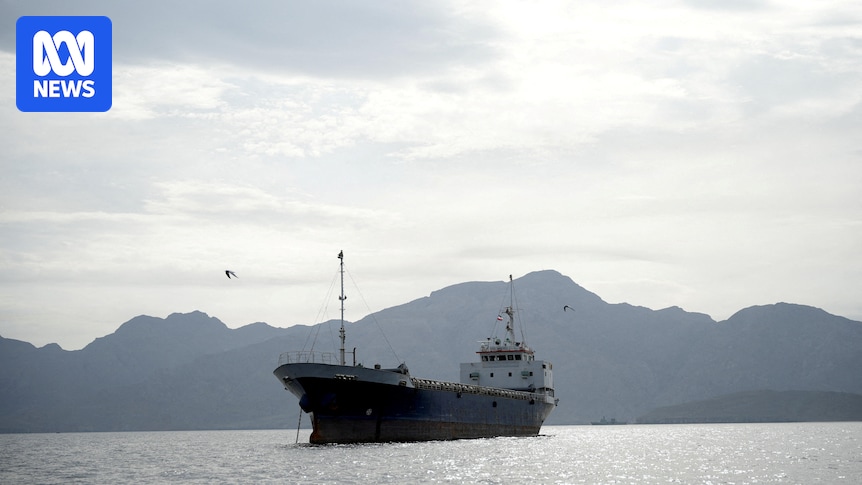
Tehran has declared the Strait of Hormuz open to commercial shipping, as a ceasefire came into effect in Lebanon, raising hopes that two of the main obstacles to a US-Iran peace deal could have been cleared.
In Lebanon, displaced families packed their belongings onto the roofs of their cars and thronged the roads, taking the chance of a 10-day truce to return to homes in bomb-damaged south Beirut or the war-torn south of the country.
After the start of the truce in Lebanon, where Israel has been fighting Tehran’s ally Hezbollah, Foreign Minister Abbas Araghchi said Iran would lift its blockade on shipping through the key Gulf energy trade route.
PM joins leaders meeting on securing Strait of Hormuz
“In line with the ceasefire in Lebanon, the passage for all commercial vessels through Strait of Hormuz is declared completely open for the remaining period of ceasefire,” Mr Araghchi said.
Military vessels are still banned from the waterway, a senior Iranian military official told state media.
President Donald Trump immediately welcomed Iran’s announcement, saying “THANK YOU!” in a post on his social media platform, but also went on to warn that the US blockade of Iran’s ports would continue.
Wartime restrictions lifted
“The naval blockade will remain in full force and effect as it pertains to Iran, only, until such time as our transaction with Iran is 100% complete,” Mr Trump said, referring to ongoing diplomatic efforts to secure a negotiated peace.
Oil prices had already been falling amid hopes of a negotiated end to the conflict, in which both Iran and the United States have sought to control shipping out of the Gulf, and the drop accelerated sharply after Iran’s announcement.
Separately, the Israeli military said it was lifting wartime restrictions, allowing civilian movement and economic activity to return to normal, although Prime Minister Benjamin Netanyahu warned that the campaign against Hezbollah was not over.
“We have not yet finished the job. There are things we plan to do to address the remaining rocket threat and the drone threat,” Netanyahu said in a recorded address, saying a key objective was the “dismantling of Hezbollah”.
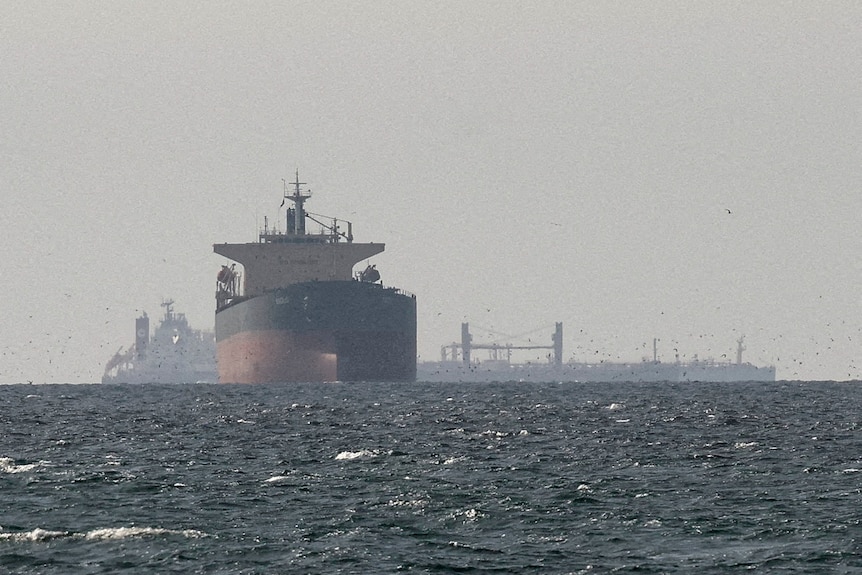
Cargo ships in the Gulf, near the Strait of Hormuz, as seen from northern Ras al-Khaimah, near the border. (File photo via Reuters)
Mr Trump, however, rebuffed this idea, promising that the United States would work with Lebanon to “deal with” Hezbollah.
“Israel will not be bombing Lebanon any longer. They are PROHIBITED from doing so by the U.S.A. Enough is enough!!!” Trump said, in another social media post.
Minutes before the ceasefire came into effect at midnight, a series of Israeli strikes in the southern city of Tyre killed at least 13 people and destroyed six residential buildings, a city official said.
Despite this, and despite Israel’s warnings, tens of thousands of displaced Lebanese civilians took to the road.
“Our feelings are indescribable, pride and victory,” 37-year-old Amani Atrash told AFP from her car seat on a road leading to a bridge into southern Lebanon, adding that she hoped the truce would be extended.
‘Security zone’
Under the terms of the ceasefire, Israel reserves the right to continue targeting Hezbollah to prevent “planned, imminent or ongoing attacks”, and it says it will maintain a 10-kilometre security zone along the border in southern Lebanon.
Israeli Defence Minister Israel Katz said the area between this security zone and the Litani River had not yet been “cleared of terrorists and weapons” and that if diplomatic pressure did not achieve that goal, then military action could resume.
“If the fighting resumes, those residents who return to the security zone will have to be evacuated to allow completion of the mission,” he said.
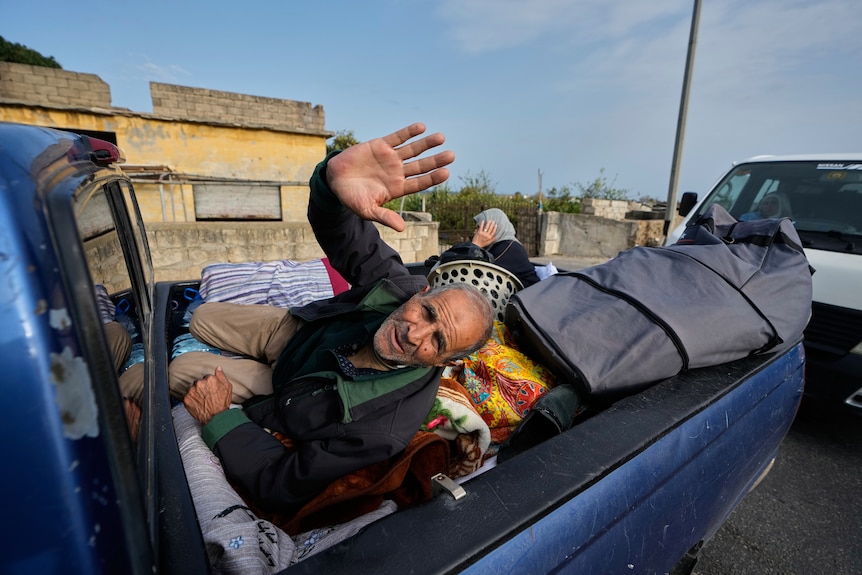
A man in Qasmiyeh, near Tyre city in southern Lebanon, returns to his village. (AP: Mohammed Zaatari)
According to details of the truce deal released by the US State Department, Lebanon “with international support… will take meaningful steps to prevent Hezbollah” from undertaking hostile acts against Israeli targets.
Lebanon’s President Joseph Aoun, who had been resisting US pressure to talk directly to Netanyahu before the ceasefire was in place, said nonetheless that now a truce was in place direct negotiations with Israel were “crucial”.
Beirut’s goal, he said in a statement, was to “consolidate a ceasefire, secure the withdrawal of Israeli forces from the occupied southern territories, recover prisoners and address outstanding border disputes”.
Hezbollah, meanwhile, said its finger remained “on the trigger” in the event of any Israeli violations.
Deal ‘very close’
The ceasefire and the reopening of the strait represent a key step in Washington’s efforts to reach a deal to end its war with Iran, after Tehran insisted that halting the Lebanon fighting must be part of any agreement.
Pakistan has been leading a diplomatic push to restart face-to-face talks between Tehran and Washington, and Trump said they were “very close” to striking an agreement.
The fighting broke out in Lebanon on March 2 when Hezbollah fired rockets at Israel a few days after the start of the Middle East war in retribution for the killing of Iran’s supreme leader Ali Khamenei.
Global mission to keep strait open
The reopening was announced as leaders from 49 countries held a virtual meeting to discuss how they could work together to ensure there was a permanent reopening of the strait.
During the talks, a dozen nations committed to support a UK and France-led mission to restore freedom of navigation through the crucial passage.
UK Prime Minister Keir Starmer, speaking in Paris alongside the leaders of France, Italy and Germany, said the mission would be peaceful and seek to ensure the safe resumption of shipping.
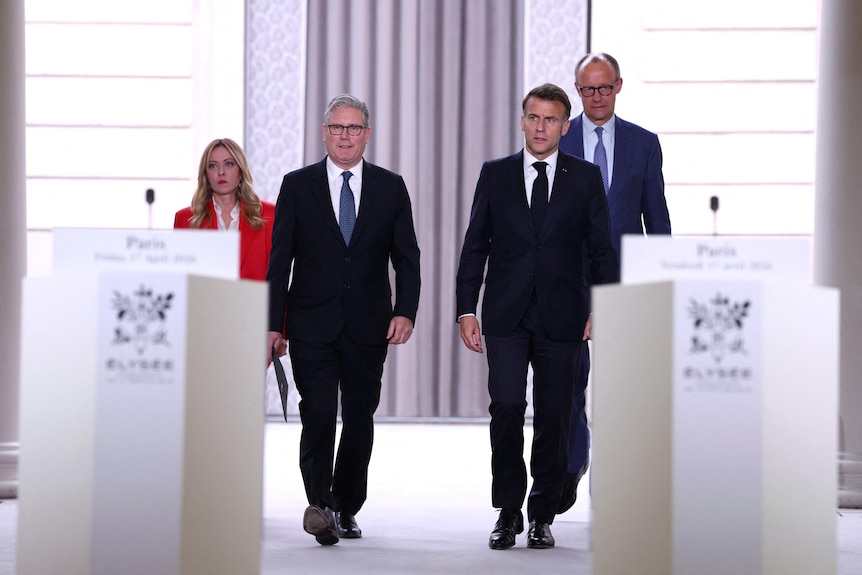
Keir Starmer and Emmanuel Macron emerged from the virtual meeting to announce fast-tracked efforts to ensure the strait remained open. (Reuters: Tom Nicholson)
“Reopening the strait is a global necessity and a global responsibility,” he said.
Mr Starmer will convene talks in London next week to further the mission.
The virtual meeting also produced unity on the need for the strait to remain open without any tolls or restrictions.