
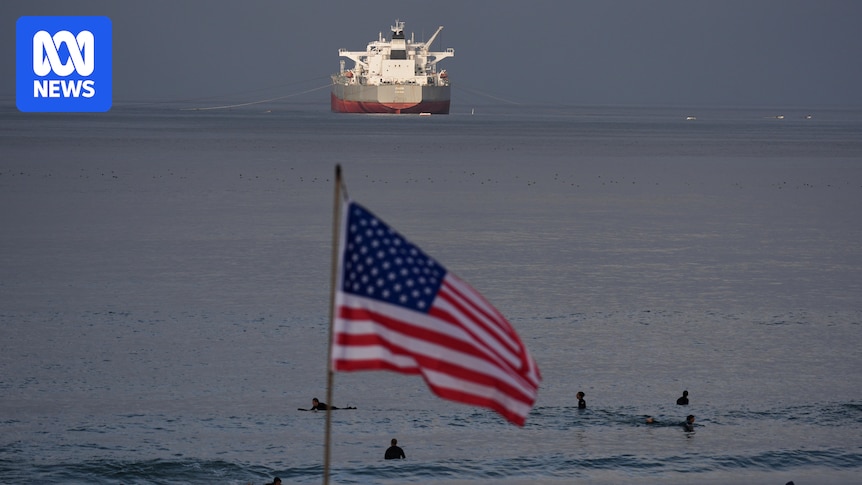
Oil prices plunged more than 10 per cent on Friday after Iran declared the Strait of Hormuz would be “completely open” but shipping giants are approaching the situation with caution.
Brent oil opened around $US98 ($AUS 136), falling to $86.52 a barrel by 10:50am EDT, less than two hours after the announcement was made by Iran’s Foreign Minister Abbas Araghchi on X.
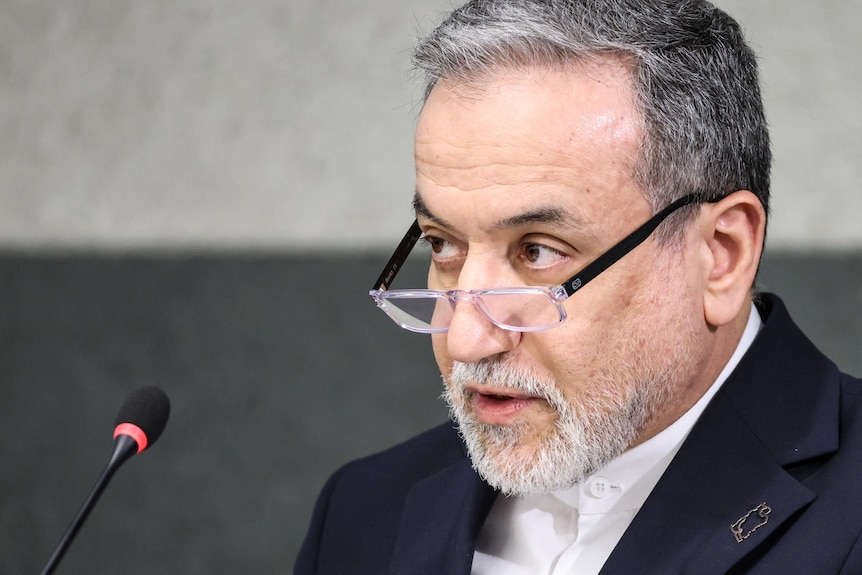
Iran’s Foreign Minister Abbas Araghchi addresses a special session of the Conference on Disarmament at the United Nations, aside of U.S.-Iran talks in Geneva, Switzerland, February 17, 2026. REUTERS/Pierre Albouy (Reuters: Pierre Albouy)
“Passage for all commercial vessels through Strait of Hormuz is declared completely open for the remaining period of ceasefire”.
The Unites States equivalent, West Texas Intermediate crude touched $80.56 after opening around $93.
Oil prices were sent to a peak of nearly $120 a barrel and threatened to disrupt the global economy during the conflict.
The strategic waterway sees one-fifth of the world’s crude oil pass through, and has been disrupted by Iran since the US-Israeli offensive began in early March.
More than 500 million barrels of crude and condensate have been knocked out of the global market, making it the largest disruption of energy supply in modern history according to Kpler data.
A cautious restoration
The announcement bolstered hopes for further peace talks and a renewal of the ceasefire, despite US President Donald Trump saying that the US blockade of Iran’s ports remains in force.
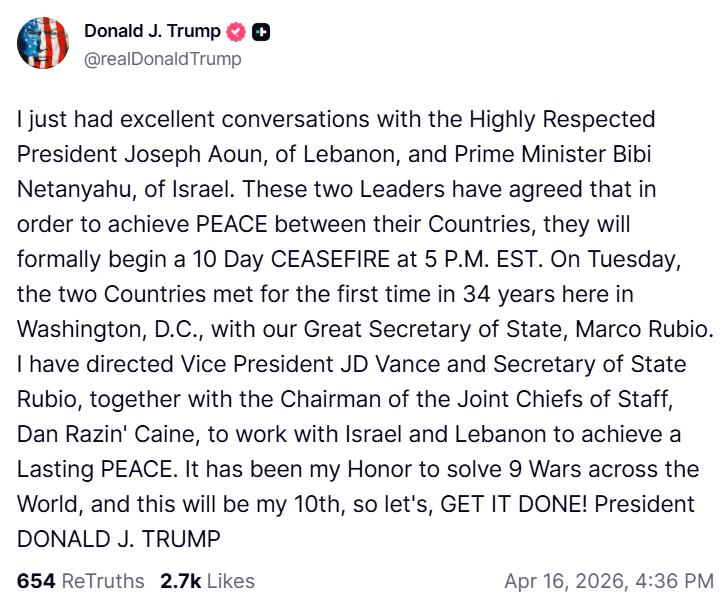
US President Donald Trump said the US blockade of Iran’s ports remains in force. (Truth Social/@realdonaldtrump)
Kathleen Brooks, research director of European financial brokerage firm XTB said “this is the biggest development so far during the ceasefire, and it gives hope that the war will end soon, and supply chains will return to some normality”.
Arsenio Dominguez, secretary-general of UN shipping agency the International Maritime Organization said the organisation were “currently verifying the announcement”.
The Norwegian Shipowners’ Association (NSA) CEO Knut Arild Hareide said the group also needed more clarity, representing 130 companies and 1500 vessels.
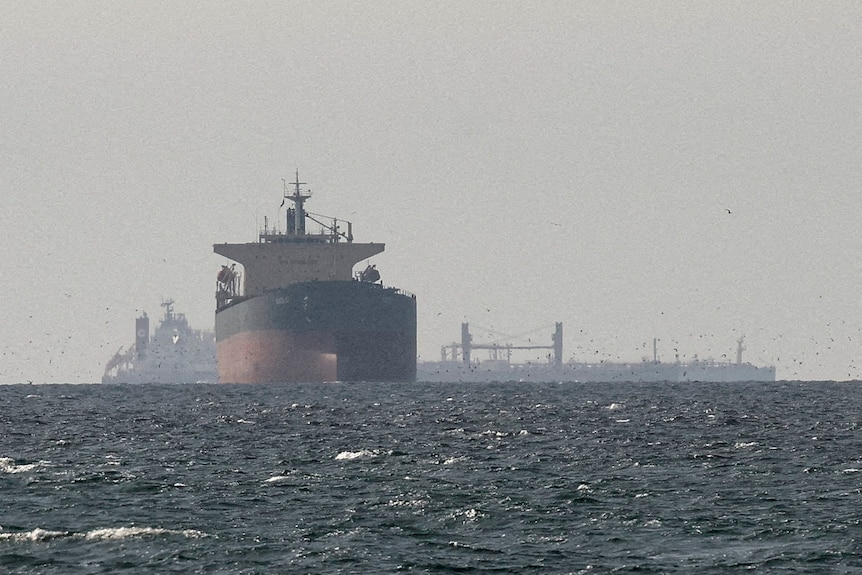
Cargo ships in the Gulf, near the Strait of Hormuz, as seen from northern Ras al-Khaimah, near the border. (File photo via Reuters)
Mr Arild Hareide listed the presence of mines, Iranian conditions and practical implementation as the focus of their questions.
“If this represents a step towards an opening, it is a welcome development”.
A statement released by shipping magnate Maersk suggested a cautious approach back to normality.
“Since the outbreak of the conflict, we have followed the guidance of our security partners in the region, and the recommendation so far has been to avoid transiting the Strait of Hormuz,”
“Any decision to transit the strait will be based on risk assessments and close monitoring of the security situation, with the latest developments also included in the ongoing assessments” a spokesperson for Maersk said.