
Malaysian Prime Minister Anwar Ibrahim is the master of the art of exactly landing a savage point, while apparently saying something relatively benign.
In Kuala Lumpur on Thursday, when he and Prime Minister Anthony Albanese were asked about the Pope’s plea for peace in the world, the Malaysian PM became one of the first world leaders to venture into the territory of US President Donald Trump’s mental faculties, while managing to stay on the safe side of doing so.
“Well, Albanese is a Catholic, I’m a Muslim, but we share something in common — we have very high regard and respect for Pope Leo, the Vatican,” Anwar began.
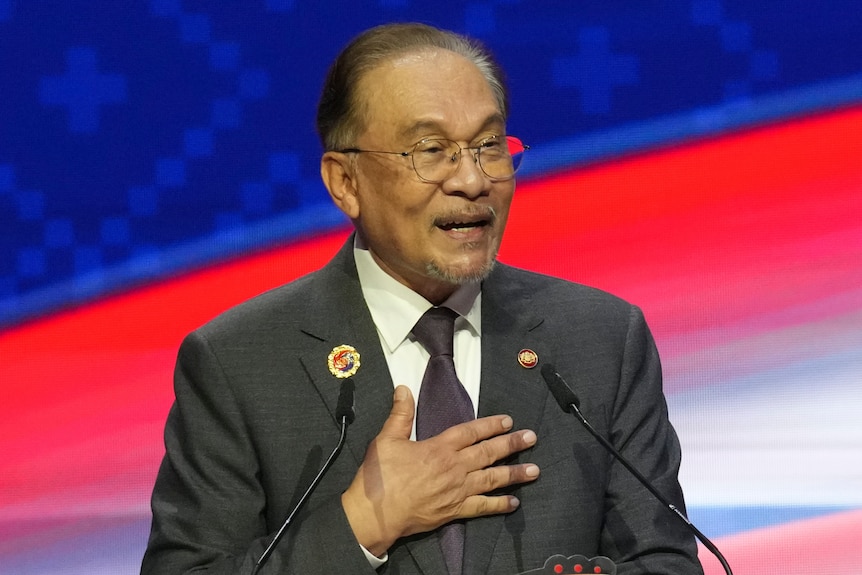
Malaysia’s Prime Minister Anwar Ibrahim. (AP: Rafiq Maqbool)
“And I think any reasonable, sane person, and I, as a Muslim and Malaysians generally, certainly support the position taken by the Pope.
“And I think we would certainly suggest that people, sane people across the world, should support the call for peace against any form of injustice, atrocities, whether he made reference specifically to Gaza or the position in the Middle East, for that matter, after the aftermath of the Israeli-American attack on Tehran and Iran.”
Lest you think that it is reading too much into his repeated references to “sane people”, remember that the veteran politician — jailed twice by a vengeful former mentor to thwart his progress — knows exactly what he wants to say and also likes to live on the edge.
“I was in prison but you almost got there,” Anwar joked to Donald Trump last year in front of the media.
‘A deranged autocrat mad with power’
Slowly, the issue of the state of the US president’s mind is becoming the subject of serious discussion, rather than just the butt of the jokes of late night talk show hosts.
As it should.
The New York Times chief White House correspondent Peter Baker wrote a lengthy piece this week about the mental capacities of the nation’s commander-in-chief in a time of war.
“A series of disjointed, hard-to-follow and sometimes-profane statements, capped by his “a whole civilisation will die tonight” threat to wipe Iran off the map last week, and his head-spinning attack on the “WEAK on Crime, and terrible for Foreign Policy” pope on Sunday night have left many with the impression of a deranged autocrat mad with power,” Baker wrote.
There has been a hesitancy to discuss the state of Trump’s mind in much of the media, let alone on the international political stage, even as his behaviour has become increasingly erratic, and as it has become dangerous for the entire world.
Albanese has spent much of the past week in south-east Asia, desperately trying to lock in energy agreements with countries in the region and find extra supplies of fuel and fertiliser.
100m litres of diesel secured under new powers, PM confirms
He is only there because of the fallout from Trump’s decision to back Israel’s war on Iran and the global uncertainty about where that war is going, partly fed by Trump’s perpetually changing pronouncements and actions.
The Australian government is much more alarmed about the unfolding global economic crisis than it will or can say publicly.
That crisis is not just caused by the decision to launch a war on Iran but by the erratic and unpredictable way Trump continues to opine on, and run, US policy via social media in the middle of the night — a circumstance which further confounds and undermines global economic confidence.
In those circumstances, in an interview on Thursday I asked the prime minister whether the time had come for world leaders to more directly call out Trump’s erratic behaviour, given the catastrophic ramifications it’s having around the globe.
“Well, we have an important relationship with the United States,” Albanese said.
“I act respectfully towards all leaders, and I continue to engage constructively with President Trump and his administration. And I do so in Australia’s national interest.”
Loading…
But Trump hasn’t necessarily been dealing respectfully with the rest of the world, though, has he, I asked.
“Well, what I do is to engage respectfully. That’s what Australians would expect, and the relationship with the United States is a relationship between leaders, but importantly, it’s a relationship between populations as well, based upon our values as two great democracies.
“And of course, our national security interests are very much linked with the United States as well.”
Is Australia being protected?
The view within the Albanese government is that there is little point criticising the president or talking about his erratic behaviour.
Not that this stops Trump launching random broadsides at Australia, as he did in Washington a few hours after the ABC’s interview, saying he was “not happy with Australia” because Australia was “not there when we asked them to be there”.
There would have been a time when such a comment was devastating for an Australian government. But not now. And that’s only partly because Australia hasn’t actually been asked to “be there” in the first place.
Trump repeats he is ‘not happy with Australia’ as Hormuz crisis continues
What is more worrying than whether the government does comment on Trump’s capacities is whether it is doing enough to protect Australia from his actions, as opposed to offsetting them as the prime minister has been doing in the past week — and more broadly — in finding extra fuel shipments and the like.
Like other countries, Australia is rewiring all its trade relationships to counter the breakdown in world trade arrangements that started in earnest with Trump’s Liberation Day tariffs last year.
But it seems paralysed to act to diversify its defence ties and strategy in the same way.
This week Defence Minister Richard Marles released the government’s new defence strategy. Its tone has just a touch of the “ex-parrot” about it as it notes the rules-based order is not dead, but “in transition”.
The grand AUKUS plans are seemingly non-negotiable, even as more signs emerge of delays in the project, and the commitment to such massive pieces of equipment — when the nature of warfare is morphing before our eyes — should be raising more questions.
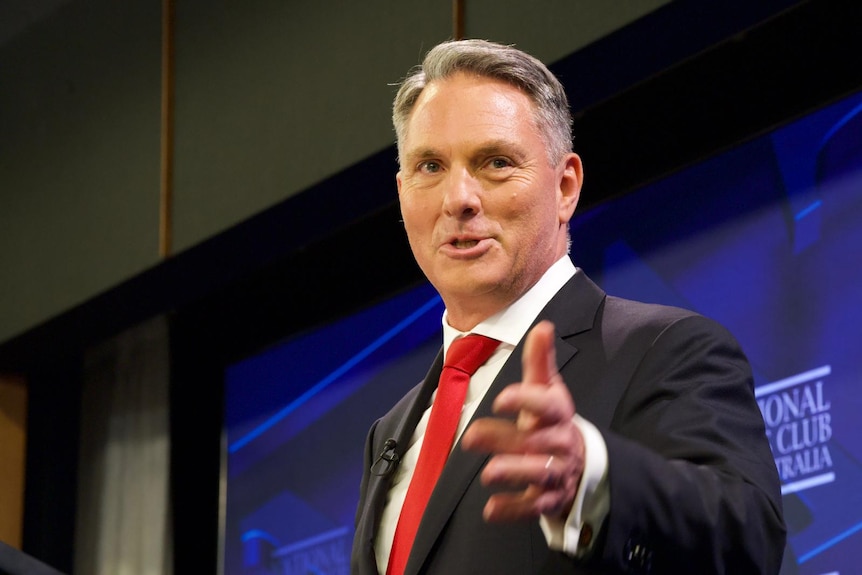
Richard Marles unveiled the latest National Defence Strategy in a speech to the National Press Club this week. (ABC News: Dan Sweetapple)
The United States’ conflict with Iran — and its blockade — are now physically spreading into our part of the world.
This week, US General Dan Caine, the chairman of the Joint Chiefs of Staff, said US Navy warships would enforce the blockade “inside Iran’s territorial seas” and “in international waters”.
“The joint force, through operations and activities in other areas of responsibility, like the Pacific area of responsibility … will actively pursue any Iranian-flagged vessel or any vessel attempting to provide material support to Iran,” he told a press conference at the Pentagon. “This includes dark fleet vessels carrying Iranian oil.”
The global economy is being rewired
Equally, there are real world implications from the global rundown in defensive weapons that have been used by the US and allies in the Middle East, which are alarming both Europeans and countries like Japan and Taiwan.
Countries in our region are pragmatically doing what they feel they must to ensure their own supply lines.
Indonesia announced a deal with Russia for energy this week.
Malaysia negotiated with Iran to get oil through the Strait of Hormuz, to the ire of Singapore which thinks no-one should be negotiating with Iran.
China keeps bobbing up in different guises, from reports it has provided spy satellites to Iran to its elevation this year to being the world’s largest oil refiner — a role which could see its position transformed significantly in coming months.
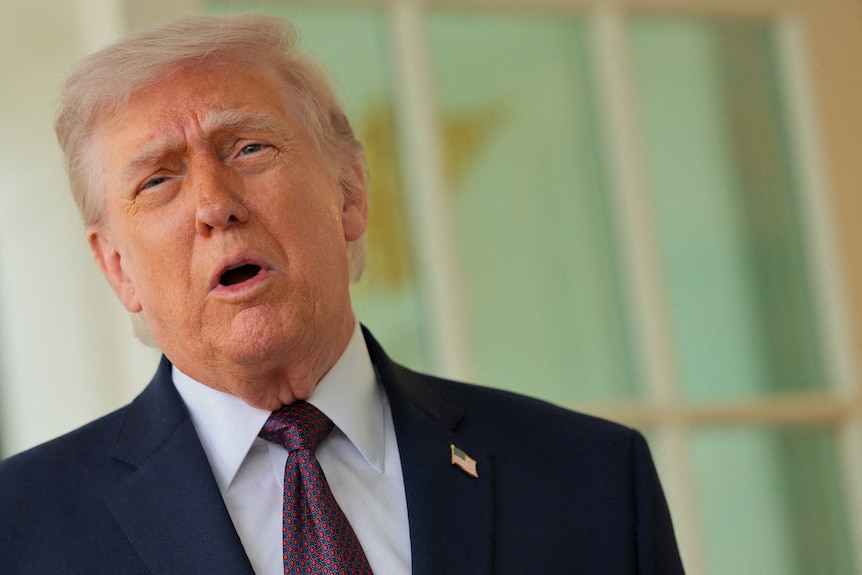
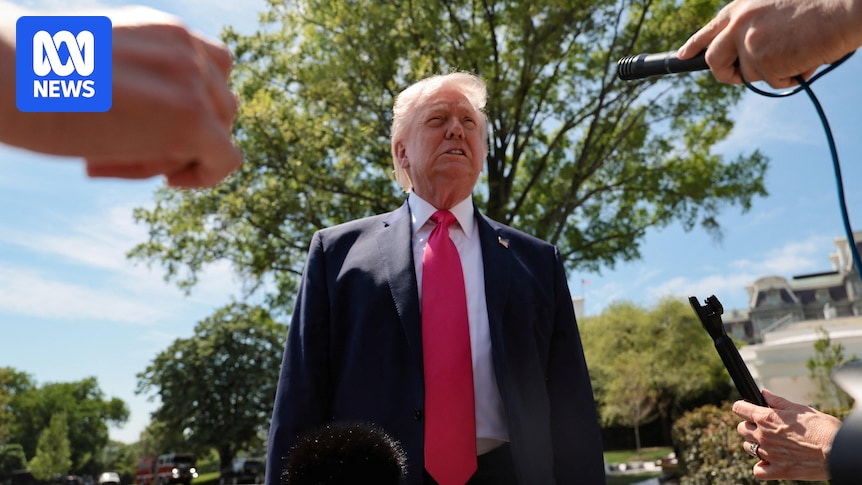
Trump’s move to blockade Iranian ships saw a shift from a military campaign to an economic one. (Reuters: Jonathan Ernst)
The war in Iran — and particularly the move by Iran to force shipping to pay a toll to go through the Strait of Hormuz — has highlighted how China is using the conflict as part of its push to establish the Chinese renminbi as the dominant global reserve currency instead of the US dollar.
Shippers are often asked to pay their Strait of Hormuz toll in RMB.
Indonesia and Malaysia have always maintained wider economic and political relations with countries like Russia and Iran than Australia has, and that is their prerogative.
But all these events once again highlight just how much rewiring is going on in the global economy as a result of the current conflict.
Donald Trump’s move to blockade Iranian ships saw a shift from a military campaign to an economic one that aimed to match Iran’s own economic tactics.
The blockade was supposed to be targeting Iran’s economy. But since it is also targeting those who are prepared to pay Iranian tolls, it almost inevitably hurts US allies who are desperate enough to pay them (even if they don’t admit it).
Loading The 10-day deal
In the meantime, Trump’s pattern of trying to perpetually put back a deadline for action in the Middle East — and or claim credit for outcomes he has not actually landed — continues.
On Thursday night he announced a ceasefire in Lebanon.
A ceasefire in Lebanon had been part of the original proposal for the ceasefire in Iran, according to the ceasefire’s brokers, Pakistan.
But Trump had not initially been able to pull Israeli Prime Minister Benjamin Netanyahu into line to stop bombing Lebanon.
The constraints of the deal quickly became clear.
Israel and Lebanon agree to 10-day ceasefire, Trump says
For starters, the “10 day deal” was between Israel and the government of Lebanon — which doesn’t control the militant group Hezbollah with which Israel is actually at war.
While Netanyahu agreed to “a temporary ceasefire of 10 days”, he insisted Israeli forces would remain in what Israel calls a “security zone” that marks a 10-kilometre incursion into Lebanese territory by Israel.
Hezbollah said any ceasefire “must be comprehensive across all Lebanese territory and must not allow the Israeli enemy any freedom of movement”.
Lebanon’s state news agency reported Israeli shelling on several towns in southern Lebanon after the ceasefire came into effect.
So in reality it is a deal imposed on Israel to give some more time to Trump, and to give more space to do a deal with Iran, with which the US is more than halfway through a ceasefire period and yet to show any results from it.
The world is stuck watching a perpetually performative series of announcements about meetings that could, may, will happen, involving US negotiators with no negotiating skills and a president not dealing with the reality that he is in a weak, and confused, bargaining position.
The possibility that Iran can arrange, via Yemen’s Houthis, the blocking of Saudi shipments currently bypassing the Strait via the Red Sea by blockading the Strait Bab el-Mandab remains a real prospect.
This is the reality facing the world at present, even if it may not be the reality existing in the mind of the US president.
Laura Tingle is the ABC’s Global Affairs Editor.