
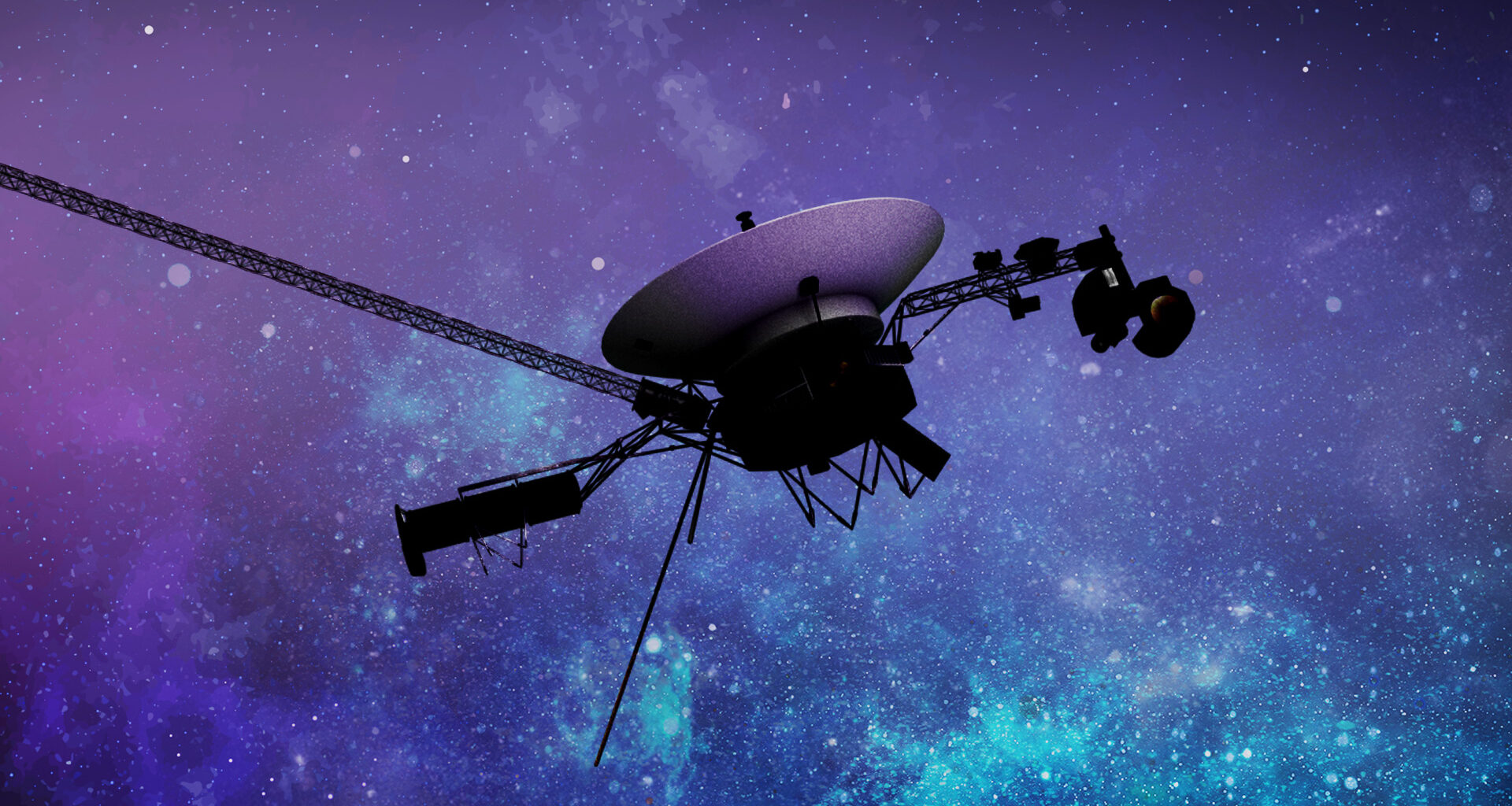
On April 17, engineers at NASA’s Jet Propulsion Laboratory (JPL) in Southern California sent commands to shut down an instrument aboard Voyager 1 called the Low-energy Charged Particles experiment, or LECP. The nuclear-powered spacecraft is running low on power, and turning off the LECP is considered the best way to keep humanity’s first interstellar explorer going.
The LECP has been operating almost without interruption since Voyager 1 launched in 1977 — almost 49 years. It measures low-energy charged particles, including ions, electrons, and cosmic rays originating from our solar system and galaxy. It has provided critical data about the structure of the interstellar medium, detecting pressure fronts and regions of varying particle density in the space beyond our heliosphere. The twin Voyagers are the only spacecraft that are far enough from Earth to provide this information.
The choice of which instrument to turn off next wasn’t made in the heat of the moment. Years ago, the Voyager science and engineering teams sat down together and agreed on the order in which they would shut off parts of the spacecraft while ensuring the mission can continue to conduct its unique science. Of the 10 identical sets of instruments that each spacecraft carries, seven have been shut off so far. For Voyager 1, the LECP was next on that list. The team shut off the LECP on Voyager 2 in March 2025.
For more details, go to the Voyager blog on science.nasa.gov.