
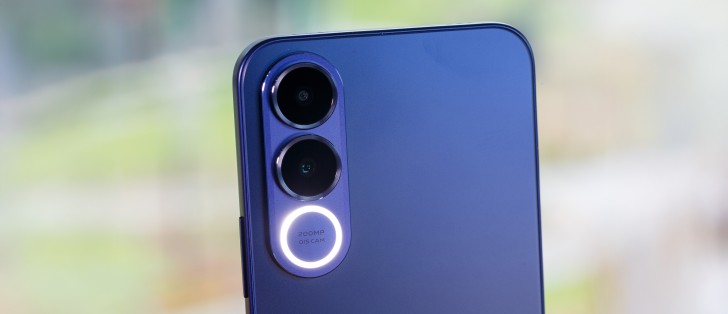
200MP main camera, 8MP ultrawide, no telephoto
The vivo V70 FE has one of those dual-camera rear setups that sound like they can do a lot, and do so on a budget. There’s a super-high-res main camera that can take care of some zoom in action, thus negating the need for a dedicated telephoto camera, while a basic ultrawide covers the other end – the one which can’t be emulated by cropping and upscaling.
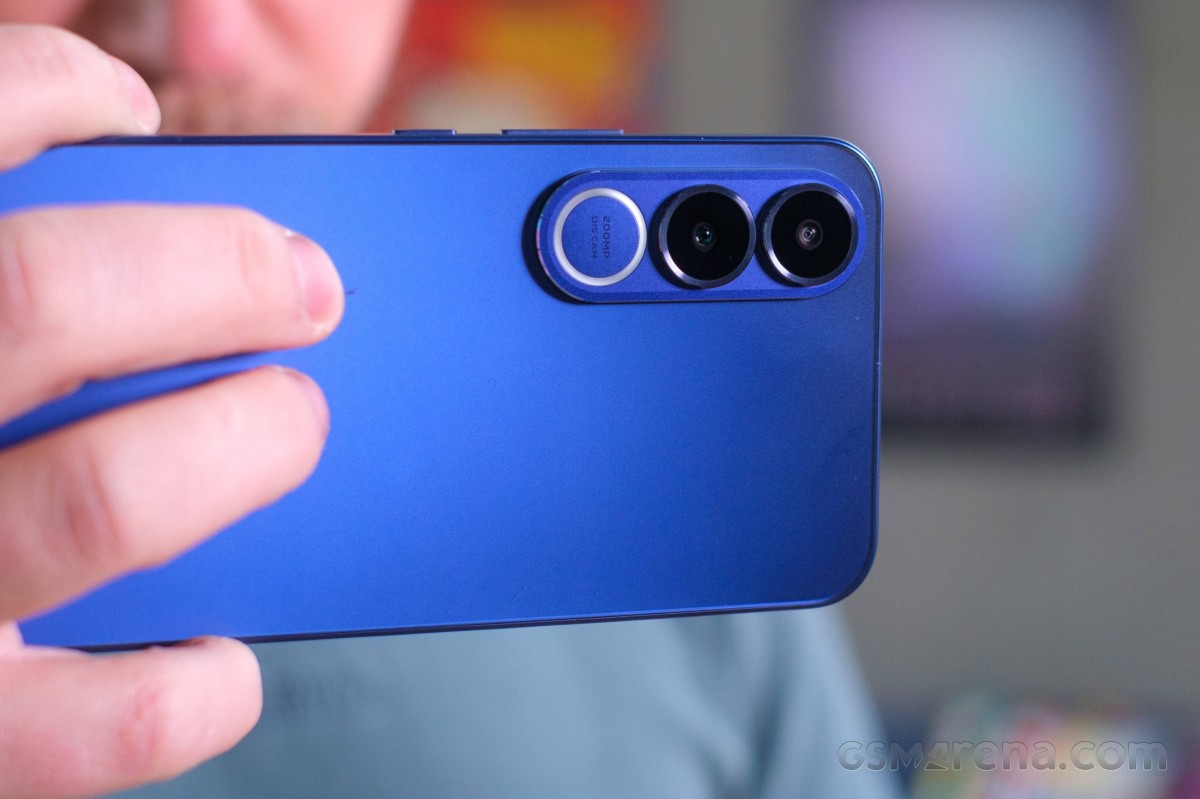
The main camera is based on the Samsung HP5 200MP sensor – a 1/1.56″ imager that Oppo deemed good enough for the vastly more expensive Find N6. Now, vivo is being a little bit ambitious here, and there are zoom presets all the way to 5x in the viewfinder – we’ll see about that.
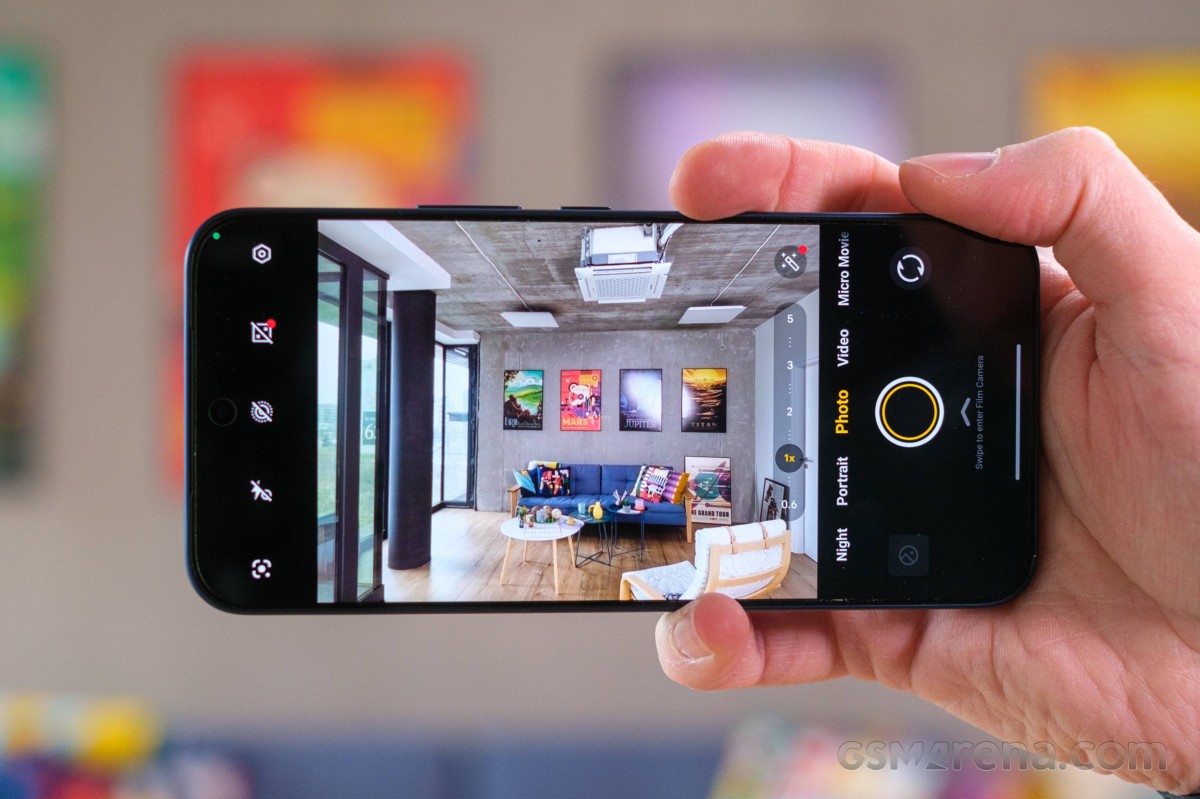
On the other end of the zoom range is a simple 8MP fixed-focus ultrawide – we know it’s not going to do wonders, but having it is better than not having it.
Over on the front, there’s a 32MP selfie camera – we’re generally not fans of those, but there are exceptions. We’d have taken a lower-res one with autofocus if it were up to us.
Wide (main): 200MP Samsung ISOCELL HP5 (S5KHP5, 1/1.56″, 0.5µm-2.0µm); 24mm, f/1.9, OIS, multi-directional PDAF (8.5cm – ∞); 4K30/1080p60 video recording.
Ultrawide: 8MP GalaxyCore GC08A8 (1/4.0″, 1.12µm); 16mm, f/2.2, fixed focus; 1080p30.
Front camera: 32MP GalaxyCore GC32E1 (1/3.1″, 0.7µm-1.4µm); 21mm, f/2.2, fixed focus; 4K30.
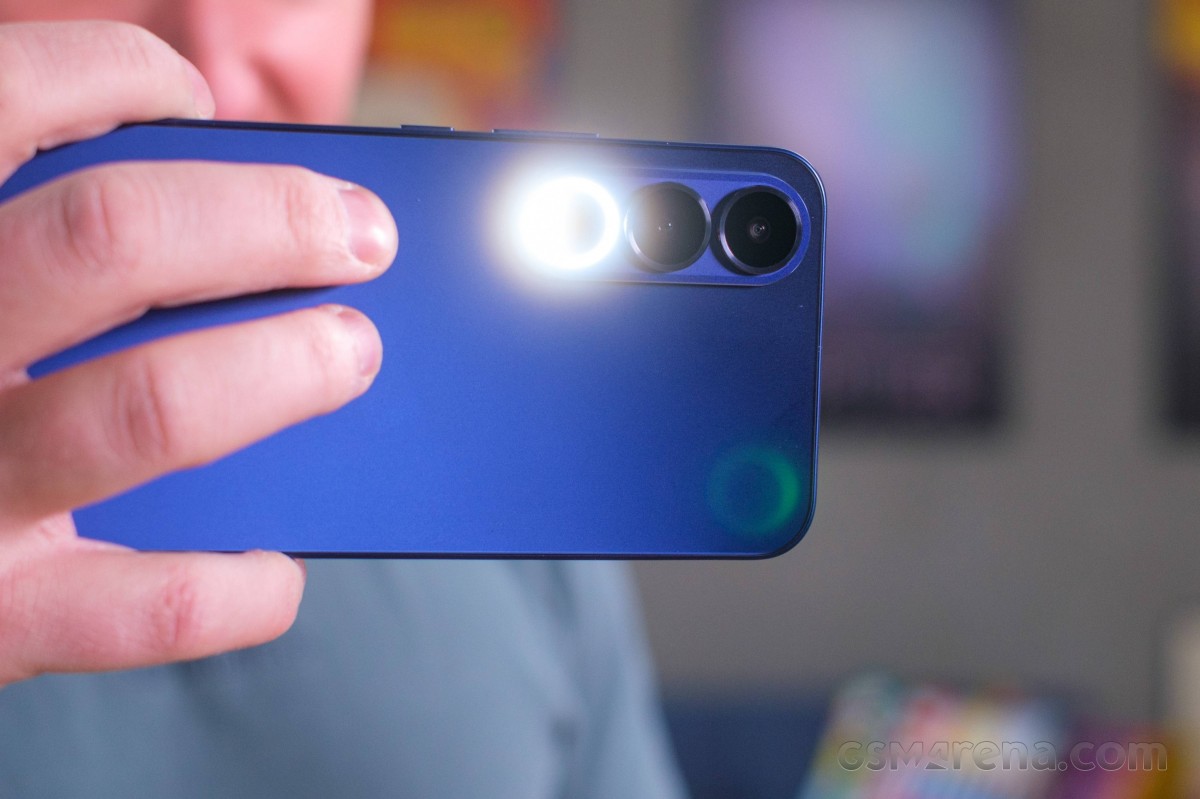
The V70 FE features an Aura Light, which is a glorified name for the flash that’s a set of LEDs arranged in a circular formation below the camera. It doesn’t do different light temperatures like some other implementations we’ve seen, and it’s not really a ring flash if it’s not around the lens, is it?
Daylight photo quality
Main camera
The vivo V70 FE’s main camera proved somewhat unreliable even at its native focal length. In our experience, it would alternate between reasonably sharp and soft and dreamy photos from scene to scene, and even the sharp ones didn’t have a particularly likable rendering of detail. Dynamic range and colors are typically good, though a tendency for overexposure can produce somewhat flat results and washed-out colors.












Daylight samples, main camera (1x)
We did get pretty great results with human subjects in terms of skin tones and overall color rendition, though detail rendition was once again suboptimal. Portrait mode results were a little softer in general – expectedly so at 35mm, but also at 23mm.






Human subjects, main camera: Photo mode, 1x • Portrait mode, 23mm • Portrait mode, 35mm
The main camera can shoot in 50MP and 200MP too. Weirdly enough, we didn’t experience that occasional softness in those resolutions, so you could say that’s a win. The 50MP shots almost make sense, the grittiness being mixed in with potentially better detail sometimes. The 200MP mode, on the other hand, is just a waste of megabytes.




Daylight samples, main camera (1x), 50MP




Daylight samples, main camera (1x), 200MP
There’s no telephoto camera on board, but the high-res main camera should be able to do some zooming in. To some extent, it does – the 2x shots have very good detail in the scenes that come out sharp, though we also had the same hit-and-miss experience with some scenes ending up soft and hazy. We’ve had sharp results from these same scenes in different lighting, so our best bet is that it’s something to do with the HDR algorithms messing things up in certain brightly lit situations.












Daylight samples, main camera (2x)
Portraits at 2x turned out fine, though, with the caveat that actual Portrait mode shots were noticeably softer than the Photo mode results.




Human subjects, main camera: Photo mode, 2x • Portrait mode, 50mm
Zooming in further, we got fewer keepers at 3x – even in the scenes where previously things were looking good at wider zoom levels, we now got softer results. Having said all that, the 3x photos that did turn out fine, are probably just about good enough for this class, even more so when keeping in mind there’s no actual telephoto camera. Still, you’d probably want to have sharp shots in bright sunlight too, and you can’t seem to be able to trust the V70 FE to deliver those.












Daylight samples, main camera (3x)
Here’s a couple of scenes of a human subject at 3x in Photo mode and at 85mm in Portrait mode – again, the Photo photos are pretty solid, the Portrait portraits are softer.




Human subjects, telephoto camera: Photo mode, 3x • Portrait mode, 85mm
The ambitious zoom selector of the V70 FE extends to 5x and at this point even if all stars align, you can’t expect sharp photos.












Daylight samples, main camera (5x)
Close-ups
The close focusing capability of the main camera and its somewhat good zoom in photo quality means you could get some pretty decent close-ups. We’d probably prefer the 2x zoom results over the 3x ones – we reckon they strike the right balance between magnification and pixel-level quality.




Close-up samples, main camera (2x)




Close-up samples, main camera (3x)
Ultrawide camera
The modest ultrawide camera takes unremarkable photos, but you could live with them as long as you don’t have too high expectations. Dynamic range is quite wide, and colors are vibrant, but detail is pretty meh.












Daylight samples, ultrawide camera (0.6x)
Selfies
Selfies are quite good on the V70 FE. They clearly don’t have 32MP worth of detail in them, and sharpening is dialed up pretty high, but they’re still reasonably detailed, and have wide dynamic range and nice colors.








Selfie samples
Low-light photo quality
Main camera
Low-light photos from the V70 FE’s main camera at 1x are pretty great. While detail can be a little bit pixelated on occasion, there’s plenty of it, and there’s good definition even in the darker areas. Dynamic range is excellent, and exposures are well tuned to produce lively images. The white balance is spot-on, and colors have a nice level of pop. You don’t have to think about night mode either – the full auto behavior is among the better ones out there.







Low-light samples, main camera (1x)
Things quickly turn sour, however, as you start zooming in. Shooting at 2x, you can expect quite coarse images – the global qualities remain, but on a pixel level, things aren’t looking good.







Low-light samples, main camera (2x)
Photos taken at the 3x zoom level are just about unusable and you’d best forget about the 5x button.




Low-light samples, main camera (3x)




Low-light samples, main camera (5x)
Ultrawide camera
The ultrawide’s low-light photos are indeed quite soft and noisy, which is to be expected from an 8MP ultrawide at this level, but it’s not the worst of its kind in terms of detail. It also has good dynamic range and colors that remain likeable.







Low-light samples, ultrawide camera (0.6x)
Photo quality verdict
The vivo V70 FE’s 200MP main camera proved pretty unreliable in daylight shooting, often returning soft photos in seemingly good light conditions, even at its native focal length. It was somehow a lot more dependable at night, which is a win. Zooming in, on the other hand, isn’t really an option in the dark and it’s also a hit-and-miss endeavor in good light. Selfies are quite alright, though.
Video quality
The V70 FE’s video recording capabilities are somewhat limited. Its main camera maxes out at 4K30 or 1080p60 – depending on whether resolution or frame rate is more important to you. The ultrawide can only do 1080p30, while the selfie camera supports 4K30 (but no 1080p60).
There’s no Pro video mode, no 24fps frame rate option, and no HDR recording capability. You do still get to choose between the h.264 and h.265 (HEVC) codecs. There’s electronic stabilization for all quality settings and you can turn it off from a toggle in the viewfinder if you’d like.
You can check out the playlist below, which includes a series of multiple video samples, or you can watch the playlist on YouTube.
Daylight videos from the V70 FE’s main camera at 1x are decent, but hardly great. Sharpness is just about okay, contrast is a bit excessive, colors are a little muted.
The 2x zoom video is too soft. The ultrawide’s footage has limited dynamic range, but good colors and good sharpness for 1080p (but it remains 1080p).



Video screengrabs, daylight: 0.6x • 1x • 2x
In the dark, the main camera is actually doing alright within that context, maintaining good sharpness at 1x and okay dynamic range. The 2x footage is very soft though. The ultrawide’s 1080p clips are also decently usable.



Video screengrabs, low light: 0.6x • 1x • 2x
Stabilization is reasonably good if a little nervous when it comes to walking shake. When shooting from a stationary position, the results are also not perfect, but good overall, and pans are good enough to not be an issue, but still not ideal.
Video quality verdict
The vivo V70 FE isn’t much of a camcorder, with not particularly great video quality and hardly any special features to offer (no pro mode, HDR video or fancy stabilization). Daylight clips from the main camera are decent at best at 1x and too soft at 2x, and the ultrawide is unimpressive. The low-light clips are better in relation to the other phones in the class. Stabilization is not perfect, but good enough.