
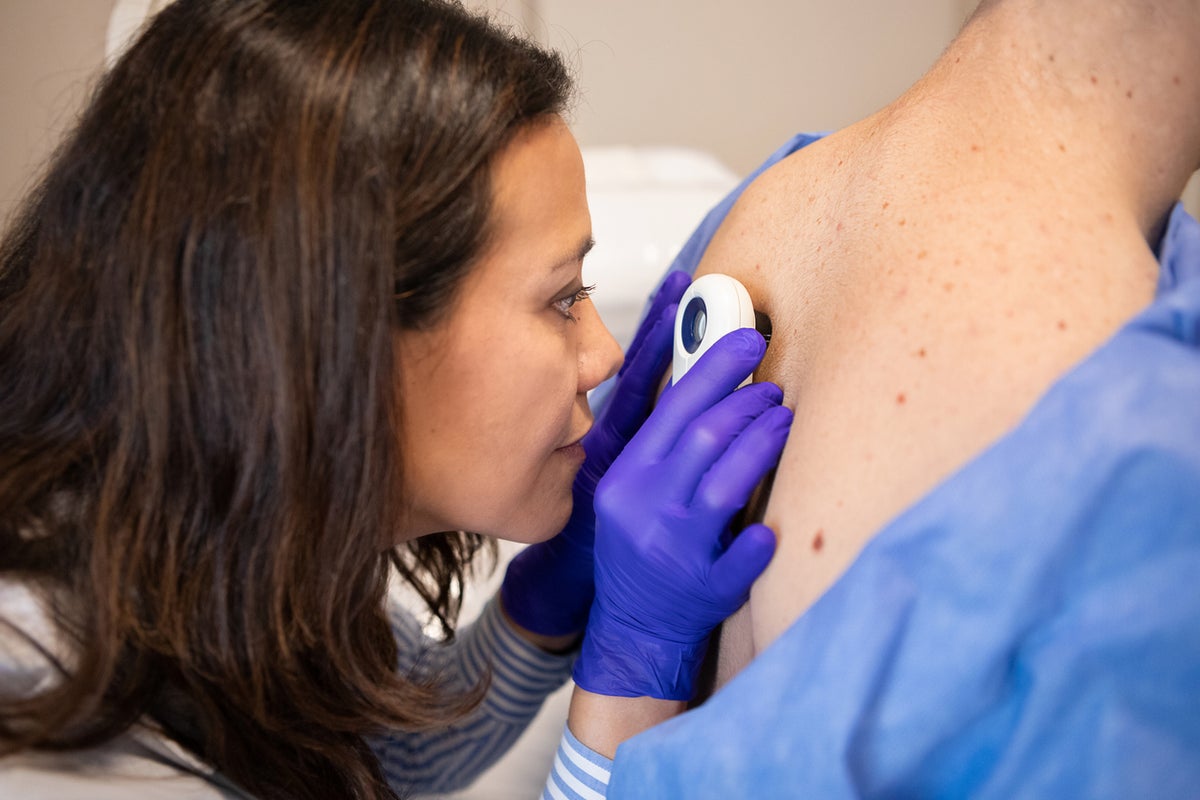
A person’s gut bacteria could determine their risk of getting skin cancer again after being treated for the disease, a new study has found.
Studies have shown that 25 to 40 percent of melanoma patients experience a recurrence after surgery and immunotherapy, NYU Langone Health said in a Friday statement announcing the new research results.
Melanoma is a type of skin cancer that is often linked to sun exposure. It can be treated through surgery or immunotherapy, a treatment that helps your immune system destroy cancerous cells.
The new study, led by researchers from NYU Langone Health and its Perlmutter Cancer Center and published in the journal Cell, analyzed stool samples from 674 melanoma patients enrolled in a global clinical trial.
Researchers found that differences in the amount of key bacterial groups in the gut predicted cancer recurrence with up to 94 percent accuracy.
A person’s gut bacteria could determine their risk of getting skin cancer again after being treated for the disease, a new study has found (Getty Images/iStock)
Trillions of bacteria live in the digestive tract, training the immune system to recognize the difference between dangerous and helpful bacteria. The bacterial groups analyzed by researchers interact with immune cells that change a patient’s reaction to immunotherapy, the press release said, citing past studies.
“Our study identified for the first time gut bacterial types that can serve as markers of increased recurrence risk in these specific patients, which will help tailor treatment,” the senior author of the new study, Dr. Jiyoung Ahn, a professor in the Department of Population Health at NYU Grossman School of Medicine, said in a statement.
But researchers found a catch to this new revelation — where the patient lives matters.
Melanoma patients in the new study had tumors that were surgically removed and then received either a combination of immunotherapies, nivolumab and ipilimumab, or just nivolumab.
The patients came from North America, Eastern Europe, Western Europe, Australia, and a sampling of other regions.

Researchers found that differences in the amount of key bacterial groups in the gut predicted cancer recurrence with up to 94 percent accuracy (Getty Images)
The study determined that bacterial markers that most accurately signal risk of cancer recurrence differed depending on where the patient lived.
Researchers found bacterial “fingerprints” that predict recurrence in each region by first grouping patients together based on the similarity of their gut microbiomes, regardless of where they were from.
“Using a standard measurement of microbial similarity, the team found that a signature derived from North American patients, for example, could accurately predict recurrence in patients from other parts of the world, but only if those patients had a similar bacterial fingerprint,” the press release explained.
Researchers hope this study will help provide patients with more reliable information ahead of cancer treatment.
“In the future, we envision analyzing a patient’s microbiome before treatment, comparing it to a global database, and providing a reliable prognosis that guides therapy from the start,” study author Dr. Richard B. Hayes, a professor in the Department of Population Health, said in a statement.