

Tom Horne thought he had a good handle on the rental market after six years living in the NSW Northern Rivers.
But after a stint away, his return to Byron Bay has brought him back to fierce competition for homes, with some listings attracting so much interest that owners have paused applications altogether.
“Whenever a decent rental comes up, there’ll be 80 to 100 likes on the post within 24 hours… if you’re late to respond, you’re already 100 deep,” Tom told Yahoo News Australia.
Tom and his partner are living in a renovated caravan — a temporary set-up that’s giving them some breathing room — but he said many others are far less fortunate.
“A lot of people don’t have that option, so they’re having to jump at whatever’s available,” he said.
His experience reflects a broader squeeze across regional Australia, where demand has surged since the pandemic but supply has struggled to keep pace.
Rental listings are scarce, competition is intense, and prices have climbed sharply even for smaller or lower-quality properties.
Across many regional areas, vacancy rates are sitting at or below 1 per cent, according to a Housing Industry Association (HIA) report, leaving renters with limited choice and little negotiating power.
And that imbalance is being felt across the country.
Do you have a story about renting? Contact newsroomau@yahoonews.com

Tom’s recently moved back to Byron Bay after a stint in Victoria. He said looking for a home to rent has been taxing. Source: Tom Horne
What’s the problem with Australia’s regions?
Industry figures suggest the issue is not short-term pressure, but a structural shortfall in housing supply.
HIA’s Simon Croft said regional communities have absorbed much of Australia’s population growth since the pandemic — there are now 10 million people living outside cities — without the housing or infrastructure needed to support it.
“The housing crisis in regional Australia is just as urgent as in our capital cities — and in many cases, more acute,” Croft told Yahoo.
He warned that housing supply and infrastructure have not kept pace with demand, leaving younger Australians in particular increasingly locked out and regional employers struggling to attract workers.
This reflects a broader failure in national planning, Croft said, arguing that housing, infrastructure and workforce needs must be coordinated through a dedicated regional housing approach.
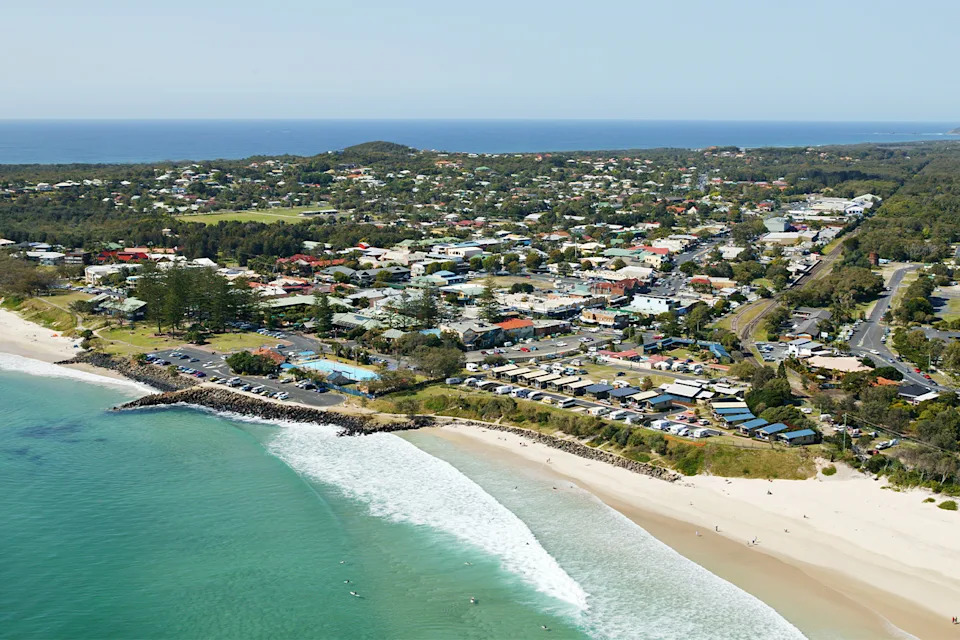
Homeowners in Bryon Bay were recently banned from leasing their homes for more than 60 days in a calendar year, in a bid to ease the burden on the rental market. Source: Getty
How can we fix the regional housing crisis in Australia?
Croft said what is needed now is a dedicated, long‑term national housing plan that explicitly recognises the distinct pressures faced by regional, rural and remote communities.
“If governments commit to a dedicated regional housing framework, not ad hoc or one-size-fits-all solutions, industry and regional towns can plan for a sustained and structured growth both in the short, mid and longer term…,” he said.
“With the right settings, even modest incentives can unlock meaningful new supply in regional towns.”
He said planning should include place-based targets, investment in social and key worker housing, and faster delivery of essential infrastructure such as roads, water and energy, alongside flexibility for smaller councils.
He also believes population growth can be positive if it is properly managed, with housing supply aligned to demand, early infrastructure investment, and a mix of housing types that preserve local character while supporting growth.
“Regional Australians welcome growth, but they want growth that enhances liveability, not overwhelms it,” Croft said.
Australia has no shortage of land
Tom said in Byron Bay, the situation has become dire. He said landlords are now receiving so many enquiries that they are unable to respond within days.
And it certainly isn’t confined to the Northern Rivers.
In Dubbo and Bendigo, renters face very limited availability and strong competition amid persistently low vacancy rates. Townsville, Cairns and Toowoomba continue to face undersupply, while Geelong, Ballarat and Bendigo also remain tight at around or just above one per cent due to sustained demand.
Even in more traditional “working regional” cities, the shortage of rental stock has made securing housing increasingly difficult for essential workers.
Tom believes the problem goes beyond demand alone.
“It’s not exactly regional here in Byron the same way as it is somewhere like Orange — but it definitely feels like it’s under pressure,” he said.
“There’s a housing crisis, but there’s not a land crisis. There’s so much land everywhere. I’ve just driven the whole east coast — there’s space everywhere.
“If you’ve got land right now, you should be encouraged to put small, self-contained homes on it.
“It shouldn’t take years of approvals, it should be incentivised.”
He said Australia’s low population density should be an advantage, not a constraint.
“We live on one of the least densely populated continents,” Tom said.
“We’re not short on space — we just need to build and develop. That’s the advantage of being in Australia. We should be cutting red tape and incentivising it.”
Do you have a story tip? Email: newsroomau@yahoonews.com.
You can also follow us on Facebook, Instagram, TikTok, Twitter and YouTube.