
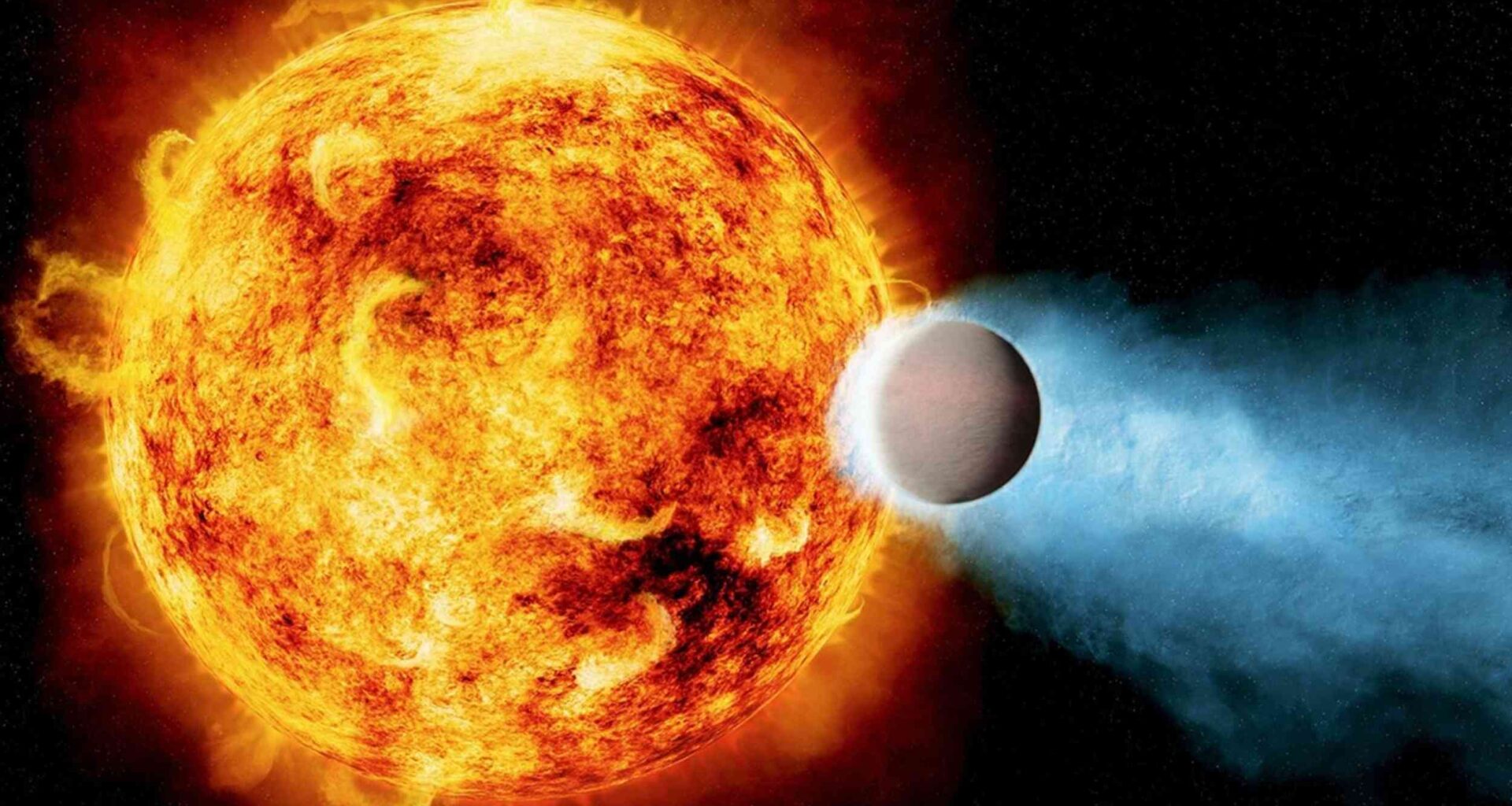
Researchers have found that Sun-like stars shed their intense X-ray output far earlier than expected, reaching a quieter state within a few hundred million years.
That faster decline shortens the period when nearby planets face the strongest radiation capable of stripping away their atmospheres.
Inside eight clusters

Across eight open clusters spanning ages from 45 million to 750 million years, Sun-like stars show a clear and early drop in X-ray brightness.
Tracking those stars across this range, Konstantin Getman, research professor of astronomy and astrophysics at Penn State University (PSU) documented how their emission falls well below long-standing expectations.
By about 100 million years, these stars produced only about a quarter to a third of the X-rays astronomers predicted.
That sharp early decline defines a narrower window of intense radiation and sets up the need to understand how planetary atmospheres respond during this critical phase.
When atmospheres erode
Young stars can strip gases from nearby planets because X-rays hit the upper atmosphere and heat it until it escapes to space.
During that process, a planet can also lose water ingredients as light breaks molecules apart before thicker chemistry takes hold.
Earlier work on even younger stars showed this danger was strongest in the first 25 million years.
The new result narrows the worst damage window for Sun-like stars, which matters because rocky planets need time to hold air.
The missing years
Between very young stars and mature ones, astronomers had a blind spot where solar cousins were neither newborn nor settled.
Chandra – NASA’s space-based X-ray observatory – caught the stronger emitters, while Gaia – a European Space Agency mission that maps star positions and motions – sorted true cluster members from look-alikes drifting in front or behind.
That combination let the team compare five newly observed clusters with three older ones, covering a long stretch of stellar adolescence.
Once that gap was filled, the long-accepted picture of a slow fade no longer matched what Sun-like stars actually did.
Expectations fall short
Earlier models expected young Sun-like stars to remain X-ray bright, meaning they emit high levels of energetic radiation, for longer as they gradually slowed their spin.
Instead, the Chandra results show the decline through this adolescent period runs about 15 times faster than that rule predicted.
Lower-mass stars below the Sun’s heft did not follow the same pattern and kept much of their X-ray output longer.
As a result, planet-friendly conditions may depend not just on age, but on a star’s exact mass.
Inside the engine
Deep inside these stars, a weakening magnetic dynamo, the churning process that builds stellar magnetism, likely reduces powerful flares.
As spin slows and internal layers change, that engine seems less able to keep giant magnetic structures hot.
Near 100 million years, the stellar corona, the outer hot gas around a star, also appears to cool.
“This is not because an outside force is consuming their light, but because their internal generation of magnetic fields becomes less efficient,” said Getman.
Smaller stars linger
Slightly smaller stars held onto their high X-ray output much longer than stars near the Sun’s mass.
Their deeper outer layers may help keep magnetic activity going, even while Sun-sized stars are already calming down.
Because that difference lasts for hundreds of millions of years, planets around smaller stars may face a harsher radiation history.
Those systems can still host life, but they may need thicker air, stronger magnetic shielding, or more time.
Lessons for Earth
Our own Sun probably passed through this quieter turn billions of years ago, while Earth was still building a lasting atmosphere.
On average, solar-mass stars start out emitting about 1,000 times more X-rays than today’s Sun, then fall to roughly 40 times that level by 100 million years.
“It’s possible that we owe our existence to our Sun doing the same thing, several billion years ago, that we see these young stars doing now,” said Vladimir Airapetian, co-author at NASA’s Goddard Space Flight Center in Greenbelt, Maryland.
If the young Sun followed the same path, Earth may have avoided a longer period of atmospheric erosion.
Chemistry gets room
With fewer hard X-rays hitting them, young planets around Sun-like stars would lose gas more slowly and keep thicker upper air.
Water would also break apart less often through photolysis, light-driven molecular breakup, easing one route toward long-term drying.
Gentler radiation could alter ionized chemistry and favor prebiotic molecules, chemicals that can support later biology.
None of that guarantees living worlds, but it gives young planets around solar cousins a less punishing start.
What remains unclear
The exact trigger of the rapid fade remains unsettled, even though the broad pattern now looks hard to dismiss.
Magnetic-field efficiency remains the leading idea, but the team has not yet pinned down how the change unfolds.
More clusters in the 100-million-year to 1-billion-year range should show whether the decline stays steep or levels off later.
Future atmosphere models will depend on that answer when they estimate how much air young worlds can keep.
A calmer beginning
What emerges is a tighter timeline for when Sun-like stars stop blasting young planets with their most damaging radiation.
Even then, the revised clock does not promise life anywhere, but it sharpens where astronomers should look for stable atmospheres.
—–
Like what you read? Subscribe to our newsletter for engaging articles, exclusive content, and the latest updates.
Check us out on EarthSnap, a free app brought to you by Eric Ralls and Earth.com.
—–