
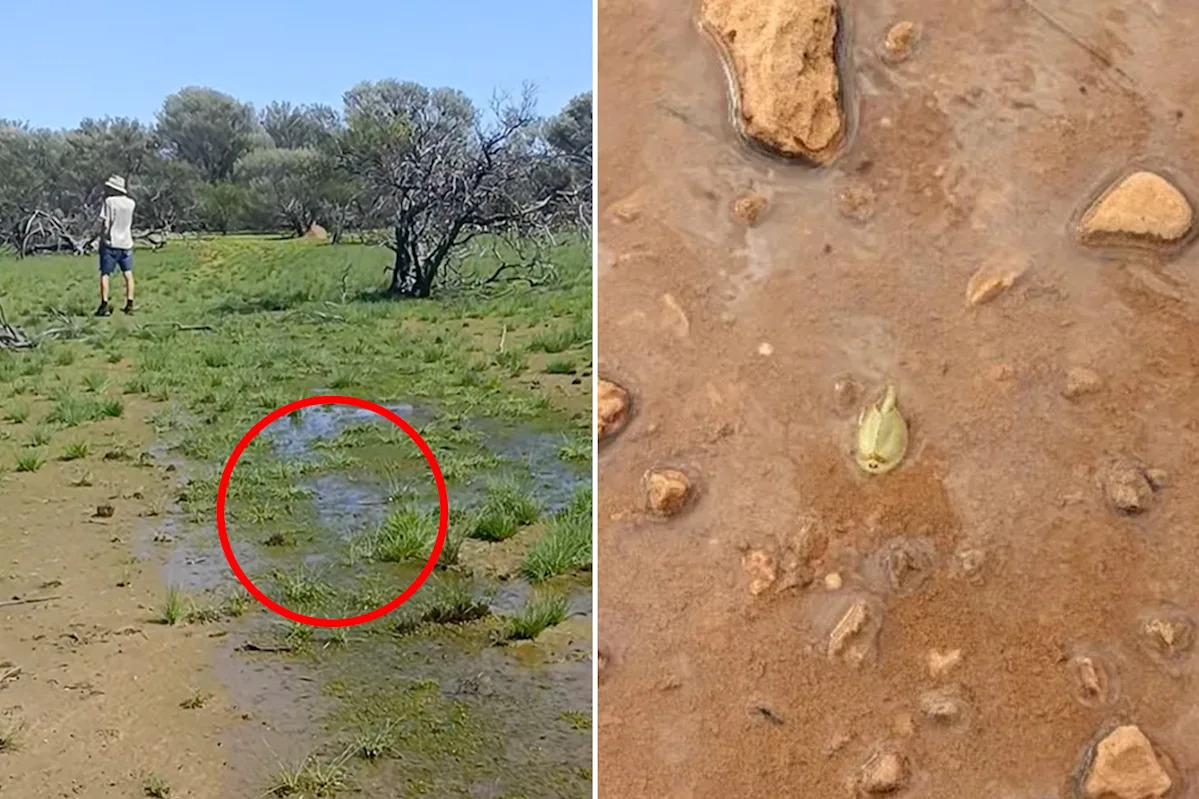
At an outback station 500km away from the nearest city, an incredible phenomenon has awoken following a bout of heavy rain.
Thousands of living fossils have emerged from the dirt, exploding with life and sparking excitement for Melangata Station owner Jo Clews. “We’ve been invaded,” she said.
The tiny creatures, known as shield shrimp, began to emerge from the ground after heavy rains caused by Cyclone Narelle, which made its destructive journey across the north coast and into Western Australia late last month.
Jo told Yahoo News Australia she stumbled across hundreds of the shrimp along the surface of a lake on her property in desert country, saying she was in the “right place at the right time” to catch a glimpse.
“They are quite an incredible creature, and to see so many of them was quite astounding”, Jo said. While it’s common to see the shrimp, Jo said that they’re rarely in such high numbers.
What are shield shrimp?
Dr Marissa McNamara, Collection Manager of Crustacea at Queensland Museum, previously told Yahoo that Shield Shrimp belong to a group of crustaceans called “branchiopods”, which literally means “gill feet”.
They are widespread across inland Australia and have leaf-like lobed feet, each bearing a gill plate that allows them to breathe, she explained, adding that their shield protects the head and frontal portion of their multi-segmented bodies.
They are highly resistant to drying out, which means they can survive for years in the desert clay before hatching.
“The eggs need water to hatch — the larvae then grow into adults and lay their own eggs very quickly, before the water dries up,” she explained.
“The eggs can remain viable for at least several years, and perhaps more (definitive data on the maximum timespan is unavailable).”
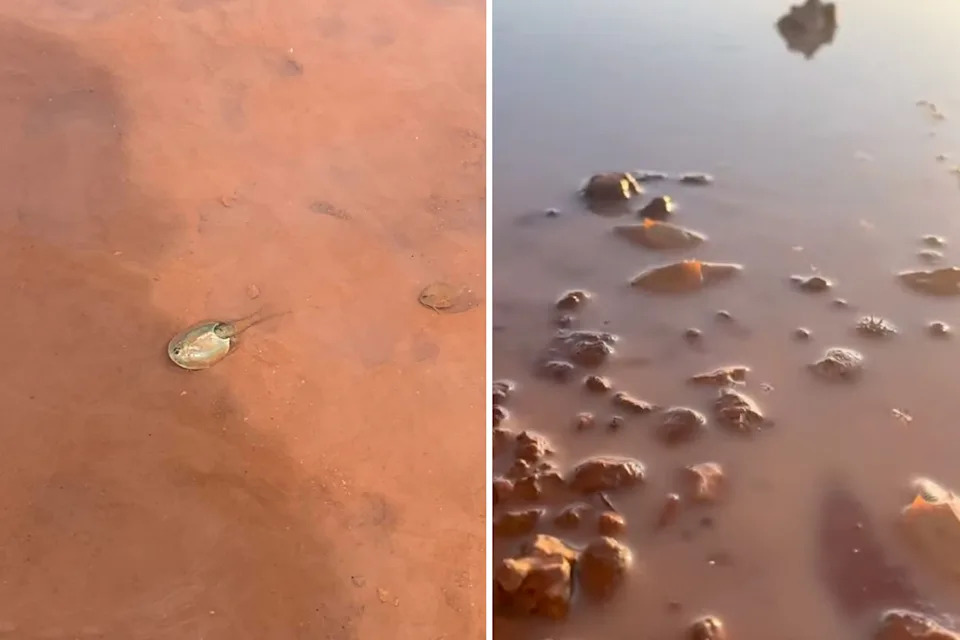
Shield shrimp specimens today look similar to those that lived over 300 million-years-ago. Source: Facebook/Julie-Anne McLean/Morgan Hughes
They are sometimes referred to as “living fossils” because today’s specimens look similar to the ones that lived over 300 million years ago.
“They also live in the desert, which is an unusual habitat for crustaceans,” Dr McNamara said.
Only one species is currently recognised in Australia — Triops australiensis — however recent research has found evidence that there may be at least 17 more species in this genus.
Wet weather means more opportunities to spot shield shrimp
Aussies across central Australia could be in for a treat as wet weather has continued to make its way across the country’s centre, creating awe-inspiring scenes in its wake.
One man previously claimed he once found shield shrimp in puddles on top of Uluru. Others said the crustaceans “fascinated” them as a child.
“I used to live in outback NSW and after every rain we would find them in the puddles,” someone else said.
“It’s best to leave shield shrimp undisturbed, especially given evidence that there are many unique species with restricted distributions, rather than one widespread Australian species,” Dr McNamara said.
Love Australia’s weird and wonderful environment? 🐊🦘😳 Get our new newsletter showcasing the week’s best stories.
