
Losing a limb changes everyday life in ways that go beyond movement. Tasks that once felt simple become difficult.
Prosthetic limbs help, but they cannot fully match the feeling, control, or flexibility of a real arm or leg. This has led scientists to ask an important question: can the human body ever regrow lost parts?

A new study offers a hopeful step in that direction. By studying how different animals regrow body parts, researchers have found a shared genetic system that might one day help humans do the same.
Animals vary in regrowth
In the natural world, some animals are far better at regeneration than others.
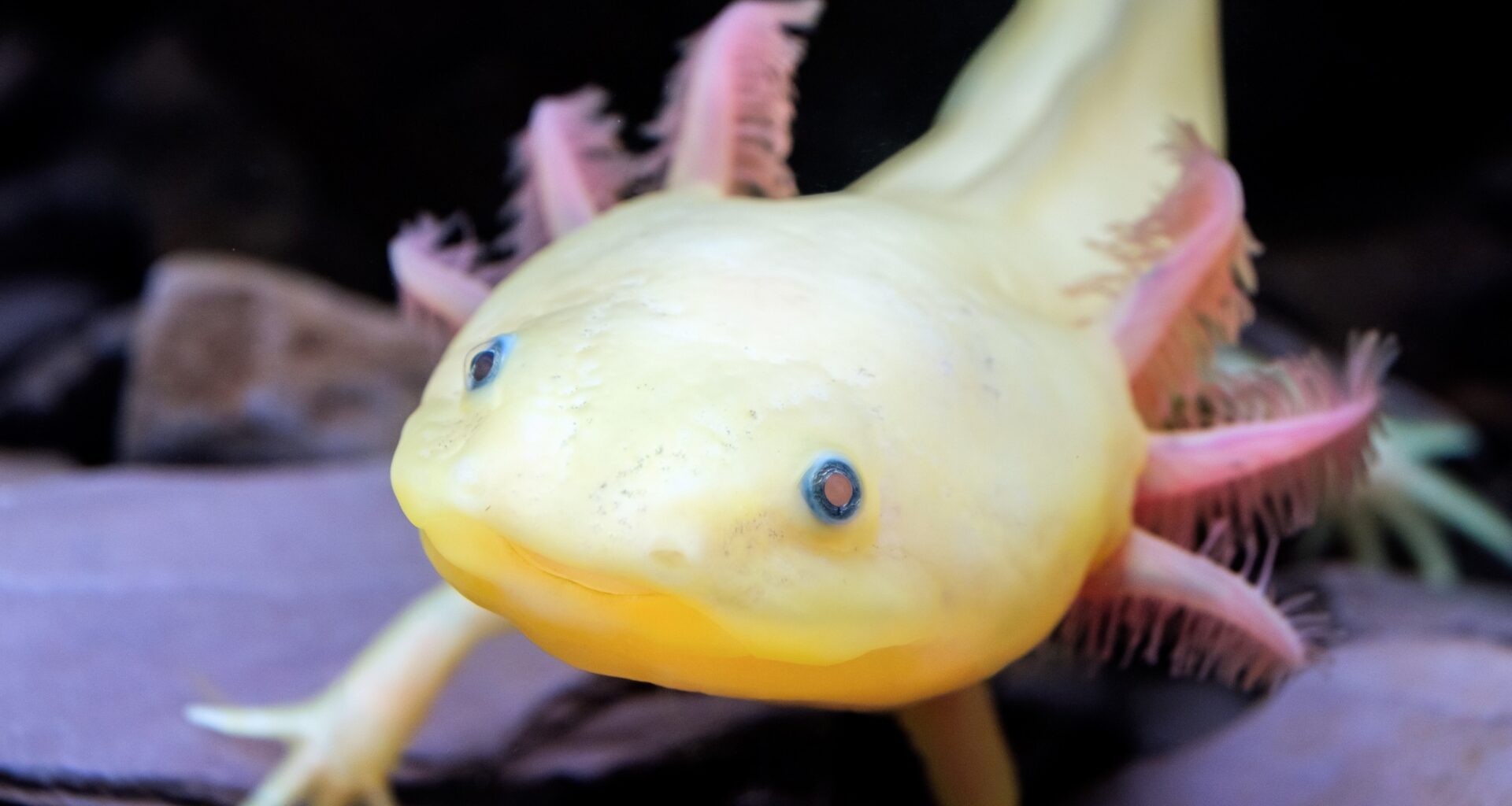
The axolotl, a type of salamander, can regrow entire limbs. It can even rebuild parts of its heart, brain, and spinal cord.
Zebrafish also have strong regenerative powers. They can regrow their tail fins quickly and repair organs like the heart.
Mice, and humans, have much more limited ability. But they are not completely without it. Under certain conditions, humans can regrow fingertips, especially if the nail bed is still present.
This wide range of abilities made scientists wonder if there is a common system behind regeneration that works in all these species.
Shared genes control regrowth
To explore this idea, researchers from three universities studied salamanders, zebrafish, and mice together.
Josh Currie is an assistant professor of biology at Wake Forest whose lab studies the Mexican axolotl, a type of salamander.
“This significant research brought together three labs, working across three organisms to compare regeneration,” said Currie.
“It showed us that there are universal, unifying genetic programs that are driving regeneration in very different types of organisms, salamanders, zebrafish and mice.”
Genes that become active in the skin
The team discovered that all three animals use the same set of genes during regeneration. These genes are called SP6 and SP8.
These genes become active in the skin that forms over a wound. This layer of skin is not just a cover. It plays an active role in telling the body how to rebuild lost tissue.
To understand how important these genes are, scientists removed them.
In salamanders, removing the SP8 gene stopped proper limb regrowth. The bones did not form correctly. In mice, removing both SP6 and SP8 reduced their ability to regrow digit tips.
This showed that the genes are essential. Without them, the body cannot complete the regeneration process.
Finding the trigger for limb regeneration
After finding the role of these genes, researchers asked a new question. Could they replace the missing signals and restore some regeneration?
To test this, they developed a gene therapy. The therapy delivered a molecule called FGF8, which normally works with the SP genes to support growth.
They tested this in mice and the results were promising. The treated mice showed better bone regrowth in their digit tips.
“We can use this as a kind of proof-of-principle that we might be able to deliver therapies to substitute for this regenerative style of epidermis in regrowing tissue in humans,” Currie explained.
This means that even if some genes are missing or inactive, scientists may be able to step in and trigger the process.
Helping the body repair itself
The need for better treatments is growing. Every year, more than one million people worldwide lose limbs due to diseases, injuries, or infections.
This number is expected to rise as populations age and conditions like diabetes become more common.
Today, most solutions focus on replacing the limb with a prosthetic. While helpful, these do not fully restore natural function.
Scientists are now exploring new ways to help the body repair itself. These include stem cells, engineered tissues, and now gene based therapies.
“Scientists are pursuing many solutions for replacing limbs, including bioengineered scaffolds and stem cell therapies,” Currie explained.
“The gene-therapy approach in this study is a new avenue that can complement and potentially augment what will surely be a multi-disciplinary solution to one day regenerate human limbs.”
The study also shows the value of working across different fields and species.
The human body may have these tools
“Many times, scientists work in their silos: we’re just working in axolotl, or we’re just working in mouse, or just working in fish,” Currie said.
“A real standout feature of this research is that we work across all these different organisms. That is really powerful, and it’s something that I hope we’ll see more of in the field.”
Human limb regrowth is still far in the future. But this research shows that the body may already have the basic tools needed. Scientists are now learning how to switch those tools on.
Step by step, the idea of regrowing a limb is moving from imagination toward reality.
The study is published in the journal PNAS.
—–
Like what you read? Subscribe to our newsletter for engaging articles, exclusive content, and the latest updates.
Check us out on EarthSnap, a free app brought to you by Eric Ralls and Earth.com.
—–