
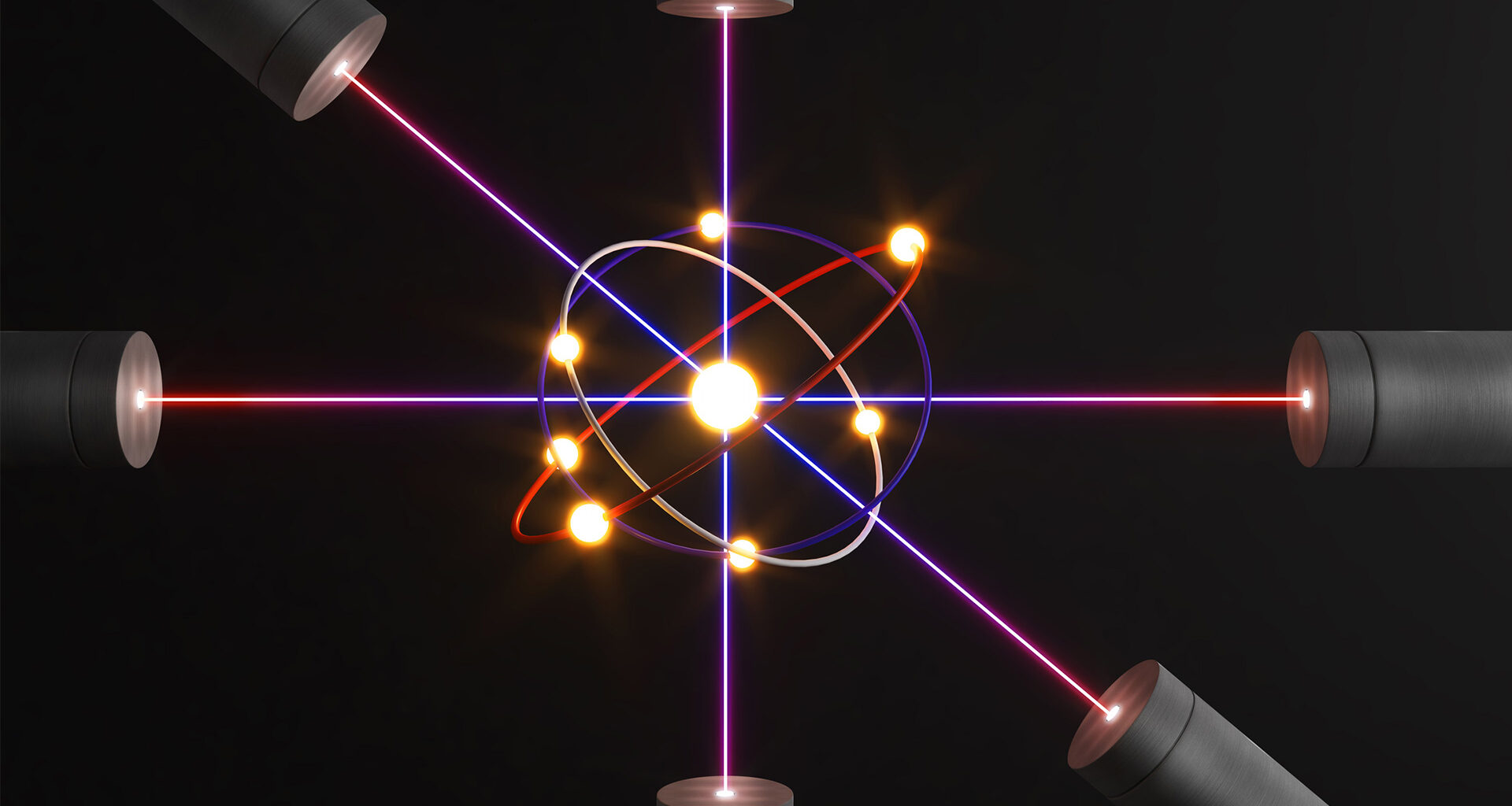
For decades, free-electron lasers (FELs) have been among the most powerful tools in science—letting researchers watch atoms move, study chemical reactions in real time, and probe materials at the smallest scales.
However, there’s a catch. These machines are enormous, often stretching for kilometers, making them rare and expensive. However, this could soon change.
For the first time, researchers have shown that a much smaller system can run an FEL continuously for over eight hours.
“We report significant improvements to the stability of a hundred terawatt laser system, resulting in successful demonstration of reliable, long-term operation of an LPA-driven FEL,” the study authors note.
This advancement could bring these powerful light sources out of massive facilities and into more accessible labs, potentially reshaping research in physics, chemistry, medicine, and industry.
How FELs work, and why shrinking them is so hard
At the heart of an FEL is a beam of high-energy electrons. These electrons are fired through a device called an undulator, which uses alternating magnetic fields to wiggle them back and forth.
As they move, the electrons emit light that builds into an intense, coherent laser beam—often in the ultraviolet or X-ray range. Traditionally, generating such high-energy electron beams requires long linear accelerators, which is why FEL facilities are so large.
A promising alternative has been the laser-plasma accelerator (LPA). Instead of kilometers, LPAs use powerful laser pulses fired into a plasma (which is basically a soup of charged particles) to create strong electric fields that can accelerate electrons to near light speed in just a few centimeters.
However, LPAs have struggled with instability. Small fluctuations in the laser’s focus, energy, or pulse duration can cause the electron beam to vary from one shot to the next. This noise makes it nearly impossible to run an FEL reliably for long periods, which is essential for real-world applications.
“LPAs face inherent challenges in shot-to-shot stability, especially in the context of the strict tolerance requirements of FELs,” the study authors said.
Real-time control and a ‘ghost’ beam
To overcome the above-mentioned problem, the research team added five active stabilization systems to their setup at Berkeley Lab’s BELLA center.
These systems continuously monitored and corrected key properties of the laser in real time, including where it was focused, how much energy it carried, and how long each pulse lasted.
They also introduced a clever addition: a low-power ghost beam. This was essentially a copy of the main laser beam, used as a sensitive probe to detect tiny fluctuations that the main system couldn’t easily see.
By tracking these subtle changes, the system could make rapid adjustments and keep everything stable. With all these improvements working together, the setup produced a steady stream of electron bunches at 100 MeV, firing 1,000 times per second.
This stable beam successfully powered an FEL for more than eight continuous hours, generating light at a wavelength of 420 nanometers—within the visible range.
“The LPA source delivered 100 MeV electron beams at 1 Hz with high stability over more than 10 h, enabling over 8 h of continuous FEL operation without operator input,” the study authors said.
The road to bringing free-electron lasers within reach
This achievement marks an important turning point. If compact systems like LPAs can reliably drive FELs, the technology could become far more affordable and widely available.
This would open the door to new applications, from advanced imaging and materials science to medical research and industrial testing.
However, the work isn’t finished. The current system operates at relatively modest energies, producing visible light. To unlock the full potential of FELs, especially in the X-ray range, the team aims to scale up to 500 MeV.
At that level, the laser could generate light between 20 and 30 nanometers, approaching the ultraviolet–X-ray boundary where many high-impact applications lie.
Although there are still technical challenges ahead, particularly in maintaining stability at higher energies, the current study shows that the core problem (keeping the electron beam stable and consistent over long periods of time) can be solved.
If the next steps also work out, free-electron lasers may not stay confined to giant facilities for long.
The study is published in the journal Physical Review Accelerators and Beams.