
All-new electric hatch blends striking design with button tactilityThe News
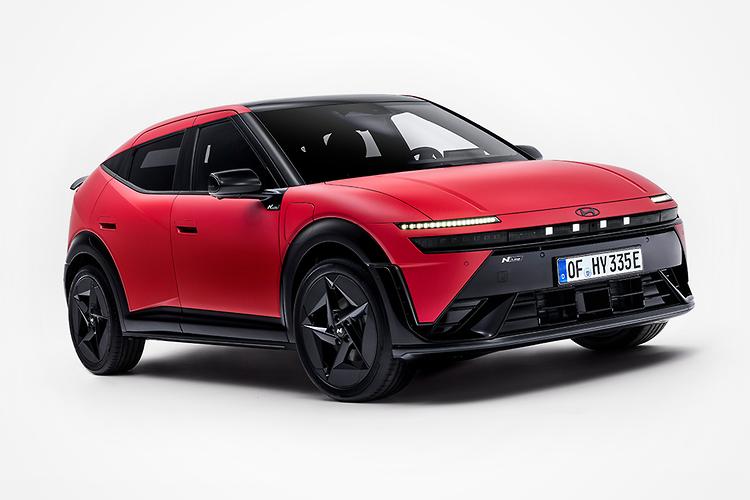
Hyundai has unveiled its new IONIQ 3 electric hatchback and confirmed will arrive in Australia in early 2027, likely with a choice of 42kWh and 61kWh batteries.
The Key Details
Hyundai IONIQ 3 confirmed for Australia, due early 2027
Two batteries available, plus standard and N-Line versions
Front-drive layout with modest power prioritises real-world efficiency
Faster models, N included, expected later
Smaller than an i30 hatch dimensionally, but comparable interior and boot space
 The Finer Details
Sitting between the Inster and Kona Electric, the IONIQ 3 uses the same lower-cost 400V version of the Hyundai Group’s e-GMP architecture as the Kia EV3 and EV4, though the Hyundai could be more affordable thanks – in part – to its smaller batteries.
That said, its fastback styling should still result in a range that surpasses 500km in some variants; two single-motor powertrains will be offered from launch, outputting either 107kW/250Nm or 99kW/250Nm.
Curiously, the punchier system is paired with the smaller ‘Standard Range’ 42kWh LFP battery as opposed to the 61kWh NMC ‘Long Range’ unit.
Concrete range figures haven’t been confirmed at the time of writing, but the Standard Range is said to be good for “at least” 335km while the Longe Range will nudge 500km on the WLTP cycle.
A DC fast charge (power TBC) will supposedly take the batteries from 10-80 per cent in 29 and 30 minutes respectively, while an onboard 11kW AC charger is standard.
Faster 22kW hardware will be able to be optioned.
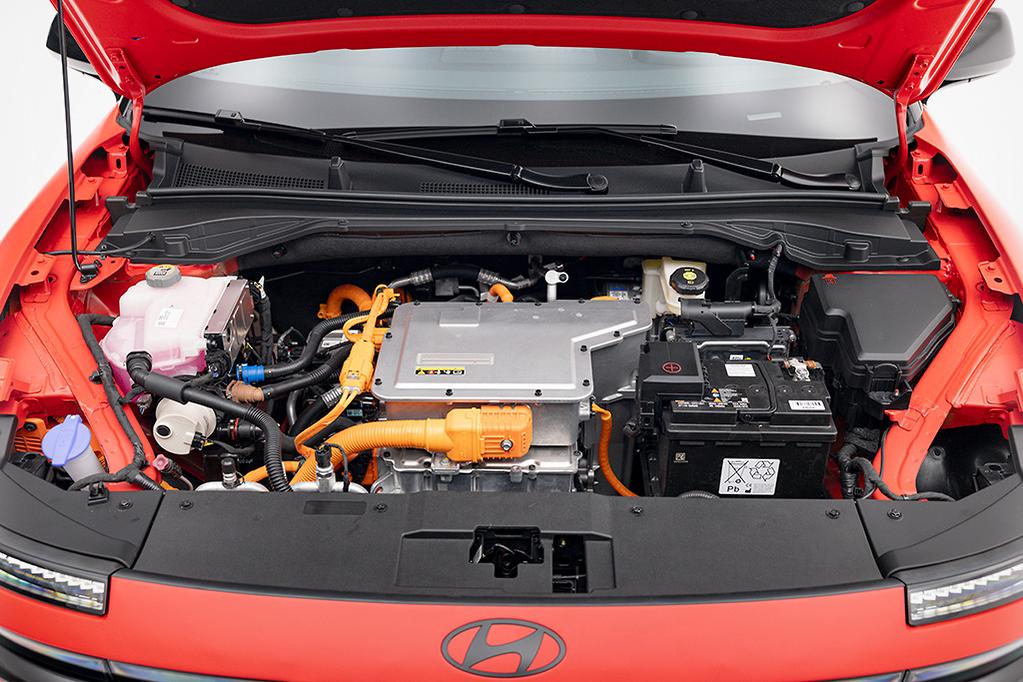
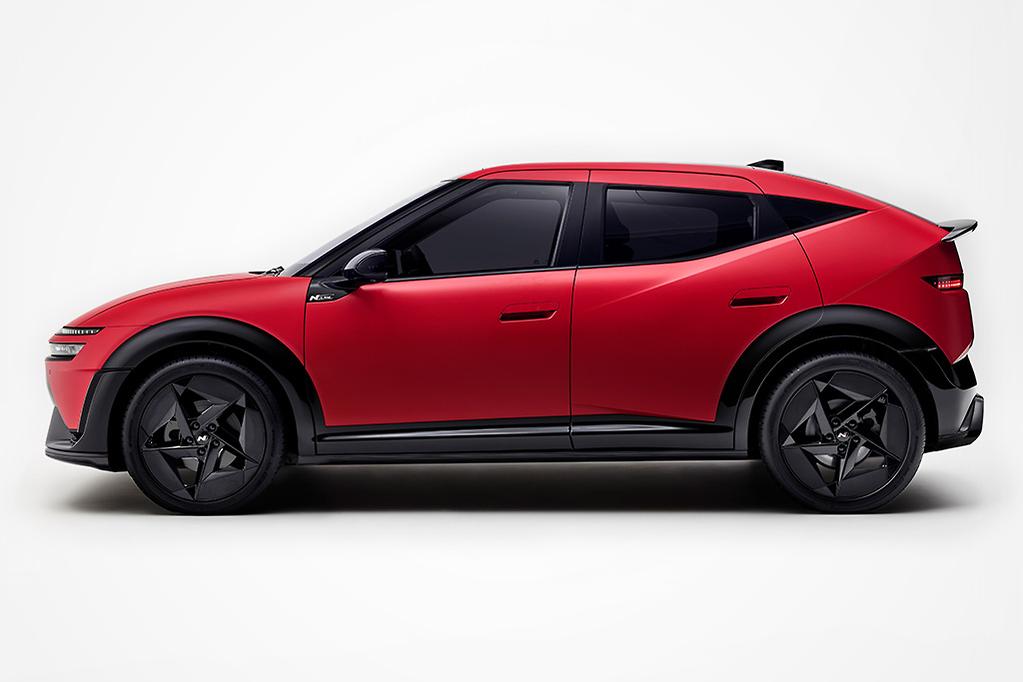
At just over 4.1 metres long, the IONIQ 3 is shorter than the i30 hatchback, but its EV-specific underpinnings mean it unlocks more interior space, including a 441-litre boot, but there’s no frunk.
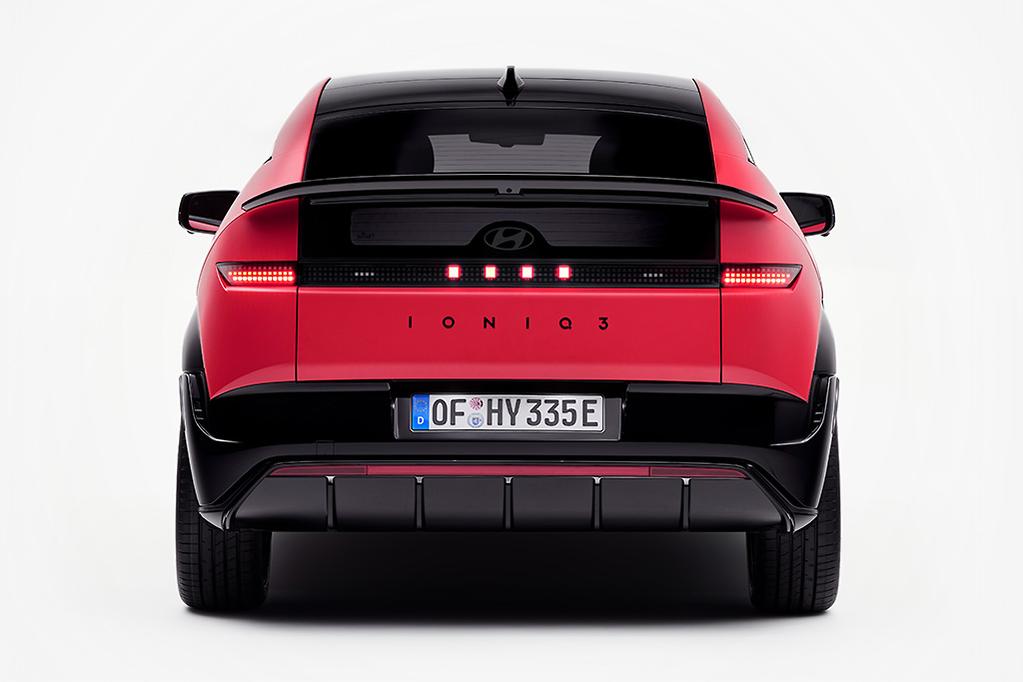
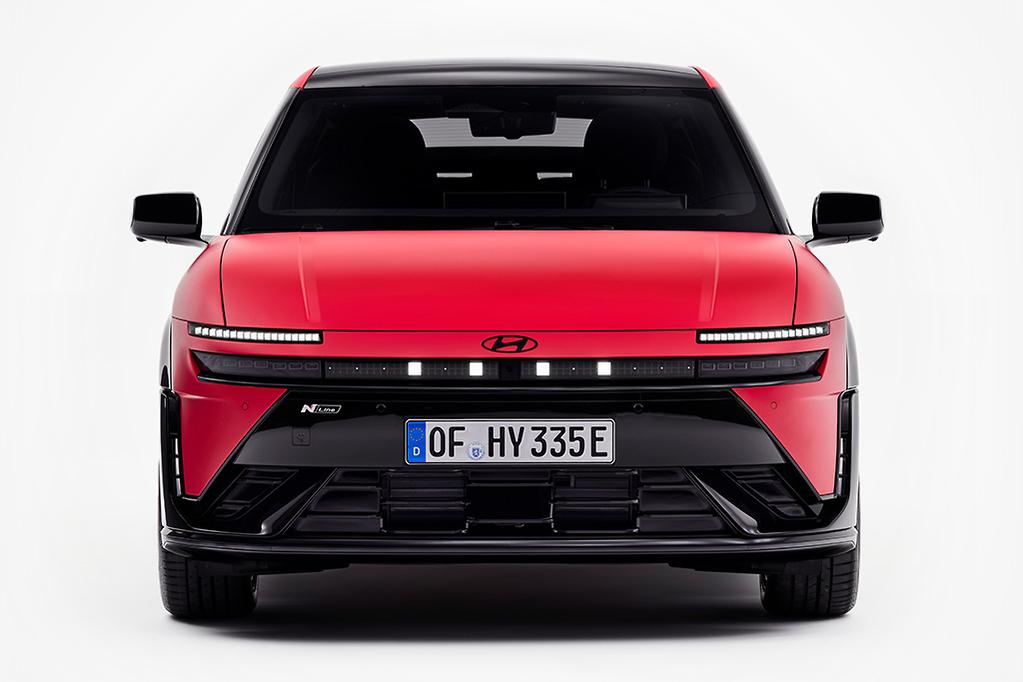
A show-stopping design was targeted to elevate the IONIQ 3 beyond what designers see as an increasingly generic class of EVs.
Hyundai describes the distinctive shape as an ‘aero hatch’ that combines a low-set nose with a fastback-style tailgate to improve airflow while retaining interior headroom.
Inside, the cabin debuts Hyundai’s new Pleos Connect infotainment system, with wireless Apple CarPlay and Android Auto to be standard. Powered, heated and ventilated seats will also be on the features list of select grades.
The Road Ahead
The IONIQ 3 range is expected to be built out gradually, with higher-performance versions pencilled in for the future. A full-fat IONIQ 3 N may already be in development…
Pricing hasn’t been set by Hyundai Australia yet but expect to see the range kick off with a Standard Range variant at around $40,000 plus on-road costs.
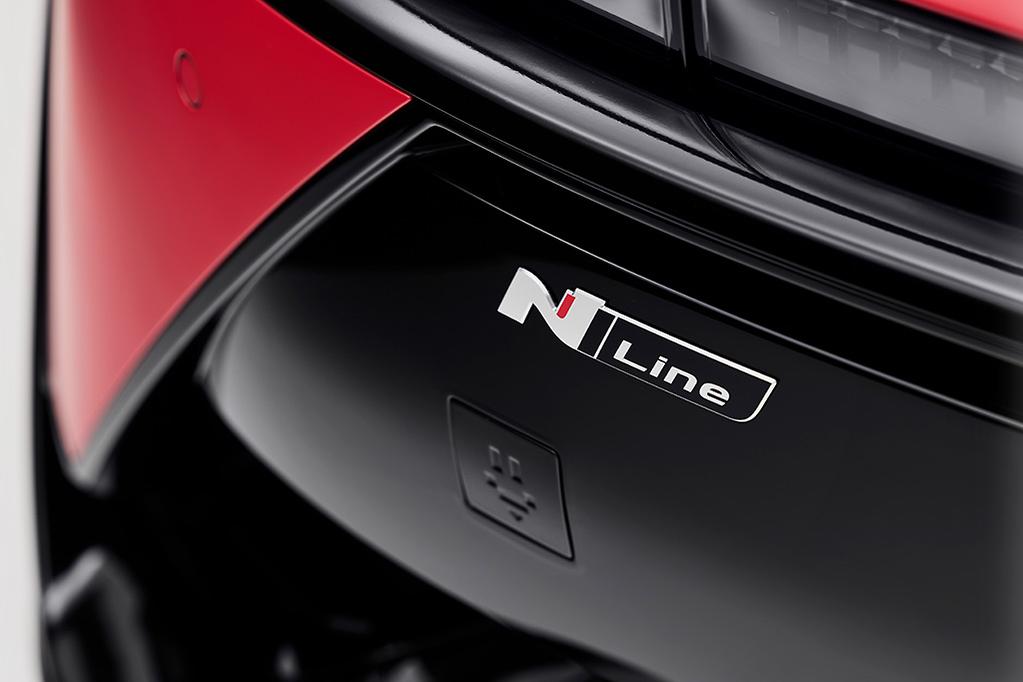
A five-star ANCAP rating has been targeted to make base variants appealing for fleets, while private buyers will eventually be able to choose between standard and N-Line versions.
 Our team of independent expert car reviewers and journalistsMeet the team