
F1 has announced a raft of changes to its controversial regulations in a bid to make new cars go down more smoothly with the disgruntled operators who drive them.
But while the changes have been labelled as “sensible”, they have done little to de-clutter what is already a complicated picture about how F1 cars in 2026 fundamentally work.
Fox Sports, available on Kayo Sports, is the only place to watch every practice, qualifying session and race in the 2026 FIA Formula One World Championship™ LIVE in 4K. New to Kayo? Join now and get your first month for just $1.

At the centre of the changes is the category’s unmoved commitment to maintaining a notional 50-50 balance of power between internal combustion and electric.
That balance has spawned a new generation of cars with a range of complexities that force drivers to, at times, driver counterintuitively. That is — for example — lift-and-coast in certain corners during a qualifying hot lap to ensure maximum power is available down a straight.
As such, many drivers have voiced their disapproval through three races. None have hit out as strongly as Max Verstappen, who has been pushed to the brink of retirement.
“The problem is simply that you can tweak these regulations a bit, but fundamentally something is wrong. Not everyone will admit that publicly, but it’s true,” Verstappen said this week.
‘WE NEED TO LEARN’: Drivers get their wish as big changes to new F1 regulations confirmed
Addressing the dissatisfaction among drivers while improving the overall F1 spectacle was therefore the key remit for the sport’s governing body, the FIA. As was improving safety with massive speed differentials between cars, and the one they are trailing, creating nerve-racking scenarios. Most notably, Ollie Bearman crashed at high speed at Suzuka when he almost catapulted into the back of Franco Colapinto, forcing him off-track.
F1 stakeholders have therefore agreed the following “refinements”, as labelled by the FIA:
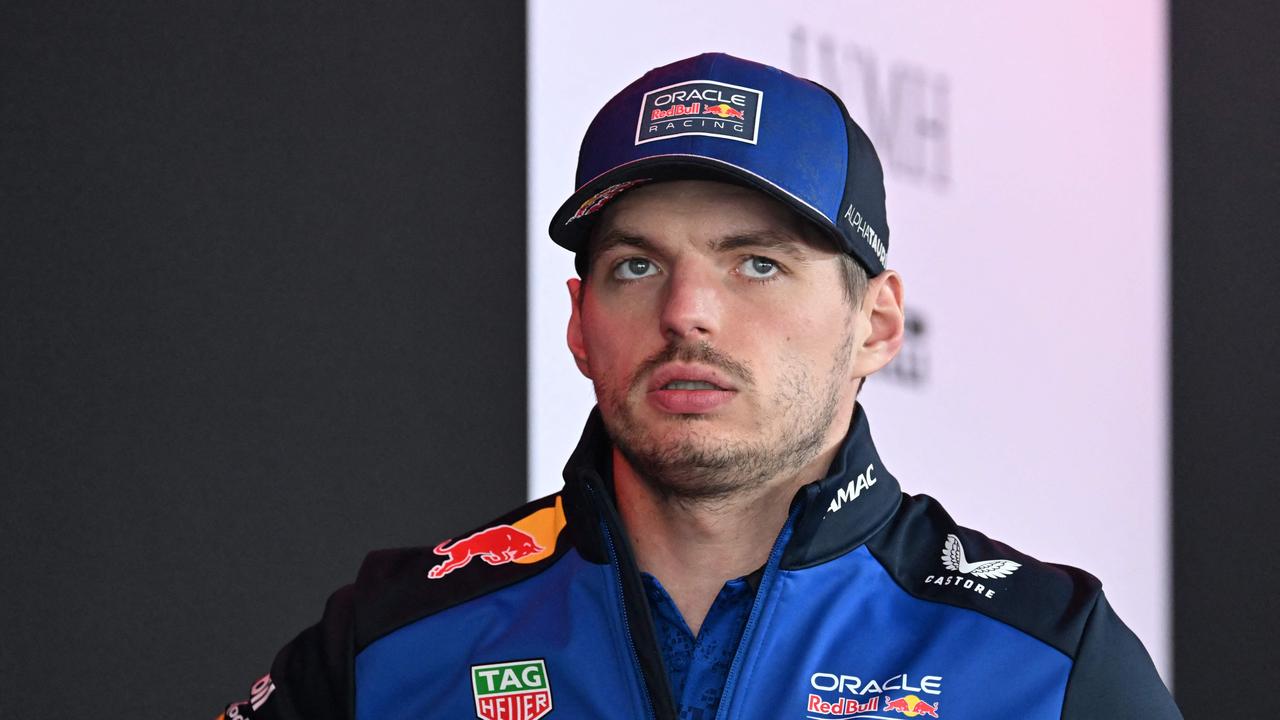
Red Bull Racing’s Dutch driver Max Verstappen awaits to be interviewed ahead of the March 29 Formula One Japanese Grand Prix race at the Suzuka circuit in Suzuka, Mie prefecture on March 26, 2026. (Photo by Toshifumi KITAMURA / AFP)Source: AFP
Qualifying:
Change — Adjustments to energy management parameters, including a reduction in maximum permitted recharge from 8MJ to 7MJ.
Explanation — This is aimed at reducing “excessive harvesting” and encouraging “more consistent flat-out driving”. The FIA says it targets a 2-4 second per lap reduction in ‘superclipping’, which is when cars are harvesting energy despite being at full-throttle.
Change — Increasing peak superclip power from 250kW to 350kW.
Explanation — This is also designed to reduce superclip duration, and how much emphasis drivers must put on energy management.
Change — Increasing from 8 to 12 the amount of events were alternative lower energy limits may apply.
Explanation — The FIA says this is to encourage “greater adaptation to circuit characteristics.”
Race:
Change — Capping maximum Boost power at +150 kW to limit “sudden performance differentials”, and limiting energy deployment to 250kW outside of key acceleration zones.
Explanation — This creates a variability where drivers can access maximum energy power in crucial overtaking areas (350kW), but are limited elsewhere. This is also designed to limit major closing speeds to safer areas of the track, while still encoruaging overtaking. Closing in rapidly while approaching a braking zone is expected, and easily navigated, compared to doing so at a high-speed corner, like Bearman at Suzuka.
‘SENSIBLE CHANGES’
William teams principal James Vowles was the first to publicly acknowledge the changes, praising F1 and the FIA for its willingness to act swiftly in the face of widespread dissatisfaction.
“These are sensible changes and the teams, FIA and Formula 1 have done good work over the past few weeks to agree them,” Vowles said.
“F1 has seen some great racing so far this year but it is right that we always look at ways to keep improving.
“We look forward to seeing them in action from Miami onwards.”
William teams principal James Vowles was the first to publicly acknowledge the changes.Source: Getty Images
Hours earlier, Mercedes boss Toto Wolff suggested the team would also share a favourable view over the tweaks.
“The discussions that have been taking place between the drivers, the FIA, Formula One, and the teams have been constructive. And we all share the same objectives,” he said.
“It’s how can we improve the product, make it out-and-out racing, and look at what can improve in terms of safety, but act with a scalpel and not with a baseball bat.
“We are going to ratify, in order to evolve, because there has only been three races. We need to learn from the past, where decisions were sometimes made in an erratic way, and then we overshot and realised it wasn’t good.
“We are custodians of the sport and we have many hundreds of thousands of fans that love F1. In order to protect this huge opportunity that the sport gives us, we shouldn’t badmouth in public our own sport.”
The fact the changes were unanimously agreed also suggests the lack of a major sporting knock-on effect. That is, the nature of the changes mean Mercedes can realistically expect to still be the frontrunner in Miami, followed by McLaren and Ferrari in no particular order.
It’s extremely unlikely Mercedes — with a reputation as a combative outfit under Wolff’s leadership — would’ve so readily signed-off on anything to the contrary.
But that alone won’t necessarily make them widely popular changes despite theoretically offering an overall improvement.
Senior F1 writer at ESPN Nate Saunders said that the changes speak to the fact that they only making tweaks to a flawed system, while calling out the complex nature of the rules.
“Reading these bullet points is absolutely mystifying. So complicated,” Saunders wrote,
“This is the best example that exists on how flawed these new regulations are.
“How F1 and the FIA allowed themselves to arrive at this set of rules is baffling.”
Meanwhile, F1 journalist and author Ben Hunt, upon quoting some of the technical wording, said: “One for the new fans? Sheesh.”
Former McLaren and Renault aero design engineer Mark Lane was also scathing, claiming that F1 is paying the price for its overall philosophy.
“There are too many holes in this dyke,” Lane wrote.
“The powers that be need to heed the writing on the wall and organise some V8 or V10 power before the whole house of cards falls down around their virtue signalling ears.”
‘ONE PROBLEM TO FIX ANOTHER’
Perhaps the biggest question, however, is whether or not the changes will be enough to satisfy Verstappen to keep him racing in the category.
They are seemingly reasonable changes in the circumstances that will, crucially, improve driver safety. However, they appear to only be a variation on a theme in terms of the driving itself, rather than offering the profound shift that Verstappen craves.
Just this week, Verstappen doubled down on wanting F1 to move away from its symbolic commitment to 50 per cent electrical power in favour of reverting to V8 or V10 internal combustion engines.
“I’m just trying to adapt to it, even though I’ll be retiring in a few years’ time, I do want it to remain a decent sport. Something has to change,” Verstappen said.
“In that case, I would choose to have the V10 or V8 engines brought back.”
But the verdict from Haas’ head of car engineering Hoagy Nidd appears to hose down any suggestion that drivers will suddenly enjoy a more traditional, and enjoyable, formula for speed.
Speaking to Autosport, Nidd said drivers will be able to harvest a greater portion of the car’s total energy capacity under normal driving conditions, since the overall limit is reduced.
It means there will be less need to rely on unusual tactics, such as lift-and-coast, to fully recharge the battery.
Nonetheless, he added: “But it’s something that, in a way, it’s kind of introducing more of a problem to fix another problem.
The biggest question is whether or not the changes will be enough to satisfy Verstappen to keep him racing in the category.Source: Getty Images
“We’re already in quite an energy-starved formula, aren’t we? And further reducing that, it perhaps means that you have more clipping and less time when the cars are running as fast as they possibly could.”
As such, it’s hard to imagine that Verstappen will go from chief antagonist to contented supporter over the changes. At the very least, it appears likely the four-time world champion will continue to agitate for big changes that can move the goalposts, and not just “refinements”.
Meanwhile, other changes are sheer safety measures around race starts and wet conditions.
As per the FIA, they are:
Race starts
– A new “low power start detection” system has been developed, capable of identifying cars with abnormally low acceleration shortly after clutch release.
– In such cases, an automatic MGU-K deployment will be triggered to ensure a minimum level of acceleration and mitigate start-related risks without introducing any sporting advantage.
– An associated visual warning system is being introduced, activating flashing lights (rear and lateral) on affected cars to alert following drivers.
– A reset of the energy counter at the start of the formation lap has also been implemented to correct a previously identified system inconsistency.
Wet conditions:
– Tyre blanket temperatures for intermediate tyres have been increased following driver feedback in order to improve initial grip and tyre performance in wet conditions.
– Maximum ERS deployment will be reduced, limiting torque and improving car control in low-grip conditions.
– The rear light systems have been simplified, with clearer and more consistent visual cues to improve visibility and reaction time for following drivers in poor conditions.