
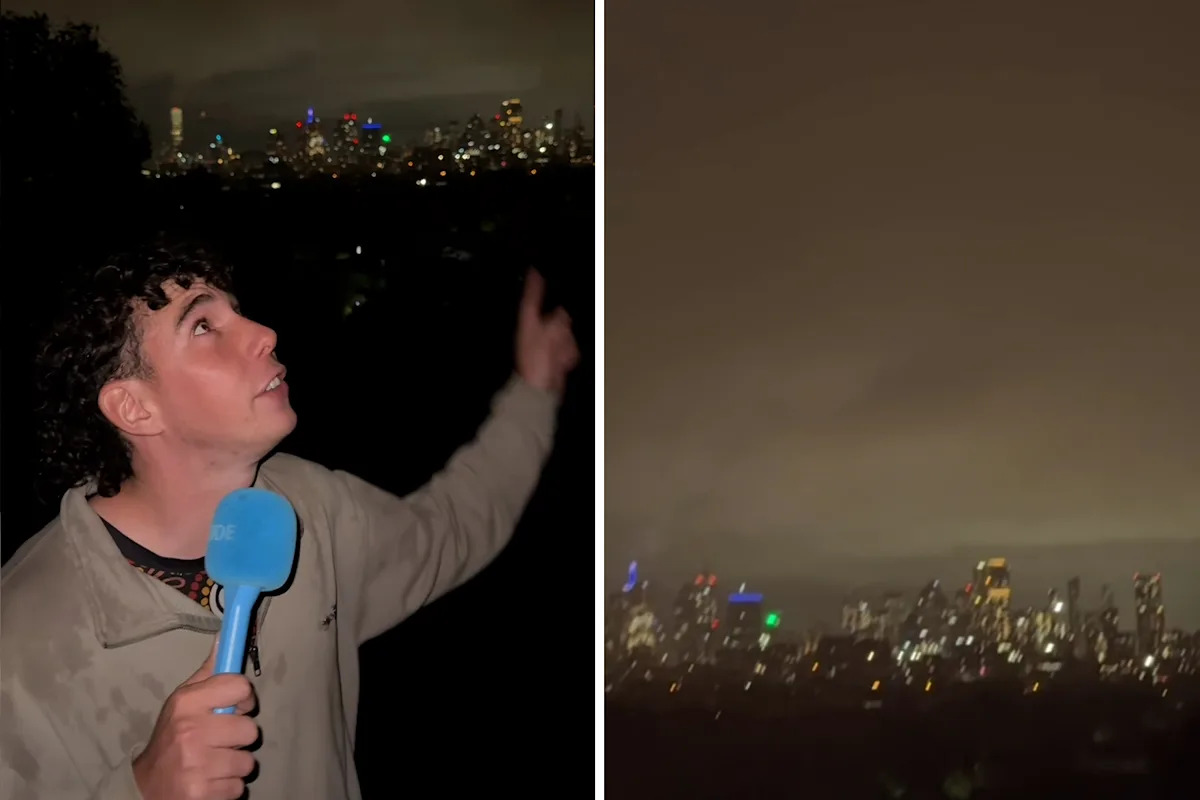
Standing on the outskirts of Australia’s busiest cities, a 23-year-old man was surprised to find that an important sight in the night sky had been blocked.
Growing up in the bush, Kai Lane had taken constellations for granted, but after he moved to Geelong, he was shocked they were completely obscured by light pollution.
The problem was even worse when he visited Melbourne and, more recently, Brisbane.
“It’s so sad,” he told Yahoo News.
“When I go to sleep, I look out the window up at the stars, and instead of seeing 10,000 stars, I’m seeing one or two.”
The disappearance of the stars wasn’t sudden or intentional.
But light pollution is hurting the natural world, with scientific research finding it’s impacting the annual migration of the bogong moth, and causing the brains of spiders to shrink.
But Kai is also concerned about its impact on the human population.
Knowledge lost as stars vanish from view in Australia
He’s worried that generations of kids growing up in cities won’t have access to the same degree of knowledge about the natural world as their ancestors, and has shared his concerns in a powerful video on Instagram.
As a Yorta Yorta and Barapa Barapa man, he teaches cultural knowledge about Indigenous astronomy, focusing on its real-world benefits.
Like many cultures around the world, Indigenous fishermen have used the stars to help them in their craft.
For instance, when the large Murray cod constellation appears in November, hunting this giant species of fish is prohibited.
It means the rivers are warm and the fish has begun to lay eggs, so hunting it could impact sustainability.
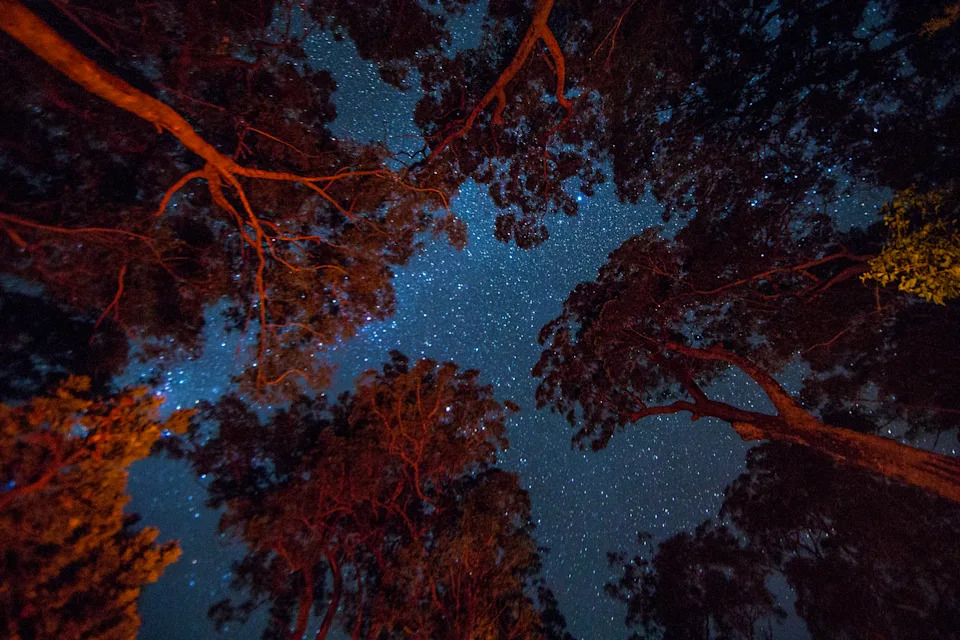
While the night sky is still incredible in the bush, it’s often hard to spot more than one or two stars in the city. Source: Getty
(Getty Images)
Generations of Barapa Barapa before him have also realised changes in the weather can be predicted by studying how a star is twinkling.
Change in how astronomy is being taught
Kai is troubled that this information won’t be properly passed on to Indigenous kids, or other Australians interested in learning more about the natural world.
Because of the light pollution, he’s often forced to teach about constellations through an online meeting platform.
“I got taught by people pointing up in the sky, but I teach Indigenous astronomy through Teams classes,” he said.
“It’s heartbreaking trying to teach a class like this — it’s getting taught the wrong way.”
Call for light pollution limits
Dr Sarah Bekessy, an urban planning expert at the University of Melbourne and the Biodiversity Council’s lead councillor, has warned light pollution is harming human health, and said the nation’s leaders need to tackle the problem as has been done overseas.
“Until Australian governments establish regulations to limit light pollution, as has occurred in Europe, it is up to all of us to individually take action,” she said.
“Every bit counts, and when we act together, the impact will be enormous.”
Incredible spectacle of night sky shining bright in Aussie bush
The stars have not been lost forever, they’re still shining brightly around his hometown of Kerang, on the Loddon River, in Victoria’s central west.
When he returns home, he always takes time to marvel at the spectacle above him.
“It’s like I’ve got a battery inside me, and when I go back home to my country, it charges up and becomes full,” he said.
“But then when I leave, I’m travelling to places like Brissie, Melbourne, or Geelong, it just deflates.”
Do you have a story tip? Email: newsroomau@yahoonews.com.
You can also follow us on Facebook, Instagram, TikTok, Twitter and YouTube.