
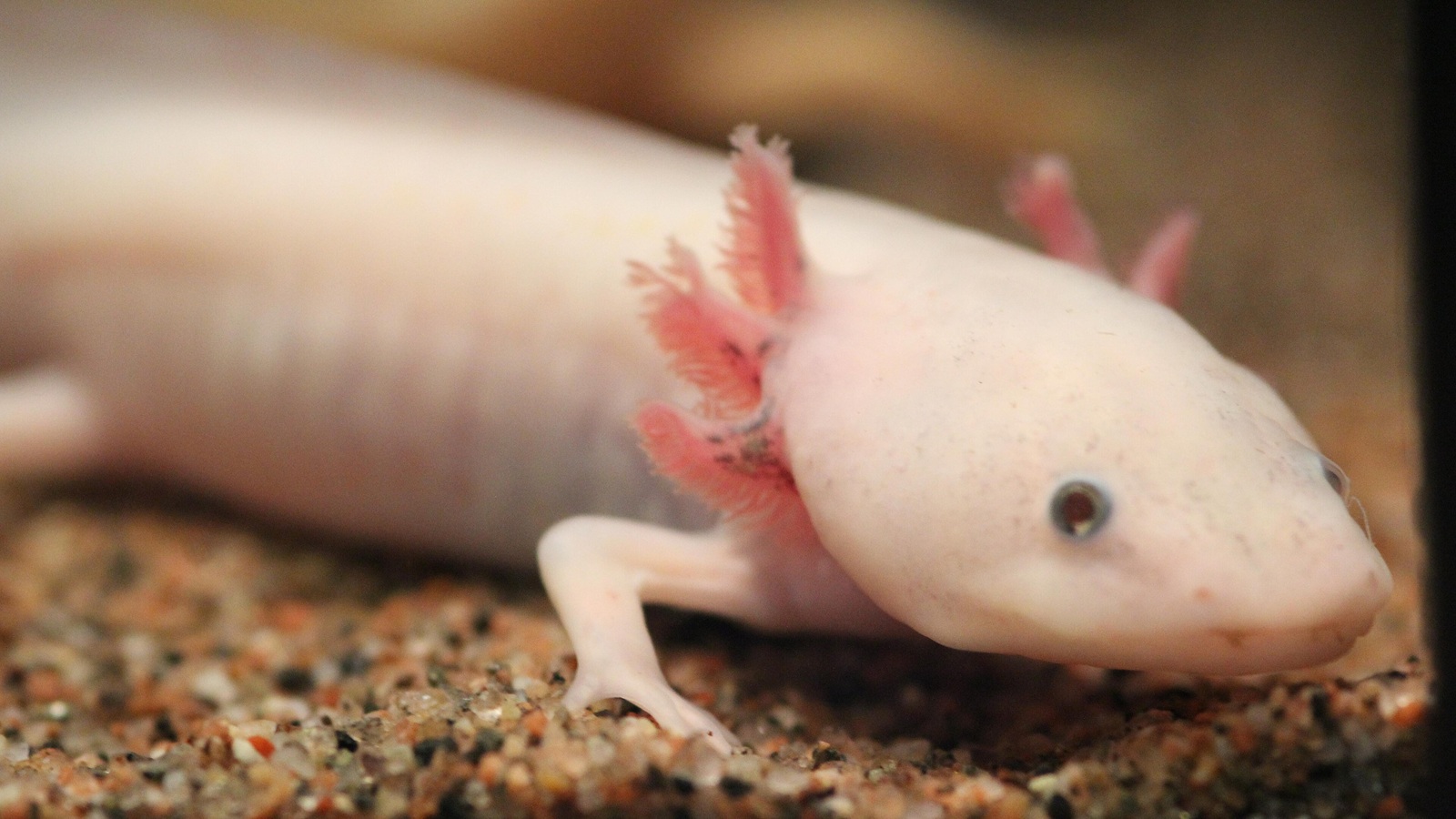
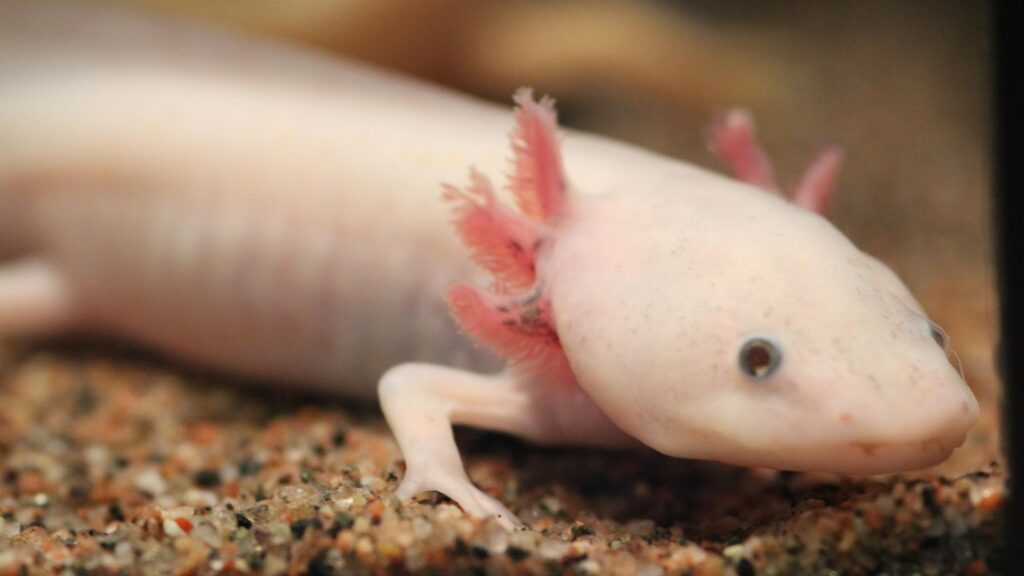
Scientists identified SP8, a key gene behind limb regeneration, moving research closer to human application. An axolotl, the Mexican salamander whose natural ability to regrow limbs has made it a key model in limb regeneration research, including recent studies involving the SP8 gene. Credit: Ruben Undheim / Wikimedia Commons (CC BY-SA 2.0).
Scientists at Wake Forest University published a study in the Proceedings of the National Academy of Sciences (PNAS) in April 2026 identifying a gene called SP8, alongside its molecular partner SP6, as a critical and evolutionarily conserved switch that controls limb bone regeneration across axolotls (the Mexican salamander renowned for its ability to regrow full limbs), zebrafish, and mice, suggesting that a sleeping genetic switch for limb reconstruction may already exist in dormant form in humans.
The finding carries weight not because it solves the problem of human limb regeneration, but because it narrows the field considerably: out of the hundreds of genes active during salamander regeneration, this study isolates a specific mechanism shared across three species with very different regenerative abilities, establishing for the first time that the underlying program is universal rather than unique to creatures that regenerate naturally.
The gene that salamanders never lost
The Wake Forest research team, led by assistant professor of biology Josh Currie, ran comparative experiments that brought together three separate laboratories working simultaneously on three organisms, and the convergence of their results gave the finding its evidential weight; in the axolotl, SP8 drives the cellular reconstruction of limb bones after amputation, coordinating the activity of a group of cells called the blastema (the mass of cells that forms at the amputation site and rebuilds the missing structure from scratch).
Currie’s laboratory confirmed SP8’s role beyond observation by using CRISPR gene-editing technology (a molecular tool that precisely cuts and disables specific genes) to remove SP8 entirely from the axolotl genome; without SP8, the salamander failed to properly regenerate limb bones, and mouse digit experiments produced the same result when researchers removed both SP6 and SP8, confirming that the gene functions across species rather than belonging exclusively to regeneration-specialized animals.
The distance between discovery and clinical use
Earlier research established the raw materials that SP8’s function now helps explain: a 2024 collaborative study by Harvard Medical School and Kyushu University demonstrated that just three proteins, Prdm16, Zbtb16, and Lin28a, can reprogram ordinary connective tissue cells called fibroblasts into limb progenitor cells (cells capable of developing into the bone, muscle, and nerve tissue a limb requires), giving scientists a reliable method to produce the cellular starting material that regeneration would need in a human context.
In November 2025, researchers at Texas A&M University took a different approach and identified FGF8, a single growth factor (a protein that instructs cells to divide, specialize, or change behavior), that when applied to joint tissue normally destined to form scar tissue instead triggered the reconstruction of five tissue types including cartilage, bone, and the beginnings of a fingertip, a proof-of-concept that targeted molecular signals can override a human body’s default response to injury without requiring genetic modification.
The critical unknown: Regeneration or uncontrolled growth
However, scientists consistently draw a firm line between pathway discovery and clinical application, and the SP8 finding sits clearly on the discovery side of that line; humans carry the same genes as axolotls, but those genes remain suppressed after embryonic development, and researchers do not yet know whether reactivating SP8 in adult human tissue would produce the controlled, structured growth that regeneration requires or the uncontrolled cell proliferation that defines cancer, a distinction the field must resolve before any therapy design becomes feasible.
The accumulated evidence from Wake Forest, Harvard, Texas A&M, and the NSF-funded Shox gene research does not yet amount to a clinical roadmap, but it establishes something the field lacked as recently as five years ago: a coherent molecular vocabulary for what limb regeneration requires, and the confirmation that the sleeping genetic switch exists in mammals, waits to be read correctly, and does not need to be invented from scratch.