
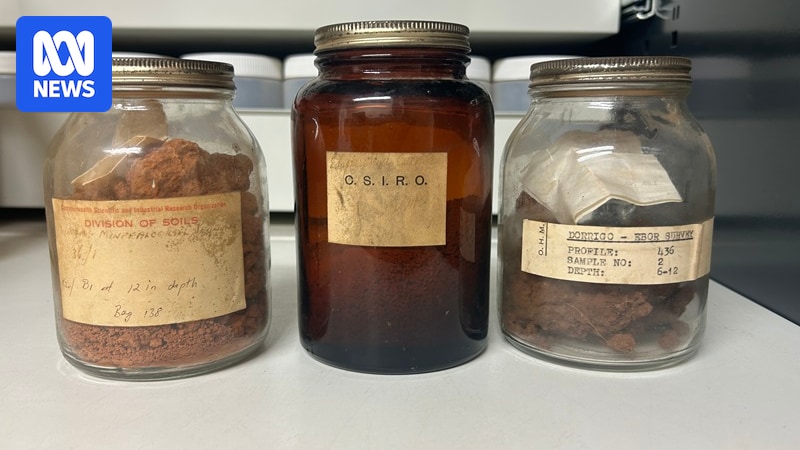
It’s not your usual archaeological dig, but rifling through boxes of soil at the Australian National Soil Archive reveals more than meets the eye.
The collection, stored in shipping containers at the CSIRO’s Black Mountain campus in Canberra, holds a century of samples.
Archive manager Georgia Reed’s job is to sort through, archive, and store the 100,000 samples from over 30,000 sites across Australia.
Far from brown dirt, this collection represents a slice through time of the ground beneath our feet.
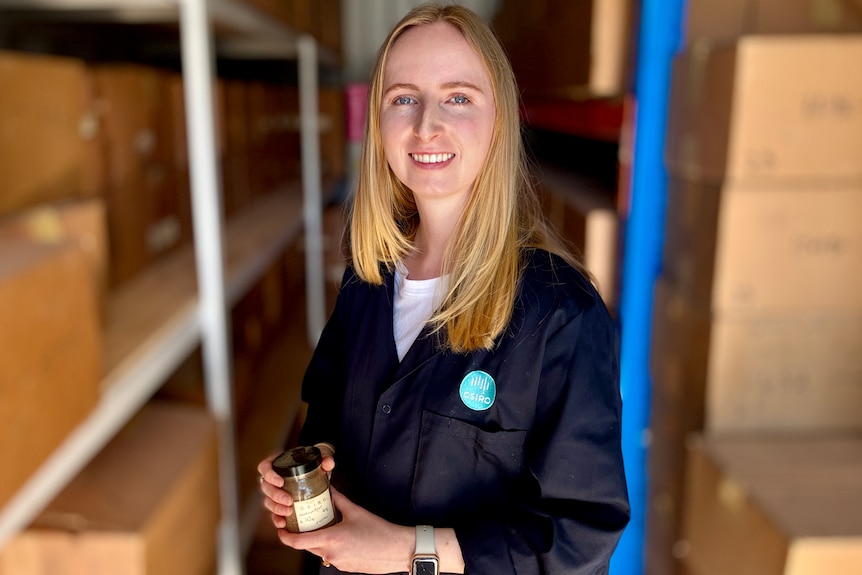
Archive manager Georgia Reed says she is currently sorting through around 20,000 unarchived soil samples. (ABC News: Lish Fejer)
“The most exciting project that I’ve found is the Simpson Desert Expedition from 1939,” Ms Reed said.
“RL Crocker was the soil surveyor on the expedition, and he collected soil samples which we found in our shipping containers in Canberra.”‘Soil is not dirt’
Leader of the CSIRO’s Soil and Landscapes Group, Ben Macdonald, said a common misconception was that soil and dirt were the same thing.
“Soil is not dirt. Soil is a living thing,” Dr Macdonald said.
“Dirt is a dead thing — it’s just powder on the ground.
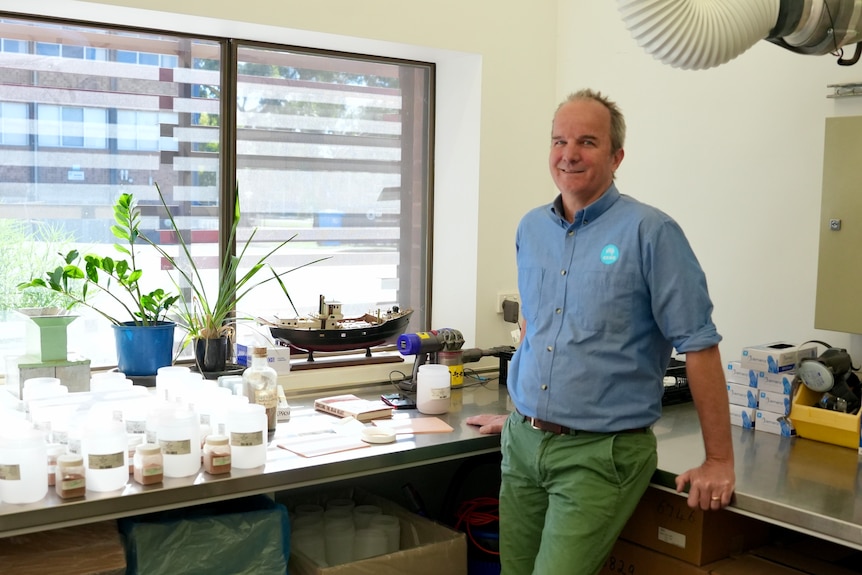
Dr Ben Macdonald says soil is an essential part of how the Earth functions. (ABC News: Joel Wilson)
“Soil is a biological medium. Yes, it has minerals, but it also has life forms in it.
“Soil delivers food, delivers fibre, delivers the natural environment which we live in. It regulates the atmosphere, it interacts with our water. It’s a central part of how the Earth functions.”
Dr Macdonald said ecosystems start from soil, and even in desert ecosystems like the heart of the Simpson Desert it contained biology that could sustain life despite the very unique environment.
“It’s certainly not a dead heart,” Dr Macdonald said.
“It’s a very productive and vibrant landscape for the amount of rainfall that it receives.
“People called it the dead heart because they were thinking about agricultural productivity, but in terms of the ecosystems which are there, they’re vibrant and thriving.”
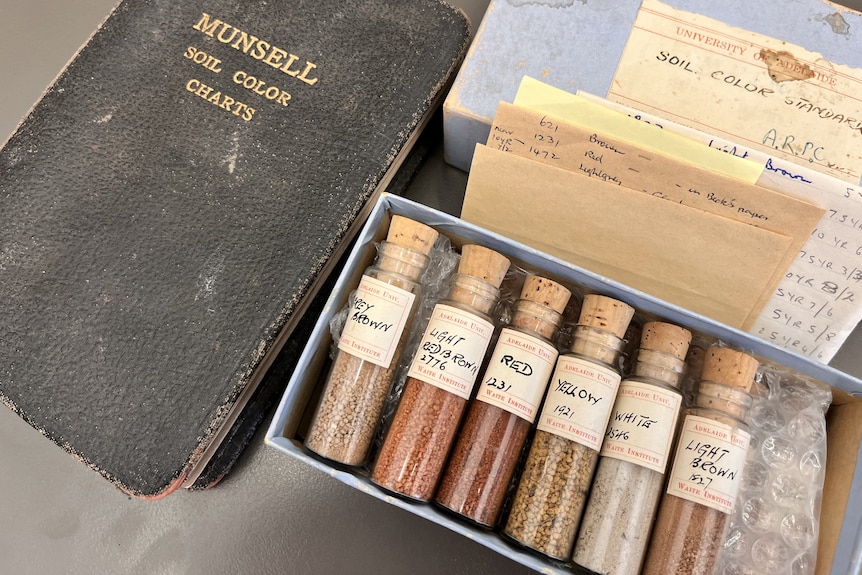
Unlike dirt, soil is a living biological medium that regulates the atmosphere and interacts with water. (ABC News: Lish Fejer)
Soils of the century
The Australian National Soil Archive is a library of what the land was like at different points in time.
“We can go back and look at and understand what those conditions were like 100 years ago,” Dr Macdonald said.
“When we disturb the soil, you oxidise the carbon and the carbon content goes down.
“There’s new things that have turned up over the last 100 years, plastics, pesticides, herbicides, radiation fallout from weapons testing. Things which have changed in that time which we can go back to the original samples and look at.”
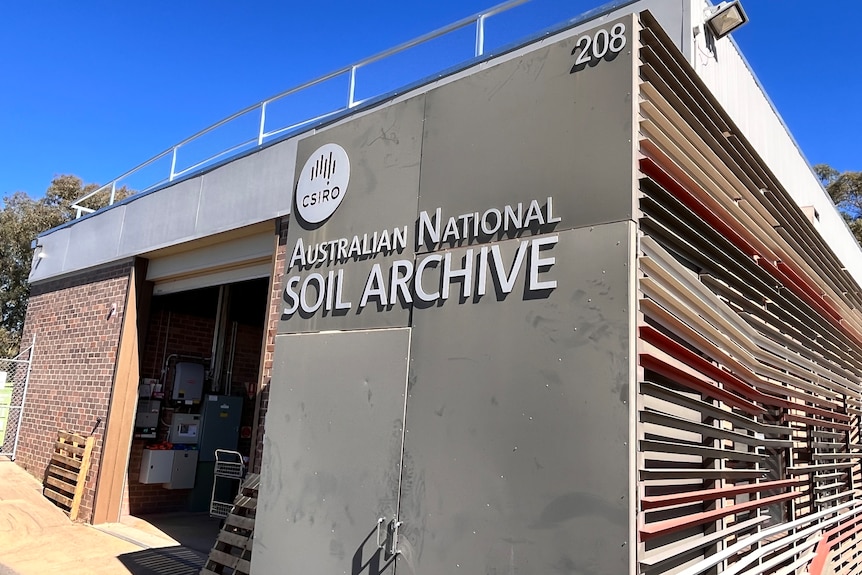
The Australian National Soil Archive contains 100,000 soil samples from over 30,000 sites across Australia. (ABC News: Lish Fejer)
New technology is also allowing soils to be analysed, with near-infrared spectroscopy — in which a soil sample’s response to having a laser shined onto it is read — able to predict soil carbon content in 20 seconds.
It means work that once took weeks in a laboratory can be done on the spot, opening the door to faster, wider soil science assessments.
Detective work matches samples
In 2003, the CSIRO combined its soil collections, which were “stored in sheds all across Australia”, at the Black Mountain campus.
“At the back, we have around 20,000 unarchived samples, which are historic, so dating from 1920s to the 1960s,” Ms Reed said.
“They just haven’t been archived yet because the data is all in physical cards called pink cards.”
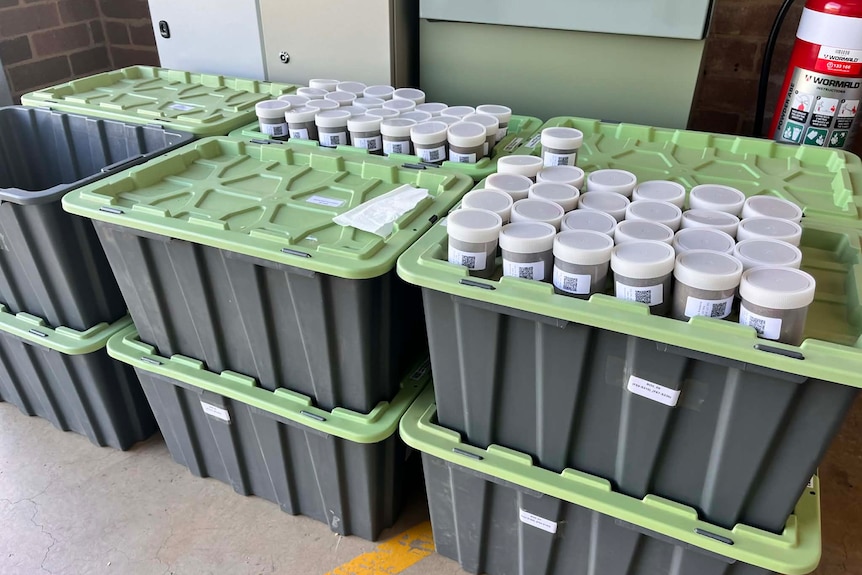
The CSIRO’s soil sample collections were consolidated at its Black Mountain campus in 2003. (ABC News: Lish Fejer)
The samples are in jars, calico bags and plastic containers with a number on the outside — but not much else to say what the sample contains
It’s like having a bag of jigsaw pieces without the box.
Through diligent detective work and using an online platform of volunteers known as DigiVol, citizen scientist are transcribing 19,000 of the digitised pink cards so Ms Reed can start matching them to a sample in the shipping containers.
“I look for publications relating to those samples,” she said.
“So the researcher might have published a few papers on them and that will give me metadata like how they took the sample, whether it was a core or a pit, where they took it, might have more location data.”
Sometimes she strikes gold — or red.
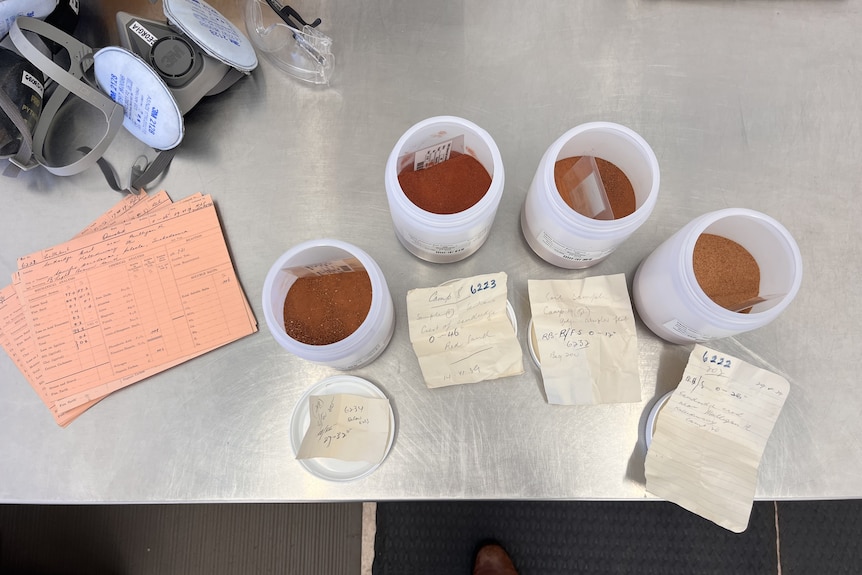
Georgia Reed was able to identify the soil samples taken from the Simpson Desert in 1939 by their pink cards. (ABC News: Lish Fejer)
One sample Ms Reed found was collected in 1939 on Dr Cecil Thomas Madigan’s camel expedition across the Simpson Desert in central Australia.
Soil surveyor Robert Langdon Crocker meticulously took samples, filling calico bags and numbering each sample along the route. He published his findings in 1947, but the samples began to gather dust, and irrelevance, as they were moved from shed to shed.
Ms Reed found them by cross-referencing Mr Crocker’s 1947 publication with handwritten field pink cards, and matching sample numbers to an expedition map she found online.
“I could see in RL Crocker’s publication from 1947 that he’d recorded the sample numbers. So I could link those sample numbers to his publication and also link that to those pink data cards that we had,” she said.
“From there, I could find a map that’s published online and we could geolocate the sites that the samples were taken from to within a boundary.”
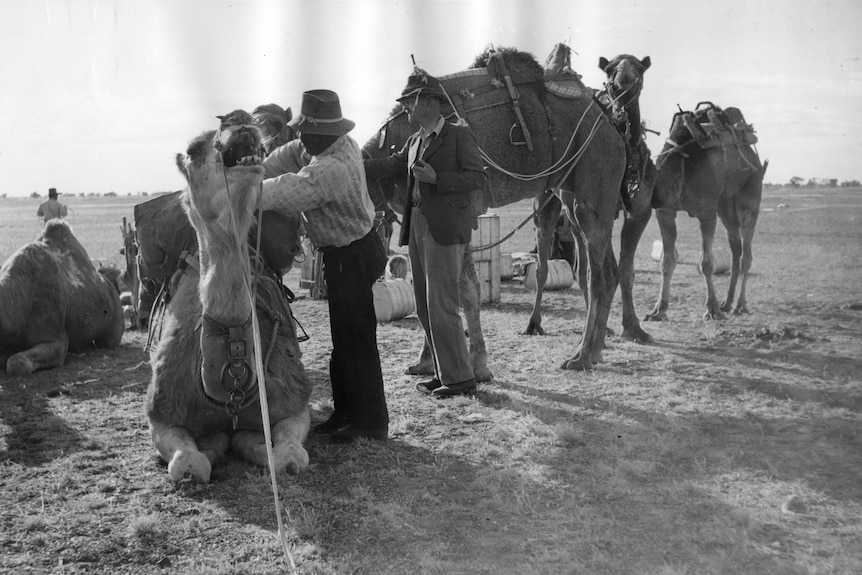
Dr Cecil Thomas Madigan preparing for his camel expedition across the Simpson Desert in 1939, from which Robert Langdon Crocker collected soil samples. (Supplied)
The jars in the shipping container were the same jars Mr Crocker had carried across the dunes of the Simpson Desert.
“It was a bit surreal,” Ms Reed said.
“I like pulling all the clues together and finding hidden gems.
“That was really exciting because we didn’t know we actually had those samples here in Canberra.”
What comes next?
Dr Macdonald said the collection for the last 100 years has been rather “piecemeal”, but the next 100 years will have a baseline of soil health.
Looking to the next century, a new snapshot of soil is currently being collected.
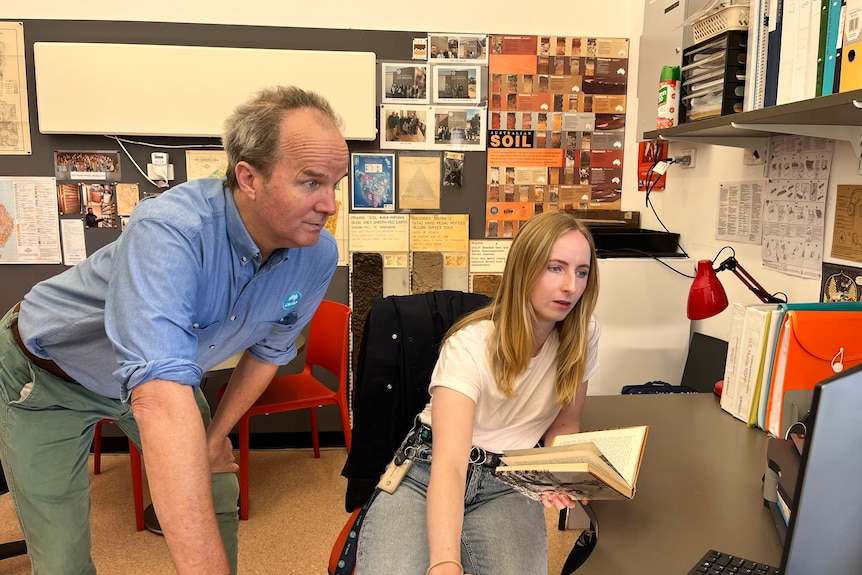
Dr Ben McDonald says for the last century the collection has been a bit piecemeal, but that’s set to change. (ABC News: Lish Fejer)
Thousands of new soil samples from sites across Australia will be added to the archive as part of the federal government’s National Soil Strategy.
The program involves collecting 25,000 new samples to establish the first ever continent-wide baseline of soil health.
The samples will be ingested into the archive, and in three to five years, a second round of collection will begin.
The goal is to track whether soil carbon is rising or falling, identify emerging threats, and guide both policy and action on the ground.
With global fertiliser supplies under pressure, there’s a renewed spotlight on the ability of our soils to sustain us.
“When in today’s environment where nitrogen fertiliser is constrained due to the current conflict globally, being able to have fertile soils to grow crops, you actually need to understand what their status is right now and how long can you work them without doing an intervention,” Dr Macdonald said.
“It’s where the food system starts. Next time you eat your sandwich, that began from the soil.”