
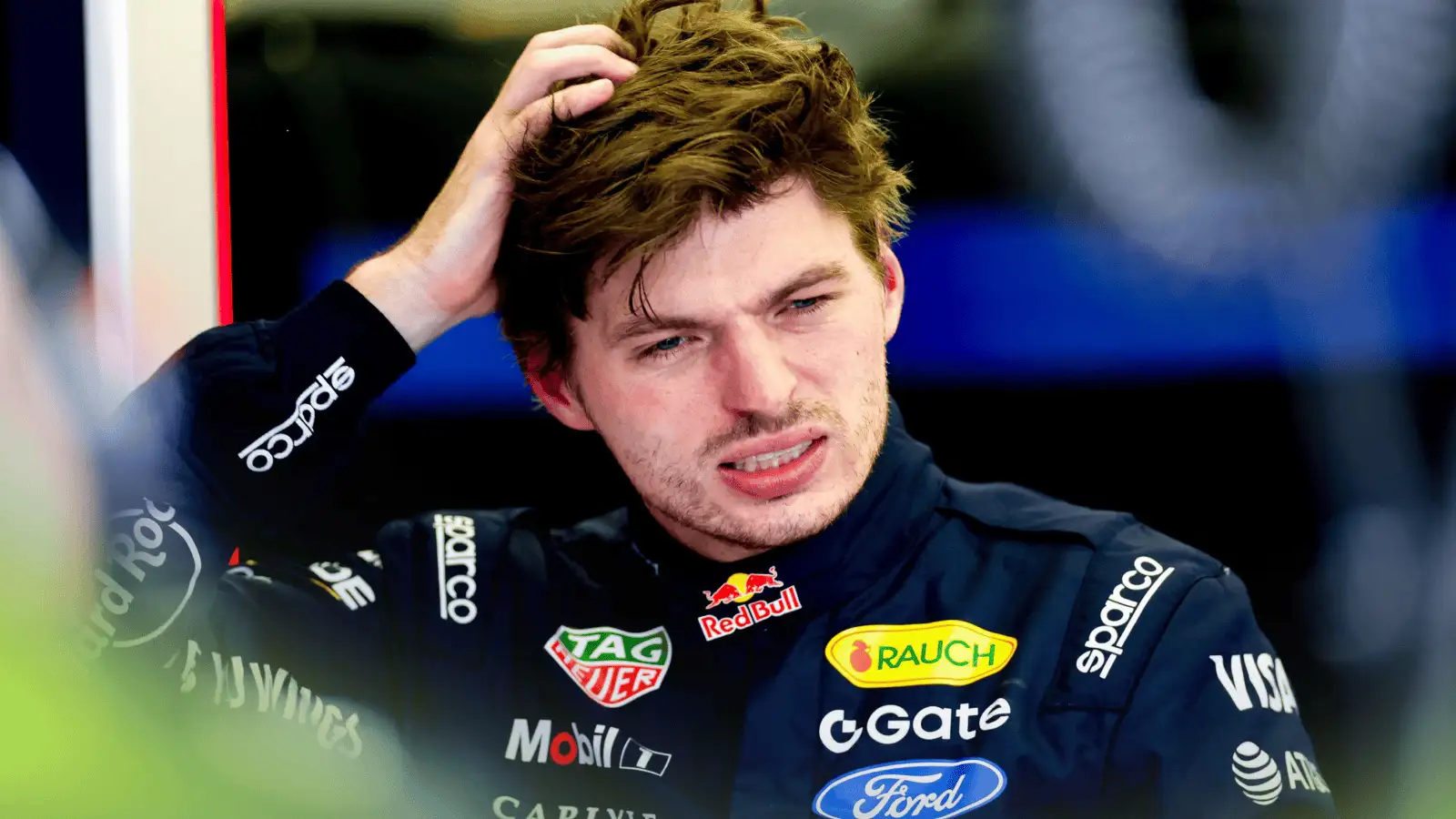
Haven’t you heard? Max Verstappen is no fan of the F1 2026 rules.
The Red Bull driver fears the regulations remain “fundamentally wrong” despite the FIA confirming a number of tweaks for the Miami Grand Prix. The state of the spectacle at Suzuka last month, culminating in a terrifying accident for Oliver Bearman, suggests Verstappen might have a point…
The FIA had to do something after the Japanese Grand Prix
A version of this article originally appeared in PlanetF1.com’s conclusions from the 2026 Japanese Grand Prix
Want more PlanetF1.com coverage? Add us as a preferred source on Google to your favourites list for news you can trust
There was a widespread sense of grudging acceptance in the aftermath of the second race of the F1 2026 season in China.
Nobody, it was said, was ever going to love the new rules.
But it is what it is, as Formula 1 people like to say, so what can we do about it now? Isn’t it time everyone stopped complaining and just got on with it?
And yes, yes, yes: qualifying isn’t great and it’s a shame about that… but the racing? The overtaking? It’s nobody’s idea of pure, granted, but it’s undeniable that it’s more exciting than ever.
It took just one more race weekend for Suzuka – dear old Suzuka – to blow that forced positivity pushed mainly by the broadcasters, as fake as the spectacle itself, to pieces.
It was one thing for Formula Net Zero to ruin the best corners in Melbourne and Shanghai; quite another for the 2026 cars to strip Suzuka, comfortably the greatest circuit on today’s calendar, of its challenge.
If you did not know any better, you would have thought an engine failure had occurred every time the revs dropped dramatically and suddenly on the approach to 130R as not-so-super clipping kicked in.
Listen closely to the onboard footage and you could even hear Max Verstappen dying inside a little bit more every time his Red Bull ran out of puff just before the turn-in point.
The issue with pretending that everything is fine when evidently it is not came to a head shortly after qualifying in Japan when as usual Formula 1 posted to its social media channels the onboard footage of the lap for pole position.
With one difference: a technical issue (resolved by F1 physically retrieving the vision from the offending camera on Sunday morning) meant it suddenly cut to an external shot for the remainder of the lap after Kimi Antonelli’s Mercedes exited Spoon and began to coast towards 130R.
So it had hardly been a flattering weekend for the 2026 rules even before the accident involving Oliver Bearman on race day increased the urgency for a change to the regulations.
Turns out that the 2026 cars do not just make a mockery of the pinnacle of motorsport and neuter the world’s great circuits – they’re actively dangerous too.
It has been plain since Romain Grosjean’s accident in Bahrain six years ago that accidents on the straights remain the final frontier of F1 safety.
F1 has seen various near misses with lethal speed differentials – of the type that claimed the life of Gilles Villeneuve at Zolder in 1982 – on the straights in qualifying over recent years without doing very much about it.
What happens when you have a set of rules that result in one car deploying energy at the same time another is harvesting it?
No prizes for guessing that they end up meeting in the middle.
At that point, F1 stops being motor racing and becomes dodgeball on wheels: missile guidance versus missile avoidance.
That’s Mario Kart racing for you in a nut – sorry, blue – shell.
With Carlos Sainz revealing after the race in Japan that drivers had previously aired concerns about accidents of this nature in 2026, perhaps Bearman’s crash needed to happen in order to open some eyes to the true madness of the 2026 rules.
The shocking footage of an F1 driver limping away from an accident before dropping to the floor inevitably travelled far and wide, providing all the ammunition the likes of Sainz needed to strengthen their calls for change.
The FIA, to its credit, has shown a willingness to act on matters, making a tweak to help minimise energy management requirements in qualifying and confirming after Bearman’s accident plans for “a number of meetings” during the April break with a view to refining the regulations.
If the powers that ought not to be were not listening before, they sure as hell are getting the message loud and clear now.
Will Max Verstappen be proven right?
And how they listened. And talked.
Following no fewer than three separate meetings with the sport’s stakeholders across April, the FIA confirmed on Monday a package of tweaks to the F1 2026 rules set to come into effect at the next race in Miami.
Yet is this a classic lipstick-on-a-pig scenario?
Max Verstappen recently appeared to suggest so.
Despite welcoming efforts to tweak the rules, Verstappen warned that the direction the sport has taken in 2026 remains “fundamentally wrong” regardless of what is done to improve the current situation.
“The problem is simply that you can tweak these regulations a bit, but fundamentally something is wrong,” Verstappen said at an event organised by the broadcaster Viaplay.
“Not everyone will admit that publicly, but it’s true.”
If the move to reduce the energy requirements in qualifying at Suzuka is anything to go by, the latest round of changes will only make a bad situation slightly less worse than it otherwise would have been.
Verstappen left another thought in the air while appearing on stage last week.
“Something has to change,” he said.
“In that case, I would choose to have the V10 or V8 engines brought back.”
All together now: hear, hear…
Want to be the first to know exclusive information from the F1 paddock? Join our broadcast channel on WhatsApp to get the scoop on the latest developments from our team of accredited journalists.
You can also subscribe to the PlanetF1 YouTube channel for exclusive features, hear from our paddock journalists with stories from the heart of Formula 1 and much more!
Read next: Why F1’s 2026 rule vote chose evolution over revolution