
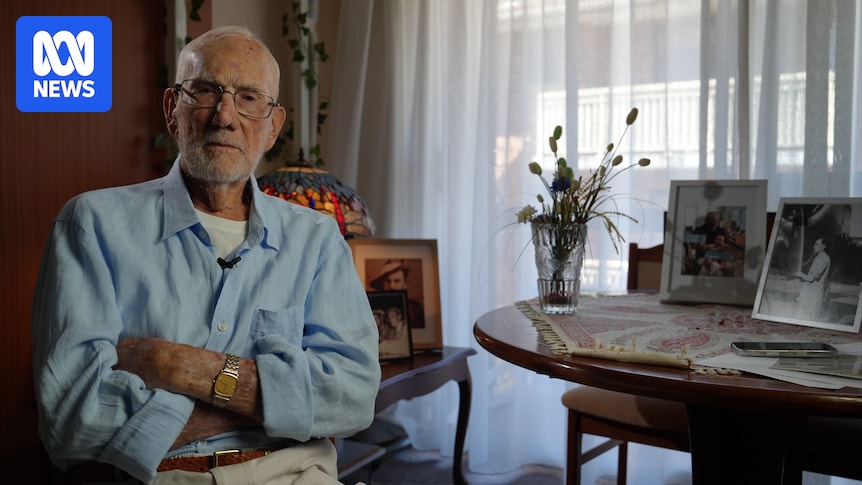
World War II veteran Terrance Byrne — now 101 years old — recalls how frightened he was when Japanese forces began bombing Darwin on February 19, 1942.
“It’s hard to find the right words,” Mr Byrne says, looking at a teenage photo of himself in uniform.
“I was young and I was confused, I’d just come through a depression, a war had just started, I had no real education.
“I’ve had to educate myself since then.”
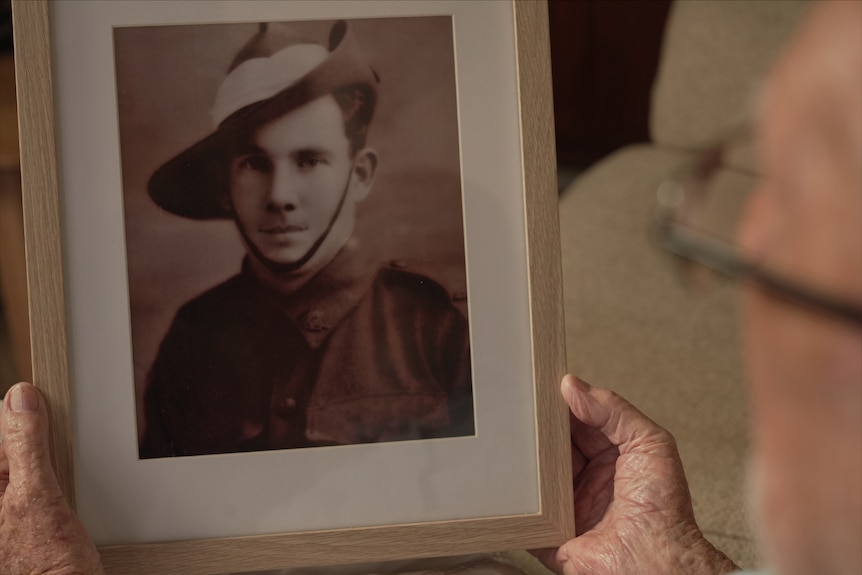
Terrance Byrne is one of the last surviving veterans of the Bombing of Darwin. (ABC News: Quentin Theron)
Mr Byrne says the photo of him in the army was taken at the request of his mother, who wanted an image of her son before he left for his war service.
On the day Darwin was first bombed, he was serving as a 17-year-old sapper, or combat engineer, in the 54th Anti-Aircraft Searchlight Unit in the Northern Territory capital.
More than 80 years on, and as Anzac Day approaches, he is determined that young people in Australia learn more about the Bombing of Darwin and the attacks on northern Australia that followed.
“Everybody’s heard about Pearl Harbour, you know what happened at Pearl Harbour,” Mr Byrne says.
“The same bloody force that attacked Pearl Harbour, attacked Darwin, and did more damage [and] killed a lot of people.
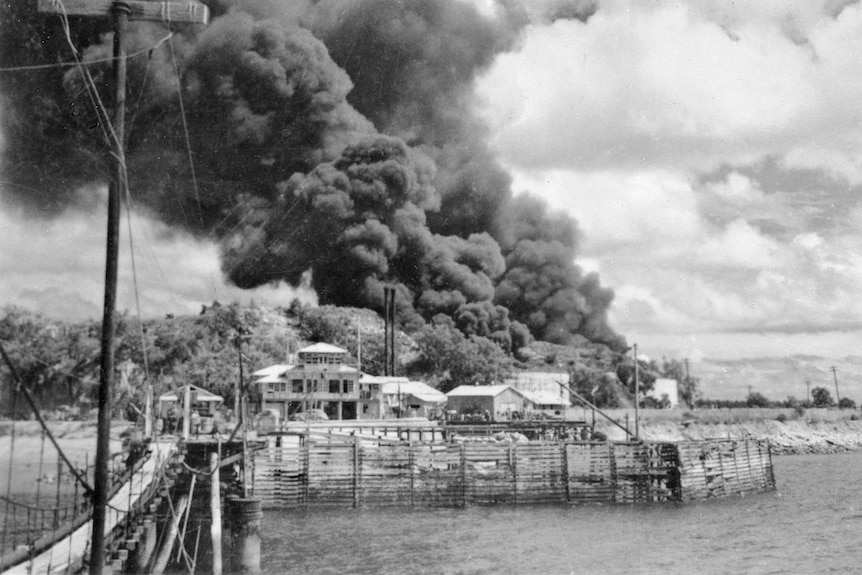
Oil tanks on Stokes Hill were damaged during the first Japanese air raid, which hit Darwin on February 19. (Supplied: Australian War Memorial)
“Pearl Harbour was attacked once — Darwin was bombed and bombed and bombed.”
The veteran remembers, in precise detail, the moment he heard the Japanese bombers in the skies above.
“It was 10 o’clock in the morning, the sun had risen, it was still in the eastern skies,” he says.
“The first raid passed over us — there were some bombs dropped on the airfield, there were some bombs dropped around us and near us.
“They went on to bomb the town, bomb the harbour, create the mess that they caused, bomb the shipping.”
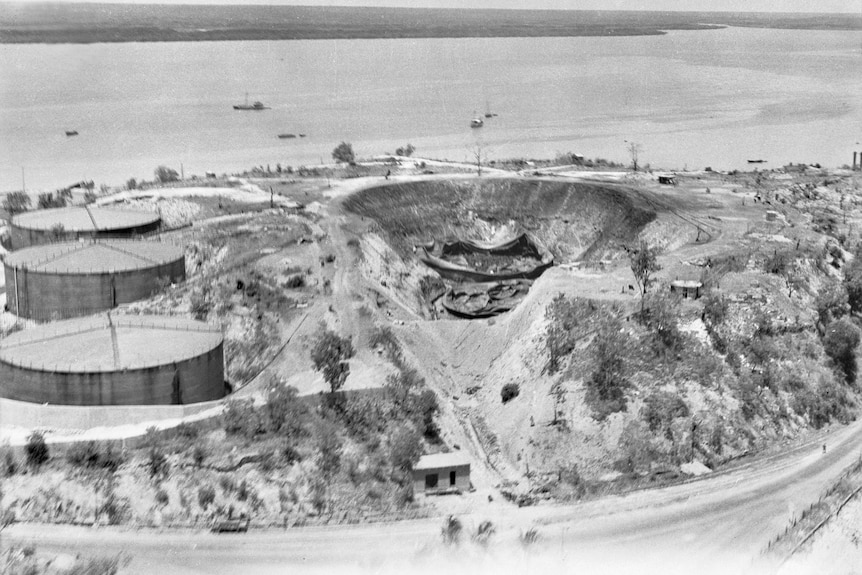
A 1942 aerial shot of damaged oil tanks in Darwin, after they were set alight during an air raid on June 6. (Supplied: Australian War Memorial)
Mr Byrne says his section commander ordered the troops “raise the alarm”, and his job had been “feeding” a Lewis machine gun.
“If I can swear, I was scared s***less. I really was,” he says.
“I’d just had my seventeenth birthday, I was a kid — I knew these were Japanese bombers coming in, but I had no idea what I was supposed to do, other than attend to the machine gun.
“We watched the aircraft fight going on overhead, we saw the American planes falling and fleeing, and then we heard the bombers coming in.”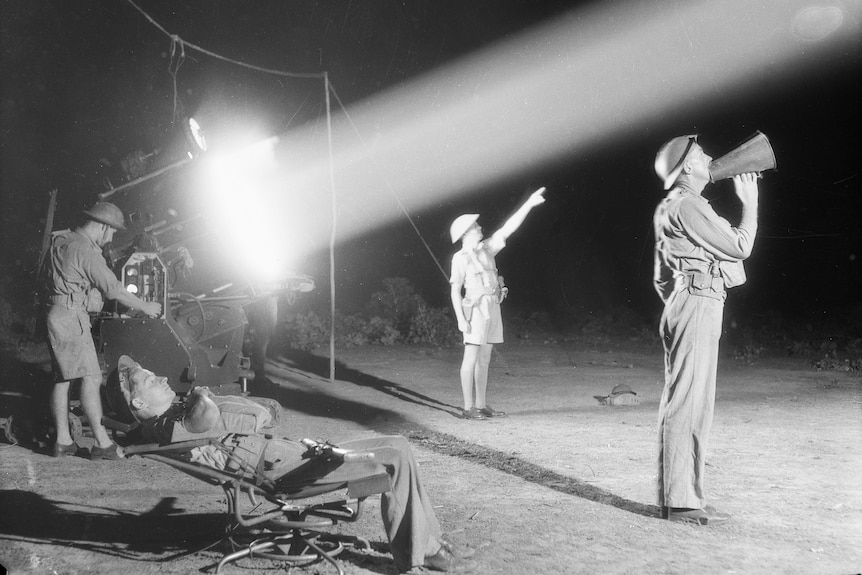
A searchlight crew, pictured in December 1941, looking for enemy planes over Darwin. (Supplied: Australian War Memorial)
Bombing of Darwin commemorated 84 years on
The two air raids on Darwin on February 19, 1942, killed 252 people and injured another 400, according to official reports, and remain to this day the single largest foreign attack on Australian soil.
They preceded dozens more Japanese air attacks across the north of Australia before the end of the war.
In February this year, Mr Byrne attended a ceremony in Darwin to remember those killed during the bombing 84 years ago.
He says he usually commemorates the bombing in Sydney, but felt he wanted to attend in person this year.
“In memory of the mates that I had here who realised that I was just a kid and supported me,” he says.
“I still have vivid memories of the airmen shell-shocked, running out trying to find a place to escape from the bombing.
“You had to see it to believe it.”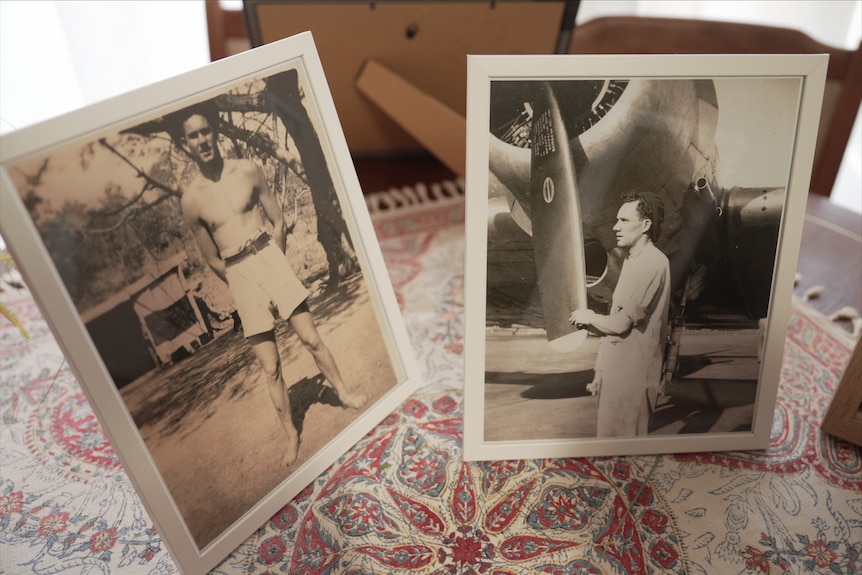
Photos inside Terrance Byrne’s home reflect memories of his time serving Australia. (ABC News: Quentin Theron)